SO-CALLED JOOZ, DECADENT CHRISTENDOM AND THE HOMOSEXUAL VATICAN ARE VISIBLY BEHIND WESTERN DEGENERACY!

Tomb of Oscar Wilde by Jacob Epstein Wikipedia - "Epstein's parents, Max and Mary Epstein,[6] were Polish Jewish refugees,[7][8] living on New York's Lower East Side."
WIKIPEDIA
Commission
In 1908 Oscar Wilde's literary executor Robert Ross[3]
chose Jacob Epstein for the commission of the tomb at a cost of two
thousand pounds, which had been anonymously donated for this purpose. Later, in a publication of letters between Ada Leverson and Ross in 1930, Letters to the Sphinx, the anonymous donor was revealed to be Helen Carew, with financial assistance from novelist Stephen Hudson (Sydney Schiff). This was only Epstein's second commission, his first being the sculpture for the Holden-designed British Medical Association building in The Strand;
these had been severely criticised for being too sexualised for public
consumption. However, Epstein retained some noteworthy supporters within
the Wilde circle such as William Rothenstein.
OTHER EXTRACTS FROM WIKILEDIA
About the tomb
The
choice of Oscar Wilde's monument created controversy. Wilde's
supporters would have liked for the monument to derive in some way from
Wilde's works, such as "The Young King",
by invoking homoerotica with figures of forlorn Greek youths, whereas
Wilde's detractors believed he was deserving of no monument at all.
One can see the influences of Wilde's works in Epstein's original
sketches for the tomb, which feature two young men, heads downcast in an
image of grief and sorrow upon an empty stone stele. However, Epstein has said of his sketches of the tomb that he "was dissatisfied and scrapped quite completed work".
It has been suggested that the change in design plans are due to Epstein's new focus on Wilde's poem "The Sphinx".[3] However, a number of influences began to play on Epstein around this period, including that of fellow sculptor Eric Gill.
The two artists were deeply interested in what they saw as the more
primal sexuality of Indian and Egyptian art, as opposed to British art.
Pennington refers to this period in Epstein's work as the Sun Temple
period and claims that, having been unable to follow this path with
some of his works in Britain, Epstein transferred his new passion onto
the Wilde tomb.
The monument began as a 20-tonne block of Hopton Wood stone in Derbyshire, England, unveiled to the London press in June 1912.
Epstein devised a vast winged figure, a messenger swiftly moving with
vertical wings, giving the feeling of forward flight; the conception was
purely symbolical, the conception of a poet as a messenger, but many
people tried to read into it a portrait of Oscar Wilde.
In the original sketches, the influences have been linked to the winged Assyrian bulls in the British Museum.
The small angel figure behind the ear of the Sphinx may have been a
deliberate reference by Epstein to the verse in Wilde's poem The Sphinx: "sing me all your memories".
Upon the headdress there are five figures, one with a crucifix, perhaps
symbolising the martyrdom of Oscar Wilde; this may be a recurring
theme—Epstein may have chosen the Sphinx with a crucified figure upon
the headdress in reference to the sensual life choice of Wilde thinly
veiled by his Catholicism.
In Epstein's original sketchings there is a list of ten sins, however
none are recognisable clearly on the final monument apart from the
Egyptian-like helmet haircuts on the women.
On the finished stone monument the small angel behind the ear has
been removed and replaced by an elaborate headdress, the crucified
figure and the phallic sphinx have been removed, and in their place is a
personification of fame being trumpeted. This may have been Epstein landing on a less sentimental, carved and angular alternative.[3]
Whilst transporting the monument to the cemetery in France from his Cheyne Walk
studios in London, Epstein ran into trouble with the police—having
rejected its status as a work of art, French customs placed a punishing
import duty of £120 on the monument for the value of the stone. Once the bill was paid (it has been suggested that Robert Ross had borrowed the funds from Ada Leverson),
the monument was covered with tarpaulin due to the Parisian officials'
reaction to the monument's nudity. Epstein returned to the cemetery one
evening and found that the testicles on the statue had been covered by
plaster, as the size of the testicles was considered unusual.
The monument was under police surveillance and Epstein found he could
only continue his work upon it after bribing a police officer to look
away, but the work was sporadic and the tarpaulin was replaced at night.
Eventually, as compromise, under Robert Ross' instruction, a bronze
plaque similar to the shape of a butterfly was placed upon the testicles
of the monument and it was unveiled in early August 1914 by the
occultist and poet Aleister Crowley. Epstein was furious that his work had been altered without his consent and refused to attend the unveiling.
A few weeks later Aleister Crowley approached Epstein in a café in
Paris, and around his neck was a bronze butterfly—he informed Epstein
that his work was now on display as he intended.
The testicles were removed in an act of vandalism in 1961. It is said that the cemetery manager used them as a paperweight.[21] They are now missing. In 2000, Leon Johnson, a multimedia artist, installed a silver prosthesis to replace them.[23]
The tomb with modern glass barrier
The epitaph is a verse from The Ballad of Reading Gaol:[24]
And alien tears will fill for him
Pity's long-broken urn,
For his mourners will be outcast men,
And outcasts always mourn.
Kissing the Tomb
Today
the monument is viewed by thousands of visitors every year. A tradition
developed whereby visitors would kiss the tomb after applying lipstick
to their mouth, thereby leaving a "print" of their kiss.[21]
The stone has also been covered in graffiti, almost exclusively
letters of love to the author, but this is not as damaging as the
lipstick kisses. Lipstick contains animal fat, which sinks into the
stone and causes permanent damage.[25]
Cleaning operations to remove the lipstick grease have caused the stone
to become more porous. It is therefore even harder to clean in
subsequent attempts, necessitating more drastic and surface-damaging
procedures.[26]
A fine of 9,000 euros was created to deter fans, but as many of them
were tourists who could leave before being brought to court this did
little to stop the practice.[27] In 2011 the creation of a glass barrier was begun, to make the monument 'kiss-proof'.[28][29] It was completed in 2014.[30] However, it only covers the lower half of the tomb. As Ireland's Office of Public Works considers the tomb an Irish monument overseas, it has paid for the cleaning and the barrier.[26]
The act of kissing the tomb has inspired a varied response from Oscar Wilde's supporters. Wilde's grandson Merlin Holland,
who is partially responsible for the tomb's upkeep, has said on the
subject that "Unthinking vulgar people have defaced the tomb forever."[25]
The producer Marc Overton, who views Wilde as a personal hero, has been
quoted saying he found the lipstick kisses disgusting. On the other
side of this discussion, the architectural historian Lisa Marie has
called this an act of devotion and a "fitting monument to a great
decadent and aesthete."[31] Two years after the barrier was erected Stephen Fry mentioned the practice of kissing Oscar Wilde's tomb in a speech on Wilde given at the Jaipur Literature Festival;
"Here's this man who believed when he died that his name would be
toxic for generations to come. For hundreds of years his work wouldn't
be read. He would stand for nothing but perversion. Utter disgust of a
society that couldn't bear people like him.....His tomb in Père Lachaise
Cemetery, in Paris. It had to be restored because the polished stone of
its surface had corroded through kissing. Thousand and thousands. ....
Wouldn't it be allowed once to just wake him up for five minutes just to
tell him that, then he can go back to sleep again?"[32]

|
|
|
| by Kevin Barrett, for American Free Press In his New Year’s address,
Russian president Vladimir Putin once again spoke of “the importance of
traditional family values.” It is one of his most common themes. Two
months earlier, Putin had angered Western liberals by
saying that teaching children “that a boy can become a girl and vice
versa...is on the verge of a crime against humanity” and blasting gender
confusion ideology that “seeks to eliminate basic human categories like
mother, father, and family.” On December 5, Putin signed legislation that
bans propaganda promoting sexual deviance. The new law makes it illegal
to “praise LGBTQ relationships, publicly express non-heterosexual
orientations or suggest that they are ‘normal.’” The new law builds on
an earlier one that banned homosexual propaganda targeting minors. The
intensifying culture war between Russia and the West is rooted in
religious difference. While the West continues its stampede away from
traditional faith, Russia is moving in the opposite direction. Since the
fall of Communism in 1989, Orthodox Christianity, Islam, and to a
lesser extent other creeds have been making a comeback. I
have long loved the interpretations and depictions of Russian Orthodox
Christianity in the works of the great 19th century authors Dostoevsky
and Tolstoy. But what about today’s Orthodox spirituality? Who, I
wondered, should I be reading to get a sense of what the Russian
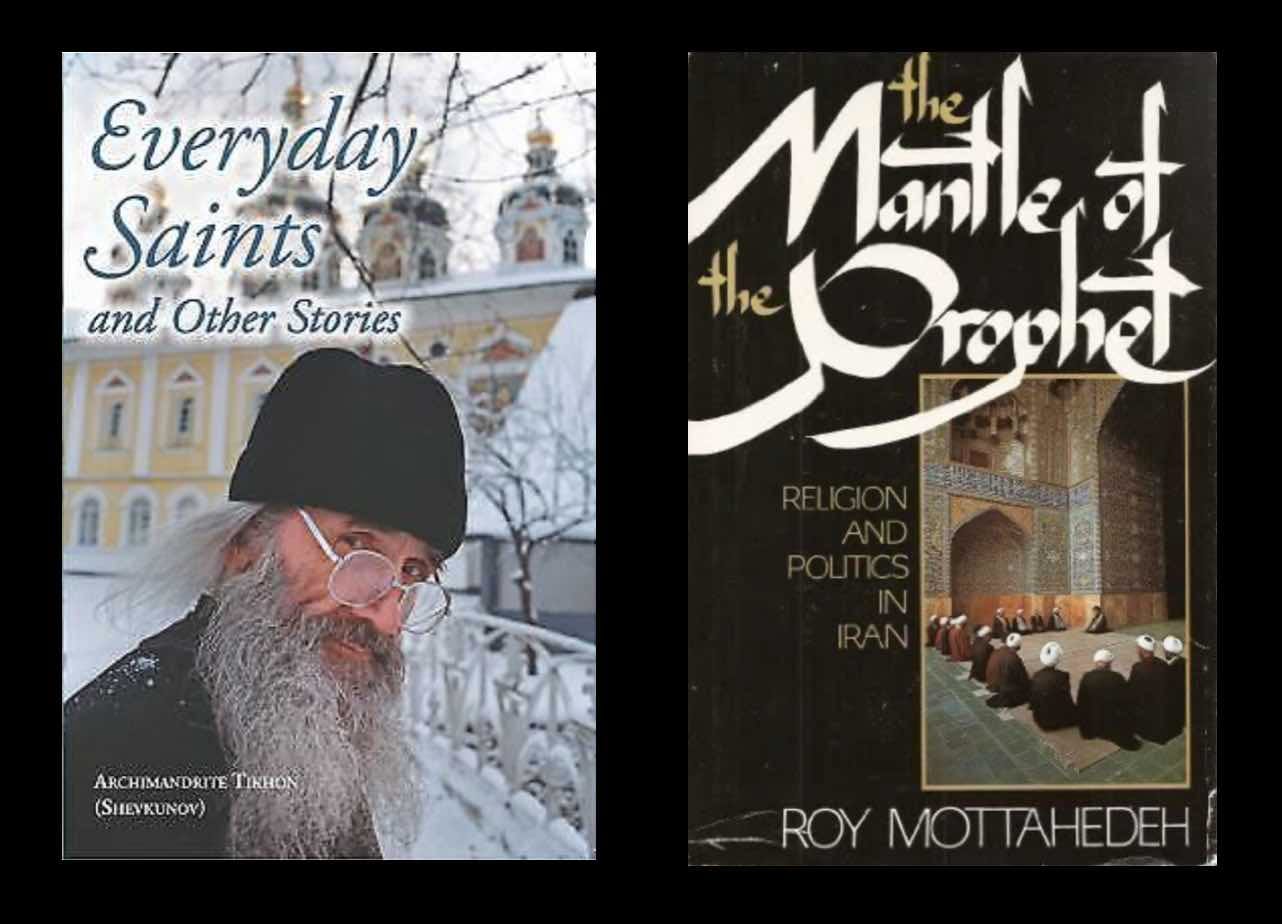
religious revival feels like from the inside? I was advised to check out the 2011 bestseller Everyday Saints and Other Stories by Metropolitan Tikhon (Shevkunov), a spiritual advisor to Vladimir Putin. ... Subscribe to Kevin’s Newsletter to read the rest.Become a paying subscriber of Kevin’s Newsletter to get access to this post and other subscriber-only content. A subscription gets you: | Subscriber-only posts and full archive | | Post comments and join the community |
|









 Top Storiesby