Showing posts with label RENAISSANCE. Show all posts

Thursday, 18 March 2021

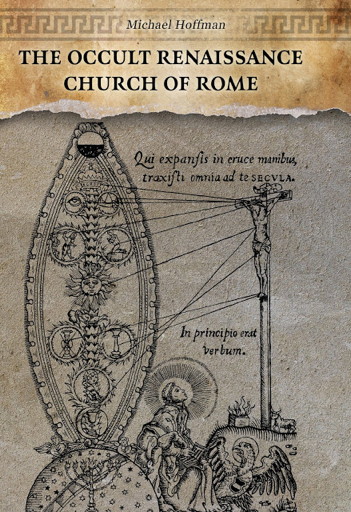
Neoplatonic Hermetic Kabbalism - The Occult Renaissance, Church of Rome by MIchael Hofman 2017

 final-romebook-front-cover

 Revisionist History: beyond the gatekeepers

A Prequel to The Occult Renaissance Church of Rome

Softcover, 723 pages. Illustrated with 42 rare plates, many in color. (The book is an invaluable illustrative resource). Fully indexed for easy access to a treasure trove of suppressed information.

Read the introduction and the first chapter free of charge


By Michael Hoffman
Copyright©2017-2021 | All Rights Reserved


Of the archetypal “Catholic” figures in the modern era who embodied the Neoplatonic-Hermetic and Kabbalistic mandate of the papacy in the Renaissance, among the most prominent are two Frenchmen, Alphonse Louis Constant (1810-1875), who wrote under the pen name Éliphas Lévi, and Pope John Paul II’s Cardinal Henri de Lubac. We have a study of De Lubac's esotericism in the book.

Regarding Lévi, he truly was a spectacular modern embodiment of the occult depravity of popery as it was overthrowing the Catholic Church, beginning in the 15th century. He was ordained a deacon of the Church of Rome, spreading his contagion from within its corridors, under Pope Pius IX. He remains the focus of intense interest and study by 21st century occultists, including “traditional Catholics.” What is perhaps most revealing about Lévi’s life is that in spite of his very public heresies of syncretism and demonism,
he was never disciplined by Rome. He was considered an “always faithful Catholic,” as one leading spokesman of the “traditional Catholic” movement termed him in the 1990s.

The record shows that Lévi was patronized by the hierarchy and never obstructed by any formal Church authority. It was smooth sailing for this Hermetic-Kabbalist inside the Church of Rome. This repeats a pattern from the Renaissance, when papist-Kabbalists, Hermeticists and Neoplatonists escaped serious interdict, and in many cases were promoted by the popes, as long as they firmly stood for popery and did not challenge the suzerainty of the pontiffs.

Papist-occultists often went to extremes to prove their loyalty (flattery being an effective subversion tool). Increasing pride in priests and megalomania in popes is a diabolic means for perverting and subverting the men who hold those offices. Concerning priests, Lévi wrote, “Representing the moral authority, and realizing it by the moral authority of its ministry, the priesthood is as holy and infallible as humanity is subject to vice and to error. The priest,
qua priest, is always the representative of God.” This inflated image is an inducement to the sin of pride in priests, and a mark of the clericalism in the Catholic Right-wing.

Of the demonic Pope Alexander VI, Lévi wrote, “When Alexander VI consecrated his bishops, it was not the poisoner who laid his hands upon them, it was the Pope.” In other words, even though Alexander turned a blind eye (or cooperated with) the murderous crimes of his Borgia offspring, Lévi is insinuating that the Pope himself did no harm to the Faith. Lévi repeats Rome’s standard apologetic story about skirt-chasers like the Borgia-Pope Alexander, i.e. that of all his transgressions none of them ever subverted the dogma of the Church. For this imposture to have plausibility, only what the Pope pronounced and wrote, and little or nothing of what he
perpetrated and institutionalized, is taken into account. The story line as parroted by Lévi: “Pope Alexander VI never corrupted or falsified the dogmas which condemned him, or the sacraments which in his hands saved others, and did not justify him.” This is an apologia from a diabolist and it’s the same exculpation of Pope Alexander which many sincere and “well-read’ Catholics mouth in defense of him, and other concupiscent pontiffs like him.

Yet to mouth it is wishful thinking grounded in ignorance of history. Pope Alexander powered the Neoplatonic-Hermetic occult inside the Church. Can it be said that this act of a Judas was not a corruption of Catholic dogma? Since the rule of prayer is the rule of belief
(“Lex orandi, lex credendi”), it is not difficult to discern what Pope Alexander believed when we learn that he established a pagan temple in his very own papal apartment, presided over by a host of magnificent art works, but dominated by two images: Isis, the goddess of black magic, and Hermes Trismegistus, the embodiment of Egyptian sorcery. These two occult idols were the “always-orthodox Catholic” Pope Alexander VI’s guiding spirits, in whose presence inside Vatican City he initiated members of the ecclesiastic hierarchy, Catholic university professors, bankers and royalty. Hermes was the unifying symbol and image of Catholic occultism throughout the Renaissance. Yet, while condemning the Borgia pontiff’s lusts and violence, Catholics maintain that he “preserved the Faith untouched.” The “traditional Catholics,” who often strain at theological gnats, have here swallowed a camel.

The Second Vatican Council and Popes Paul VI, John-Paul II, Benedict XVI and Francis, are merely the public Revelation of the Method manifestations in our post-modernist era, of the previously hidden theology of hell, which began to rule over Rome after 1450; that rule was advanced exponentially through Alexander VI’s exculpation and blessing on Giovanni Pico della Mirandola, who was a kind of one-man papist theological virus.

Of all the outstanding personalities of the Renaissance, from Michelangelo to Pope Pius V, from Luther and Calvin to Queen Elizabeth I, no single individual of that era can begin to approach the influence of Pico. Historian Frances Yates observed, “The profound significance of Pico della Mirandola in the history of humanity can hardly be overestimated. He it was who first boldly formulated a new position for European man, man as Magus using both Magia and Cabala to act upon the world, to control his destiny by science. And in Pico, the organic link with religion of the emergence of the Magus can be studied at its source.”

Pico was, more than any other figure in this era, responsible for forging a magical tradition in early modern Europe which fostered the growth of mechanical science. There are traps for the unwary in the history of the Church which have obstructed our ability to perceive these mysteries. The purpose of my work is to expand horizons, so as to understand how limited has been our recognition of illusion and misdirection.
Plethon, Ficino, Pico, Reuchlin and the popes, cardinals, bishops and bankers who assisted and shielded them, propelled, first in the ecclesiastical underground, the movements that would become man-playing-god scientism, Rosicrucianism and Freemasonry.

The futuristic reign of machines, of “dead matter” over human life, was inculcated by the papist cult that enshrined it, beginning in Medici Florence with the
Asclepius text attributed to Hermes Trismegistus, and the Oratio de hominis dignitate of Pico della Mirandola, later blueprinted by the Protestant Astrologer Royal, Dr. John Dee. It is one of the more profound ironies in the history of the western secret societies, that artificial machine intelligence in the 21st century originated with the Hermetic and Kabbalistic concept of the “ensouling” of statues, a doctrine nurtured by the papacy’s Renaissance magical tradition.

In the case of Pico’s Judaic handler, Flavius Mithridates, this was accomplished through the protection and promotion granted to Flavius by Pope Innocent VIII. With regard to Pico, Pope Alexander VI exonerated him of all imputations of heresy, in the Pope’s
Brief of June 18, 1493. It is at this momentous historical juncture—which has proved invisible to the approved writers of the “classic Catholic histories,” and nearly three centuries before Rousseau and Kant—that a malevolent spirit was unleashed upon the Catholic world, emerging blatantly in the documents of the Second Vatican Council. No less than Pope John-Paul II’s most revered cardinal-theologian bore witness to this astonishing fact in a book published in France, which was influential among the hierarchy, but otherwise languished in obscurity, neglected by those who insist there is no such phenomenon as a Renaissance occult papacy. The book was never translated into English by any enterprising researcher in all the annals of “conservative” and “traditional” Catholic scholarship, or by any Protestant sleuth, until we commissioned a translation of this key text for exposition in The Occult Renaissance Church of Rome. A writer is deserving of the honorable title of historian only if he devotes his life’s work to leaving no stone unturned.

Furthermore, “Conservative” and “traditional Catholics” prepared for the 500th anniversary of the Reformation in October, 2017 by attempting to tear Luther to shreds. Rip him to pieces if you think he deserves it, and if your attack is truthful, then fine. But beware: Rome’s operation of error has mounted more illusions than many people
can imagine. Data strongly points to the papacy having secretly provoked Luther to break away. The record shows that he did not start out on his path of reform as a rebel. He was at first a scandalized Augustinian monk, seeking answers about the traffic in fake relics and the sale of indulgences. In some respects he nearly went mad with grief over the usurious money-gluttony in the Church, yet some Catholics have dared to pin the tail of money-greed on the Lutheran donkey, which is an outrageous fraud.

The sale of indulgences was intimately linked to a historical truth of which few Catholics are aware: the largest usury bank in the western world was behind the indulgence racket; that fact wounded the Augustinian Luther to his core. Before he is alleged to have affixed his
95 Theses to the door of Wittenberg’s church, he begged the pope and the hierarchy to desist from that sin of money love which is the root of all evil. They answered him with the equivalent of spittle in his face. One need not be a Lutheran to acknowledge this datum from the documentary record. Those who are running amok today charging Luther with the rise of greed in the West are victims of a papal hoax:

“...the particular ‘indulgence scandal’...involved much more than the crude preaching of Johannes Tetzel...Rather, Tetzel’s activities fed into a series of fundamental practices which financed the Church. The money raised by the preacher was supposed to go to Rome, to pay for the rebuilding of St Peter’s. In fact, half of it was going directly to the Fugger banking family in Augsburg, the richest merchant capitalists of the day, to whom (Archbishop) Albrecht of Mainz owed money. The younger son of a powerful princely family, Albrecht had become archbishop of Magdeburg at the age of twenty-three. But then there had been an unexpected vacancy in the archbishopric of Mainz, the richest of the German sees. This was not a chance to miss...(to gain his office) Albrecht...agreed to pay a contribution of 21,000 ducats to support the building of St Peter’s; money he did not have.

“So he borrowed from the Fuggers, even though their involvement in monopoly capitalism was regarded as usury...He then moved to divert money, such as that collected by Tetzel, into paying the debt. Luther’s theses, in other words, not only attacked papal power, but also...one of the most powerful people in Germany and the richest financial house in Europe.” (Lyndal Roper,
Martin Luther [Random House, 2016], p. 5).

The beginning of the Reformation marked the beginning of Luther’s war against the Money Power. Why do some Catholics believe they must run from this radical fact, or what is worse, bear false witness and accuse Luther of the sin of avarice of which papal Rome was guilty? The banking House of Fugger was not Judaic. It was not Protestant. It was thoroughly and zealously papist. In some regions of Germany agents of the Fuggers actually were the custodians of the indulgence lucre, transporting the money chests while hucksters like Tetzel went from town to town collecting the swag which fed the pope’s usury engine. But, oh yes, it’s Lutheranism that’s to blame for the rise of avarice in Europe! This is infantile stuff, and it is tragic to observe so many otherwise fine people regurgitate it, because they haven’t done their historical homework, and wish to believe only that which their preconceived bias permits them to believe. How is this brain-shuttering any different from how the rabbis approach knowledge? People who knowingly reject the truth are rejecting the author of truth (God). They will come to the same bad end as many rabbis.

Returning to the 19th century and Éliphas Lévi, we note that he famously preached his syncretic “Catholic” religion of pagan occultism throughout France, under the nose of Pope Pius IX, the celebrated author, in 1864, of the encyclical
Quanta Cura and its Syllabus of Errors. Meanwhile, Lévi’s occult syllabi were being freely circulated throughout the Church. Oh yes, the pope was ignorant of Lévi’s undertakings. Oh yes, so too was the entire hierarchy of the Church in France, and all of its agents and informants. If you wish to believe it, be my guest.
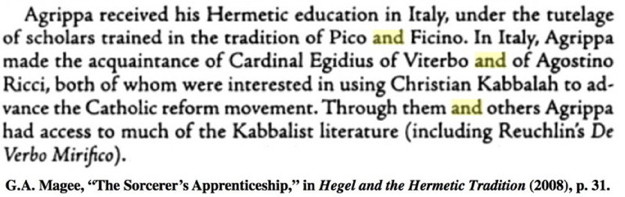

Demonic popery
Demonic popery derived from papist diabolists: Ficino, Pico and Reuchlin; protected by Cardinals Viterbo and Ricci.


The fact is, the ordained deacon, Rev. Mr. Lévi, was an initiate of the Neoplatonic-Hermetic and Kabbalistic conspiracy inside the Church of Rome. He was shielded by powerful members of the hierarchy during the “wonderfully conservative” and “orthodox” pontificate of Pius IX, about whom “traditional Catholics” say, “If only we had a pope like him today. The conspiracy would be crushed.”

Here are the words of the Right-wing arch-conspirator Éliphas Lévi, who flourished in the pontificate of Pius IX and was renowned for his execration of Protestantism. We begin with the red meat he tossed to ultra-montane Catholics and the papacy:

“To substitute human arbitrament for the legitimate despotism of the law, to put, in other words, tyranny in the place of authority, is the work of all Protestantism and of all democracies. What men call liberty is the sanction of illegitimate authority, or, rather, the fiction of power not sanctioned by authority...

“Then, the Protestants, those eternal regulators of anarchy, who have broken down dogma, and are trying always to fill the void with reasonings, like the sieve of the Danaides; these weavers of religious fantasy, all of whose innovations are negative...those men who wish to realize salvation by faith alone, because charity escapes them, and who can no longer realize it, even upon the earth, for their pretended sacraments are no longer anything but allegorical mummeries; they no longer give grace; they no longer make God seen and touched; they are no longer, in a word, the signs of the almighty power of faith, but the witnesses of the eternal impotence of doubt.” Éliphas Lévi,
The Key of the Mysteries (London: Rider, 1959; reprinted 2013: Martino Publishing, pp. 67 and 71).

The preceding is the set-up that attempts to confirm in the eyes of Catholics on the Right that Lévi was one of their own. That he truly believed what he wrote about Protestantism, we do not doubt. As noted, until the 20th century, the overwhelming majority of Rome’s occult diabolists proved to be champions of absolute papal authority and the tenet of Boniface VIII in 1302, in his Bull
Una Sanctam, “We declare, we proclaim, we define, that it is absolutely necessary for salvation that every human creature be subject to the Roman Pontiff.”

Another statement from the same book by Éliphas Lévi which contained his disparagement of Protestants:

“The Catholic, that is to say the universal, dogma merits that magnificent name by harmonizing in one, all the religious aspirations of the world; with Moses and Mohammed it affirms the unity of God; with Zoroaster, Hermes, and Plato, it recognizes in Him the infinite trinity of its own regeneration; it reconciles the living numbers of Pythagoras with the monadic Word of St. John
; so much, science and reason will agree. It is then in the eyes of reason and of science themselves the most perfect, that is to say the most complete, dogma which has ever been produced in the world” (The Key of the Mysteries, p. 66).

This is a curious melting pot for an ultra-montane, Protestant-despising, super-Catholic to adopt: "with Moses
and Mohammed;" and "with Zoroaster, Hermes and Plato."

Zoroaster, Hermes and Plato feature prominently in
The Occult Renaissance Church of Rome. They are the tutelary deities of the papalolatrous conspiracy that substituted a robber Church for the Church of Jesus Christ. This infernal Trinity has been the esoteric lode star of popes, cardinals and bishops for five centuries. (Lévi's role in inspiring Satanic feminism is studied in Revisionist History® newsletter no. 94).

These facts and many other multifaceted dimensions of a conspiracy that has never before been recounted, and in some cases,
never even imagined, await the reader of this book.

Michael Hoffman is a leading scholar of the western secret societies and the history of ideology in early modern Europe and Britain. He is the author of Usury in Christendom: The Mortal Sin that Was and Now is Not, and the editor of the periodical, Revisionist History®.

The Occult Renaissance Church of Rome

Table of contents: More Catholic than the Pope; Neoplatonic Hermeticism; The Serpent in the Garden of the Quattrocento; The Priest and the Platonists; Pope Alexander’s Wizard; Bonfire of the Verities; The Sorcerer Abbott; Reuchlin’s Revolution; Renaissance High Art: An Initiation; The Grand Egyptian Lodge of Vatican City; The Cabal’s Co-conspirators; The Moral Theology of Mental Reservation and Equivocation in the Church of Rome; Ecclesiastical Sodomy and its Root; The Hermetic Prince of the Second Vatican Council; Neoplatonic-Hermetic Kabbalism in the Modern Era; The Breeders of Money Gain Dominion over the Church of Rome; A Prophecy Fulfilled; An Occult Miscellany; The Influence of Neoplatonic Thought on Freemasonry.

A sampling of sections: The Protestant Isis and the Papal Isis; Advancing Satan’s kingdom with a wink and a nod; Vatican Council I—Pastor aeternus; Popes on Papal authority; When white is not white and black is not black according to the Jesuits; Revolutionary overthrow by pastoral means; Plato Hermeticised; The Magi: A Cautionary Tale; The Inquisition in Legend and Reality; Judaizing: Distinctions and Definitions; Origins of the Illuminati. The Pyramid and Obelisk Men; Michelangelo’s Conspiracy; Pornographic secrets of the Sistine Chapel; Ritual Murder at Bernini’s colonnade; Talmudic oath-breaking: a pattern for the Church of Rome; The Patron Saint of Liars and Thieves; Secret Approval for Contraception. The Cremona Conspiracy; Child oblation; Sodomy and the Natural Law; Scripture twisting; Occult reincarnation; Reuchlin’s papist denial of the Judaic curse on Christians; Henri de Lubac’s Renaissance-Kabbalist magus; The Hermetic “Traditional Catholic” movement; Tridentine Judaism; Contra the Money Power in the Arena Chapel; The Ten Lost Sermons of St. Anthony of Padua; The Scrovegni Penance; Brother Brandano’s Prophecy; Kabbalism in a Catholic Bible; Pa-pa Francis and his parrot familiar; and much more.


Softcover, 723 pages.

Illustrated with 42 rare plates, many in color.
(The book is an invaluable illustrative resource). Comprehensive index.

Now on sale for a limited time! Order here
___________________________

Another massive revisionist history textbook from Independent History and Research:

Judaism Discovered
A Desideratum

by Michael Hoffman
www.RevisionistHistory.org

Judaism is not a normal adversary, it is an exceptional recrudescence of the guile synthesized from the accumulated intelligence of the eternal pagan psychodrama on which it is based. One of the most refractory intellectual and practical difficulties that scholars of integrity face in the post-modernist era is deciding how to apply to Judaism the same critical scrutiny to which Christianity and Islam are subjected, without being defamed as a "hater."

The completion of my book
Judaism Discovered: A Study of the Anti-Biblical Religion of Racism, Self-Worship, Superstition and Deceit gives me the satisfaction of knowing that I have accomplished one of the principal missions of my life. It is the actualization of thoughts and lines of inquiry which I have been pursuing for years. For example, Who is a Jew? What is the role of counterfeit "Jews"? If the counterfeit is predominant, then this fact opens a revolutionary vista on history, signifying that contemporary Talmudists and Zionists are descendants of people who were not in Palestine when Jesus was crucified. They are representatives of the ideology that crucified Christ, but in general, not the race. This fact in turn disarms the race-based antipathy of the opponents of Talmudists and Zionists, a racial animus upon which, ironically, the rabbis and the Israelis depend for the continued allegiance of their own am ha'aretz.

Years ago I noticed that disinformation about the Kabbalah had been seeded - the illusion of a fissure between Talmudism and Kabbalism was deliberately sown - using the figure of Moses Maimonides to pretend that these two supporting "pillars" of the Third Temple are inimical. I searched the texts of Maimonides, however, for hidden Kabbalistic sympathies, and found clear evidence of Kabbalistic doctrine.

One goal in writing
Judaism Discovered has been to transcend the current state of Talmud criticism; which is largely centered on the repetition of a what amounts to slogans: 1. the "Talmud defames Jesus and Mary"; 2. the "Talmud is pornographic." There's nothing erroneous in stating that the Talmud contains these disgusting scurrilities, which indeed it does. The problem is, that's where what passes for anti-Talmudic "scholarship" begins and ends these days; there may be some brief reference to pilpul and PaRDeS, but the current state of Talmud and Kabbalah criticism is mostly superficial and leaves most of the big questions unanswered.

For example, very few critics seem to understand that Judaism is neither Left wing nor Right wing; it manifests as Leftist or Rightist at will. One moment it is the instrumental ally of the Throne; in the next, it is the revolutionary power that overthrows it.

I sought routes into Judaism from dozens of investigative approaches, beginning with, pro forma, the irrefutable fact of the existence of the Jesus and Mary Talmudic blasphemies, and the truth that the Old Testament is not the foundation of Judaism. I expand on these themes, based on my original excavation in my book from 2000,
Judaism's Strange Gods. It is necessary to prove, from the rabbinic texts themselves, that Judaism is not an Old Testament faith; and to unravel for all time the confusing series of feints that attempt to mislead the truth-seeker into believing that Jesus is not in the Talmud, or that if He is, just barely.

But the Revelation of the Method being what it is in this dispensation, even positive confirmation that the Talmud blasphemes Our Savior and His Mother and possesses allegiance to an extra-Biblical gnosis, has elicited controverting apologia from prominent rabbis, all of whom seek to "contextualize" these revelations by placing them in a framework of a Roman Holocaust/Nazi Holocaust typology that renders Judaism's defamation of Christianity as "understandable" from the point of view of post-modernism's acceptance of the rabbinic exceptionalism clause: Judaic suffering is magnitudes above the historic experience of other nations. Therefore, fierce rabbinic hatred for Romans/gentiles/Christians/Europeans has at times been understandable, if "harsh."

To overcome this exceptionalism, this writer sought to plumb the depths of the rabbinic texts and not content myself merely with detection of the degenerate libels of Jesus Christ and the Blessed Virgin Mary in, for example, the
Gemara.

Though we are not dealing with the "Jewish" race of antiquity, we are dealing with a rabbinic spirit which functions as a kind of ideological organism; an organism which exhibits as one of its most striking features, the ability to reinvent itself in response to the light of exposure. When an informed researcher documents that Judaism is "A," it becomes "B." When "B" is understood by the public as an antithesis of Judaism's thesis "A," Judaism transmogrifies into synthesis "C," and so forth, in an endless and bewildering historical metamorphosis that has deceived and gulled generations. I have sought to shatter this recurring shadow play.

The student of rabbinic religion who dogmatically categorizes Orthodox Judaism as inevitably Left wing or Right wing, Zionist or anti-Zionist, anti-Muslim or pro-Muslim, will defeat himself and confuse all who adhere to this erroneous proposition; a proposition which Judaism itself is pleased to project; just as it sees the silver lining in being regarded as the scion of those who crucified Christ, since those malefactors were genetic Israelites, however gravely disordered in their behavior.

The paradox here is that whoever is genetically descended from the murderers of Jesus must be acknowledged as a racial Jew and an Israelite, and this identification has, throughout history, triggered the strange awe and wonder for these supposed "Jews" which their alleged consanguinity with Abraham, Isaac, Jacob and Jesus Himself, engenders among the gentiles, in a kind of love-hate relationship which has been played throughout history. Even the "Christ-killer" invective has utility for the rabbis, by perpetuating the hunted/hounded, persecuted martyr image, which Judaism has capitalized upon to great effect, particularly since 1945.

What would be the point of publishing yet another dreary "Jew-bashing" book that indelibly stigmatizes 21st century Talmudists with the two brands they themselves have been past masters at manipulating and cultivating: the myth of their descent from Abraham, and the stereotype of them as people it is our duty to hate and hound? I would not have spent a good deal of my life investigating Judaism if I were going to regurgitate self-defeating images which the rabbis themselves covertly sow and perpetuate to their advantage. Let me impart to you a signal discovery: whoever hates Judaics perpetuates the rule of the rabbis.

It has been my objective to craft
Judaism Discovered so that there is no possibility of a rational refutation of it. While it's true that the book's evidence and arguments can be twisted, misrepresented and demonized with smears and falsification, the information in Judaism Discovered cannot be easily disarmed, because much of it pertains to epistemology, e.g. Judaism's knowledge of itself and the ways in which it responds to discovery.

If in
Judaism Discovered I have successfully anticipated the rabbinic epistemology, then what I teach concerning rabbinic dissimulation is valuable not just as a history of Judaism's past, but as a guide to rabbinic machinations and strategizing in the future. My mission does not consist in merely conveying a set of facts to the reader, but rather to teach how to deconstruct the deceitful tactical and strategic feints which Judaism wields as a response to the dissemination of accurate knowledge about its inner doctrines.

Judaism Discovered arms the reader to penetrate and expose the disingenuous elements of virtually every rabbinic act of camouflage and misdirection. If this knowledge of how to decode Judaism were to become widespread, it could have far-ranging consequences. It could result in a radical revision of western culture, so steeped are "our" intelligenstia in the pieties and platitudes of the rabbinic gestalt, which forms a foundational narrative through which virtually all contemporary western thinking about religion and history are filtered.

Judaism Discovered also has the potential to spark a revival of ancient western verities long abandoned by supposed paragons of 20th and 21st century "conservatism" - these "paragons" having concocted a bastard, "Judeo-Christian family values" movement, which is so deranged it places Orthodox rabbis at the front of the barricades. The "conservative" mania for proclaiming a movement for restoration of Christian culture inclusive of Talmudic rabbis, is a betrayal of the wisdom and vision of every Biblical prophet and every Christian saint. It is on the basis of this desperate craving for looking good in the eyes of the world and its media empire, that the clergy of Christendom ally and even pray with rabbis who worship not God but themselves.

Judaism Discovered offers an empiric and strictly factual discovery of Judaism's deepest operational and spiritual secrets, and in particular Judaism's extremely circumspect epistemology of concealment; its chameleon-like propensity for projecting an adapted outward image synchronized with the prevailing zeitgeist, even while the hostile fires of its inner volcanic core of hate, burn with an intensity undimmed since 33 A.D.

Conversely, it has also been this writer's mission to endeavor to remove the ground from under classical "anti-semitism" and "Jew hate," and to show how these brittle, senile, clichéd and programmed responses actually fulfill the rabbinic prediction of gentile bigotry, a prophecy which they impart to Judaic youth and by which they maintain these unfortunate persons in bondage to Judaism throughout their adult lives.

Copyright ©2016-2019 Revisionisthistory.org

Preview the contents of Judaism Discovered here

Paperback edition of Judaism Discovered is for sale here
_______________________________________________________________________________________________________

News Bureau
Privacy Notice

No information is gathered about you by this website. Your privacy is guaranteed. We take this promise to you seriously. Thank you.

Legal Notice
Revisionist History® is a registered trademark of Independent History and Research
Box 849 • Coeur d'Alene • Idaho 83816
REVISIONIST HISTORY®

banner_philosophe  

Friday, February 26, 2016

Judaica: Books and resources

UPDATED FEBRUARY, 2021

Democracy functions only when we have the free flow of information

Independent History and Research is the largest publisher of truthful information about Judaism in the English-speaking world. Our information is compassionate and ethical. Our Truth Mission is dedicated to the liberation of all people, with love for all.

Click on the above to enlarge
______________


Judaism Discovered
A Study of the Anti-Biblical Religion of Racism, Self-Worship, Superstition and Deceit


“Mr. Hoffman - I would like to express my gratitude for your work. I am slowly making my way through Judaism Discovered and several other books and newsletters of yours, and I am not only learning amazing things never imagined, but slowly developing a new way of thought perception. May God richly bless you and your work.”J.M., Princeton, Illinois

Judaism Discovered is a mine of information about Talmudic Judaism. I am astonished by the quality and the abundance of your documentation. Your many quotations from the Talmud and rabbis constitute indisputable argumentation concerning the anti-Christian enterprise of Judaism, and also the compromises of the governments and the Catholic Church with Judaism...I wish success for your book…” —Bishop Bernard Tissier de Mallerais, Econe, Switzerland 

Deconstructing the rabbinic texts line by line, Michael Hoffman has discovered a terra incognita: Orthodox Judaism as the ideological survival of the most ossified traditions of Babylonian paganism, concealed beneath a complex system of dissimulation and misdirection. His unsparing thesis is a radical challenge to Judaism's claims to Biblical provenance and probity. Partial list of subjects: Principal Sources of the Divine Law of Judaism; Deceit Mechanisms and Defense Mechanisms; No "Judeo-Christian" Tradition; Judaism's Hermeneutic of Concealment; Power Over the Court System; the Tarnish on Hillel's Golden Rule; Permissible Lying and Deceit; From Kabbalah to Aggadah: A Sexual Progression; Hasidic Paganism; Kabbalistic Renaissiance; Gentiles are not to be trusted; Talmud and Women; Jesus in the Talmud; Child Molestation; Halachos of Manslaughter; Maimonides: Rabbinic Worker of Iniquity; Maimonides and Islam; the Noachide Hoax; Anti-Black Racism; 'Sin Chicken'; Cursing the homes and graves of gentiles and Christians; Images and Talismans; Circumcision; Abortion; Ritual Murder; the Talmud and Kabbalah in Protestantism and Catholicism; Judaism's Homo-Erotic Culture; the "Menstrual Science" of the Rabbis; Judaism and Kabbalah: An Inseparable Unity; Purim; the Golem; Converts and Conversions; the Kosher Food Racket; the Kol Nidrei Nullification of Vows; Critics, Criticism and Apologetics; and much more!
1100 pages. Quality softcover.


Judaism Discovered USA customers:


Judaism Discovered Canadian customers:
Judaism Discovered Foreign customers:
Note to foreign customers: The U.S. Post Office charges an average of $75 to ship Judaism Discovered overseas.
_____________________________________________________


JUDAISM’S STRANGE GODS:

Revised and Expanded


“If you don’t read any other book besides the Bible this year, be sure to read Judaism’s Strange Gods.”  


— Dr. Chuck Baldwin, nationally recognized patriot-pastor, educator, and former presidential candidate


Hello Michael: My wife and I have finished reading Judaism's Strange Gods: Revised and Expanded. Read every word. Studied every word. Marked it all up with highlighting and comments all over the place. I want to be able to go back and find stuff. And there’s an awful lot of stuff. And before I go any further, I want to tell you that you are a hero. You have provided a blessing to the Church, and to the world beyond computing. I cannot imagine the painstaking hours you invested in research in order to compile all this information as you have done. Simply incredible. 

Paul T., Blue Springs, Missouri 

Judaism's Strange Gods is the best book under 400 pages for educating people about the hidden side of this much glorified, but soul-destroying creed of warfare and deception. This volume contains all of Christian scholar Michael Hoffman's main facts and most effective research, in an easy-to-read, quality paperback. Judaism's Strange Gods is a condensed version of Hoffman's massive reference work, Judaism Discovered (see above). 


Talmudism is overwhelming  the Right wing, masquerading as a family values partner with patriots against the forces of evil. On the Left, it poses as a progressive partner with peace activists. Hoffman deconstructs that facade in clear and understandable writing, and does so charitably and without vitriol. Christian bookstores are packed with tomes purporting to unmask the religion of Islam, but not one slim volume will be found delving into the depravities of rabbinic Talmudism. Judaism's Strange Gods corrects that imbalance with irrefutable documentation from the sacred texts of the rabbis themselves. 

Softcover. Illustrated. Glossary. Index. 381 pages.


Sample Contents: Principle Sources of the Divine Law of the Religion of Orthodox Judaism; The Rabbinic Eras; Rabbinic Law vs. Biblical Law; Judaism's Attack On The Prophets And Patriarchs; The Talmud: Only a Record of Debates?; "The Babylonian Talmud Represents God in the Flesh"; Judaism's Hermeneutic of Concealment in Theory and Practice; The Tarnish on Hillel's Golden Rule; A Gigantic Heap of Self-Perpetuating Legal and Textual Arcana; Falsifying Scripture with Gezera Shava; "A Hedge Around the Law"; Loopholes And Escape Clauses; "The Pious of the Nations" Loophole; Four Exegetical Categories: PaRDeS;  Outright Lies and Deception; Permissible Categories of Lying; The Deceiver's Gloss on Exodus 23:7; Why Women Have Not Been Allowed to Study the Talmud; Bribery; Defrauding Workers; The Authority of the Talmud; The Inferiority of Gentiles; Gentile is not a Brother or a Neighbor; Jews May Kill Non-Jews; Torat Hamelech: Warrant For The Murder Of Gentiles; The Status of the Gentile in Jewish Law; Non-Jews are "Supernal Refuse"; The Halachos of Manslaughter: "Lifting and Lowering";  Judaism Teaches: Abraham & Isaac were Tainted with Lust; Rabbinic Texts are a Virulent Source of Anti-Black Racism; Every Gentile's Mother, Daughter and Sister: NShGZ; New World Order: U.S. Government Lays The Groundwork For Talmudic Courts; Christians in the Talmud; Escape Clauses and Loopholes Concerning the Rabbinic Ban on Churches; Talmud Citations Concerning Christianity; Balaam: The Talmud's Code Name for Jesus; Christianity Alleged to be a Form of Prostitution; Mary the Mother of Jesus as "Sedata" (a promiscuous woman); Establishing a Legal Principle for Courtroom Entrapment of Christ and Christians; Pandera and Balaam: Jesus as a Bastard in the Talmud; Origen Contra the Antichrist Rabbinic Calumnies of Celsus; Anti-Goyimitic and Anti-Christian Hatred; Divine Mandate to Kill Jesus Christ and Christians; Judaism's Reincarnation Dogma;  Star of Bohemia, Not David; Kaparot: The Sin Chicken; The X-Rated Talmud; Judaism and Menstruation; Judaism and Abortion; Converts and Conversions to Judaism; Yom Kippur and the Kol Nidrei Nullification of Vows; Judaism's Holy Days; Birkat HaMinim: The Curse on Christians; Child Molestation and Homosexuality; Glossary of terms; Index. 


For shipping purposes, please choose the correct selection from the drop-down menu (U.S., Canadian or Overseas customer):


Judaism’s Strange Gods: Revised and Expanded (latest, 2011 edition)

USA

Canada


Overseas


MYSTERIES

Mysteres - Emission 01

62,890 views
13 Sept 2016
47131Share
4.35K subscribers
 https://www.youtube.com/watch?v=CF6Pl627qLQ&t=2450s


1.La maison qui saigne 
2.Le saint sarcophage d'Arles-sur-Tech 
3.Sauvé par le pendule 
4.Le fantôme de la belle Lucie : le fantôme du Château de Veauce


Saturday, 12 February 2011

ALLAH'S SUN SHINES OVER THE OCCIDENT (THE WEST) ​Allahs Sonne über dem Abendland 1960 by SIGRID HUNKE

  JOOTUBE IS AGAIN FILTERING MY COMMENTS! THIS HAS BEEN HAPPENING ALL THE TIME, LATELY! 11/7/2021

 https://www.youtube.com/watch?v=fwPiSlljry0


All I read in their own "history" ("White Western Supremacist") is that their leaders were all thieves, plunderers, liars, racists, and mass murderers! 

1. They stole all non Western science (knowledge) like Egyptian, Babylonian, Persian, As-Syrian, and Arabian and made everything coming from "Greece", a term not well defined geographically, historically, and even ethnically! 

2. The Greeks were so intelligent that they HAD TO come to Egypt, Palestine, and Arabia to show how advanced they were in all domains! 

3. At the time of the Muslim Golden Age, they even stole all known science and philosophy of the time, and made them into Greek Science and philosophy, and destroyed most of the originals! 

4. Check the works "of Copernicus" and of other much acclaimed scientists! 

5. Rome took even a heavily corrupted Arabian Palestinian religion, destroyed most of the old manuscripts, and made it into racist Western Roman Catholicism! 

6. Read the book by Sigrid Hunke "​Allahs Sonne über dem Abendland" (1960; "Allah's sun over the Occident"), one of the most ignored and even boycotted book ever written! 

7. See how Alexander (the Accursed) tried to stop their racism! 

BAFS

"As pointed out here by the author, when Europe was struggling with ignorance and fanaticism in the Middle Ages, scientists like Khawrazmi, Abu Rayhan al-Biruni, Razi, Avicinna, Khayyam, Ibn al Haytham and Ibn al Nafis, and hundreds of other scientists emerged in the Muslim world and served it."

ALLAH'S SUN SHINES OVER THE OCCIDENT (THE WEST)  by SIGRID HUNKE

 “Allah’s sun over the Occident”

 Le soleil d'Allah brille sur l'Occident - Sigrid Hunke

Dialogues for Change

  Le soleil d’ALLAH brille sur l’occident | Sigrid Hunke (fiche de lecture)


Arabesques andalouses “Le soleil d’Allah brille sur l’Occident”  pages 382-383 – Sigrid Hunke


"Et voici la teneur du dernier poème qu'un Arabe d'Andalousie ait osé composer;
ce poème tomba entre les mains des autorités en même temps que la lettre destinée à appeler à l'aide les frères d'Afrique du Nord :

Je me dois de crier à l'univers comment
Notre célèbre Andalousie
Sous le joug d'infidèles, pêcheurs et mécréants
Est odieusement asservie.
Nous vivons comme autant d'agneaux épouvantés
Cernés par la horde des loups
Qui veulent notre mort et nous criblent de coups
Sans cesse avec férocité.
Ils veulent par violence obtenir que nos frères
Se soumettent à leur loi,
Que devant leurs idoles, à genoux, nos prières
Nous convertissent à leur foi.
Nous vivons dans la peur qui torture notre âme
Et les tourments perpétuels.
Pour nous faire adorer leurs images infâmes
Leurs clochers lancent leurs appels.
Ils veulent notre mort, et chaque espion nous guette
Comme guetterait un vautour.
Emploie pour louer Dieu la langue du Prophète :
Tu disparaîtras sans retour.
Pour traquer tout suspect, ils emploient tant de sbires
Que fût-il à cent lieues un beau jour il est pris !
Dans un cachot sinistre on le jette, ô martyre !
Où sans cesse on lui crie :"Réflechis, réfléchis!"
Ce mot vrille encor le tympan du malheureux
Etendu sur le sol, des larmes plein les yeux.
Dans son cachot obscur gisant jour après jour,
Son infinie patience est bien son seul recours.
Il lui paraît qu'un gouffre hideux va l'engloutir
Quelque océan sans fin qu'il ne saurait franchir.
Voici qu'on le traîne à la chambre de torture,
Lié au chevalet, le supplicié endure
Le broiement affreux de ses os.
Les chrétiens méprisants se rassemblent bientôt
Place Attaoubin où ils ont dressés très haut
Le plus effroyable échafaud.
Nommant ce jour celui du jugement dernier,
De jaune ils vêtent ceux qu'ils n'ont pas condamnés.
Précédés de statues, les autres prisonniers
Vers le feu du bûcher en troupeau sont menés,
Ce bûcher où les guette une mort effroyable.
Dans un cercle enflammé le danger nous enserre,
Il n'est pas de tourment, hélas ! sur cette terre,
Qui jour et nuit ne nous accable !

Par la furie de l'autodafé et par des bannissements massifs, on dépeupla rapidement le pays le plus prospère du continent; en peu de temps il redevint un désert. La victoire sur le monde arabe était consommée."


Le soleil d’Allah brille sur l’Occident
Auteur : Sigrid Hunke 

Sigrid Hunke (1913-1999) était une historienne des religions et écrivain allemande, spécialisée dans l’étude des religions, théoricienne de l’universalisme unitarien (mouvement de retour aux religions païennes). Elle a travaillé sur le mysticisme nazi avant d’atteindre la reconnaissance pour ses ouvrages sur la civilisation islamique et sur le néopaganisme dont elle était partisane. 

Elle publia « Le soleil d’Allah brille sur l’Occident » en 1960. Son parcours et ses idées expliquent en grande partie la forme de son ouvrage mais, cela étant, n’enlèvent rien à la réalité exprimée dans son ouvrage et à l’apport énorme de la civilisation islamique à l’Occident. Dans un premier temps je rendrai compte de la pensée de Sigrid Hunke puis dans une deuxième partie je commenterai ces passages. 

Ce premier texte traite uniquement de l’introduction de son ouvrage, les autres chapitres étant fichés de la même manière dans d’autres textes à venir in sha Allah. 

Introduction :
L’auteur débute son ouvrage par une introduction de 3 pages, expliquant ainsi le but de son ouvrage, les objectifs poursuivis.

Sigrid Hunke entame son oeuvre en donnant une nouvelle perspective, une nouvelle historiographie qui tente de sortir de l’ethnocentrisme, de la vision européo-centrée de l’Histoire. Cet ethnocentrisme se décline sur plusieurs points développés par l’auteur :

- la certitude que l’Occident et son histoire sont les seuls à influer sur la marche du monde et de l’histoire, à l’influencer ; également elle dénonce l’ethnocentrisme des intellectuels occidentaux et de leurs travaux :
« l’univers actuel ne se compose plus de la seule Europe. Et l’histoire de l’Europe ne constitue plus aujourd’hui à elle-seule l’histoire de l’univers » (1) ;

« toutefois, [...] nous continuons à évoquer le passé sous la forme d’une  »mappemonde » médiévale uniquement constituée par une Europe que cerne l’Océan, une Europe dont les foyers spirituels, l’Hellade et Rome, occupent en quelque sorte la place du Paradis »(2) ;

« en dépit de quoi et sur cents traités historiques que vous feuilletterez, vous n’en trouverez guère plus de deux qui mentionnent son nom (nb : la civilisation arabe). »

- l’absence quasi totale du terme  »arabe » dans tous les manuels scolaires occidentaux :

« Aujourd’hui encore pour tout écolier occidental, l’étude de l’histoire du monde – celle de la littérature, de l’art et des sciences – débute par un examen superficiel de ce que furent l’Égypte ancienne et Babylone pour s’arrêter longuement sur la Grèce et Rome puis, après un rapide coup d’œil jeté vers Byzance, passer aussitôt au Moyen Age chrétien et de là enfin aux temps modernes. »(3)

L’auteur critique cet état de fait, de surcroit lorsque la civilisation arabe a été la civilisation de la redécouverte du savoir grec, la civilisation qui a permis la Renaissance en Europe, entre autres. La civilisation arabe qui fut le dépositaire et le porte-flambeau du savoir, du raffinement et de la culture. Loin d’être, comme le font croire les intellectuels occidentaux pour réduire le rôle de la civilisation arabe, de simple vecteur de la pensée grecque, ils ont appris, compris, assimilé, corrigé et dépassé les Grecs et leur savoir :

« qu’en ce temps là, aux portes même de l’Europe, les Arabes aient porté pendant les trois quarts d’un millénaire le flambeau de la civilisation, qu’ils aient donc connu une période de splendeur deux fois plus longue que celle des Grecs, qu’ils aient en vérité influencé l’Occident plus directement et plus diversement que ces derniers, qui s’en soucie ? »

« ce sont eux qui ont transmis le savoir des anciens. Cette simple phrase qui prétend rendre hommage au service que les Arabes ont rendu à l’Occident ne réussit en fait qu’à les amoindrir en réduisant leur rôle à celui de simples intermédiaires tout en passant sous silence l’essentiel de leur oeuvre. »
Sigrid Hunke explique cette ingratitude occidentale par l’opposition multi-séculaire entre le monde arabe et le monde occidental, hérité du Moyen-Age, et qui est encore très présente chez les intellectuels occidentaux. L’auteur appelle à un changement des mentalités en conformité avec l’évolution des relations entre monde arabe et monde occidental (commentaire : effectivement il devient urgent à l’occident de changer leur point de vue car la civilisation est passée d’ennemi à … ).

« La nature des rapports entre l’Occident et le monde arabe depuis la proclamation de l’Islam jusqu’à nos jours montre de façon exemplaire à quel point les sentiments et les passions peuvent dicter la façon d’écrire l’histoire. Mais ce point de vue, valable au Moyen-Age ne devrait plus avoir cours aujourd’hui. Or il est certain qu’une sorte de malaise d’origine religieuse, inconscient mais profondément enraciné en nous, limite notre horizon et nous indispose à l’égard d’individus auxquels la propagande a conféré l’aspect d’incendiaires, d’idolâtres et de sorciers. »

« Du destin du monde arabe, qui une fois déjà a changé la face du monde, peut-être le nôtre va-t-il très bientôt dépendre étroitement. Ne serait-il pas temps dès lors de nous interroger, au-delà de ce qui nous sépare, sur ce qui nous lie, sur ce que nous avons de commun ? »

Sigrid Hunke explique son choix délibéré d’appeler la civilisation arabe « arabe » et non islamique ; elle affirme que l’on doit qualifier d’arabe cette civilisation et non d’islamique car tous ne sont pas musulmans dans l’empire (présence de minorités chrétiennes, juives, zoroastriennes, bouddhiste si l’on compte le sous-continent indien). En revanche, les arabes sont mis en valeur et elle fait mention de leurs qualités présentes avant l’arrivée de l’Islam ; également l’assimilation des populations qui ont au fil du temps adopté l’arabe comme langue, prouve, selon l’auteur, que c’est la dominance arabe qu’il faut prendre en compte et non la religion :
« cet ouvrage parlera des  »Arabes » et de la civilisation  »arabe » et non de la civilisation islamique, car il est notoire que non seulement des chrétiens, des juifs, des parsis, et des Sabéens ont contribué à cette civilisation mais qu’encore bon nombre des plus éclatantes réalisations de celle-ci se sont précisément effectuées contre l’Islam orthodoxe. En effet, bon nombre des éléments qui constituent le génie spécifique de cet univers spirituel existaient déjà dans le caractère de l’Arabe préislamique. »

Sans nier l’apport des autres civilisations dans la création, le développement et l’épanouissement de la culture occidentale, Sigrid Hunke souhaite par le biais de cet ouvrage rendre hommage et « s’acquitter envers le monde arabe d’une très ancienne dette de reconnaissance ».

Commentaire concernant Sigrid Hunke :
Les idées et croyances de Sigrid influencent grandement son écriture – ce qui en soi est tout à fait normal mais malheureusement ne reflète en aucun cas la réalité historique. En effet, la civilisation n’est pas arabe mais bien islamique ; l’ensemble des minorités chrétiennes juives, zoroastriennes voire bouddhistes sont totalement intégrées dans l’empire islamique, sous le statut Dhimmis (protégés). Ces minorités sont utilisées par et pour la civilisation islamique : exemple des moines chrétiens qui traduisent les textes grecs pour les savants arabes. L’appartenance de l’auteur au mouvement unitarien et son aversion pour les religions monothéistes (visibles dans ses écrits concernant le christianisme) expliquent son penchant pour le terme arabe au détriment de la religion. Également son adhésion aux thèses nazies expliquent également sa vision racialiste du monde et l’étude par le prisme des théories raciales ; le philoarabisme nazi explique de la même manière les éloges faites aux Arabes de la Jahiliyya. De plus, elle est influencée par le contexte dans lequel elle écrit son ouvrage, les années 60, en plein triomphe du panarabisme au Moyen Orient. L’ensemble de ces remarques nous permettent de mieux comprendre le choix de Sigrid Hunke de traiter de la civilisation arabe et non de la civilisation islamique malgré l’évidence historique !

Commentaires concernant l’introduction de l’ouvrage :
(1) : On peut remarquer que l’auteur, de manière implicite, affirme que l’Europe a été durant un moment donné, la seule histoire qu’il fallait transcrire, les autres n’étant finalement d’aucune influence sur le monde. Ceci est récurant de la part de la majorité des intellectuels occidentaux. C’est absurde d’affirmer qu’un peuple ou une civilisation constitue la seule aire géographique qui influe sur l’histoire mondiale même si l’Occident fut en effet à l’origine de beaucoup de bouleversements depuis la chute de Grenade en 1492 qui annonce le mouvement de « découverte »/conquête occidentales à travers le monde et la genèse de leur domination ;

(2) : Arrêtons-nous sur cette parabole faite par l’auteur ; elle fait référence ici aux cartes produites par les « occidentaux » (le simple terme « occidental » suppose de définir ce que signifie ce terme, ce qui n’est pas une mince affaire… le terme « Latin », « Etat Latin » serait le plus juste pour désigner les États chrétiens d’Europe, en opposition aux byzantins) qui représentaient l’Europe au centre du monde. Les cartes, loin d’être de simples instruments de localisation traduisaient également la vision du monde de leur concepteur, une vision représentant le continent européen, « l’Heliade et Rome », la Grèce antique et la Rome impériale comme étant à la source de la Civilisation en général et de la civilisation occidentale en particulier. Ce sujet est très bien traité dans cet article qui montre que l’élaboration des cartes est significatif de la vision du monde et porteur d’un message fort, preuve en est du modèle « classique » des cartes, le Mercator : http://blogs.mediapart.fr/blog/vero-…a-cartographie ;

(3) La teneur des programmes scolaires met en évidence l’ethnocentrisme de l’enseignement donné en Europe et en Occident en général. Plus grave, cet ethnocentrisme est enseigné comme étant la vérité historique aux jeunes générations d’occidentaux participant à la réduction de leur vision du monde et de leur esprit critique. En cela les programmes scolaires concernant l’histoire que nous donne l’auteur montre jusqu’à quel point l’ethnocentrisme est présent dans la société occidentale, n’épargnant pas les jeunes écoliers. Ceci finalement étant totalement compréhensible au vu de l’importance de l’enseignement dans une société, constat valable aussi pour l’histoire.

Le soleil d’ALLAH brille sur l’occident | Sigrid Hunke (fiche de lecture)


Le soleil d’Allah brille sur l’Occident ;
Auteur : Sigrid Hunke 

Sigrid Hunke (1913-1999) était une historienne des religions et écrivain allemande, spécialisée dans l’étude des religions, théoricienne de l’universalisme unitarien (mouvement de retour aux religions païennes). Elle a travaillé sur le mysticisme nazi avant d’atteindre la reconnaissance pour ses ouvrages sur la civilisation islamique et sur le néopaganisme dont elle était partisane. 

Elle publia « Le soleil d’Allah brille sur l’Occident » en 1960. Son parcours et ses idées expliquent en grande partie la forme de son ouvrage mais, cela étant, n’enlèvent rien à la réalité exprimée dans son ouvrage et à l’apport énorme de la civilisation islamique à l’Occident. Dans un premier temps je rendrai compte de la pensée de Sigrid Hunke puis dans une deuxième partie je commenterai ces passages. 

Ce premier texte traite uniquement de l’introduction de son ouvrage, les autres chapitres étant fichés de la même manière dans d’autres textes à venir in sha Allah. 

Introduction : 

L’auteur débute son ouvrage par une introduction de 3 pages, expliquant ainsi le but de son ouvrage, les objectifs poursuivis.

Sigrid Hunke entame son oeuvre en donnant une nouvelle perspective, une nouvelle historiographie qui tente de sortir de l’ethnocentrisme, de la vision européo-centrée de l’Histoire. Cet ethnocentrisme se décline sur plusieurs points développés par l’auteur :

- la certitude que l’Occident et son histoire sont les seuls à influer sur la marche du monde et de l’histoire, à l’influencer ; également elle dénonce l’ethnocentrisme des intellectuels occidentaux et de leurs travaux :
« l’univers actuel ne se compose plus de la seule Europe. Et l’histoire de l’Europe ne constitue plus aujourd’hui à elle-seule l’histoire de l’univers » (1) ;

« toutefois, [...] nous continuons à évoquer le passé sous la forme d’une  »mappemonde » médiévale uniquement constituée par une Europe que cerne l’Océan, une Europe dont les foyers spirituels, l’Hellade et Rome, occupent en quelque sorte la place du Paradis »(2) ;

« en dépit de quoi et sur cents traités historiques que vous feuilletterez, vous n’en trouverez guère plus de deux qui mentionnent son nom (nb : la civilisation arabe). »

- l’absence quasi totale du terme  »arabe » dans tous les manuels scolaires occidentaux :

« Aujourd’hui encore pour tout écolier occidental, l’étude de l’histoire du monde – celle de la littérature, de l’art et des sciences – débute par un examen superficiel de ce que furent l’Égypte ancienne et Babylone pour s’arrêter longuement sur la Grèce et Rome puis, après un rapide coup d’œil jeté vers Byzance, passer aussitôt au Moyen Age chrétien et de là enfin aux temps modernes. »(3)

L’auteur critique cet état de fait, de surcroit lorsque la civilisation arabe a été la civilisation de la redécouverte du savoir grec, la civilisation qui a permis la Renaissance en Europe, entre autres. La civilisation arabe qui fut le dépositaire et le porte-flambeau du savoir, du raffinement et de la culture. Loin d’être, comme le font croire les intellectuels occidentaux pour réduire le rôle de la civilisation arabe, de simple vecteur de la pensée grecque, ils ont appris, compris, assimilé, corrigé et dépassé les Grecs et leur savoir :

« qu’en ce temps là, aux portes même de l’Europe, les Arabes aient porté pendant les trois quarts d’un millénaire le flambeau de la civilisation, qu’ils aient donc connu une période de splendeur deux fois plus longue que celle des Grecs, qu’ils aient en vérité influencé l’Occident plus directement et plus diversement que ces derniers, qui s’en soucie ? »

« ce sont eux qui ont transmis le savoir des anciens. Cette simple phrase qui prétend rendre hommage au service que les Arabes ont rendu à l’Occident ne réussit en fait qu’à les amoindrir en réduisant leur rôle à celui de simples intermédiaires tout en passant sous silence l’essentiel de leur oeuvre. »

Sigrid Hunke explique cette ingratitude occidentale par l’opposition multi-séculaire entre le monde arabe et le monde occidental, hérité du Moyen-Age, et qui est encore très présente chez les intellectuels occidentaux. L’auteur appelle à un changement des mentalités en conformité avec l’évolution des relations entre monde arabe et monde occidental (commentaire : effectivement il devient urgent à l’occident de changer leur point de vue car la civilisation est passée d’ennemi à … ).

« La nature des rapports entre l’Occident et le monde arabe depuis la proclamation de l’Islam jusqu’à nos jours montre de façon exemplaire à quel point les sentiments et les passions peuvent dicter la façon d’écrire l’histoire. Mais ce point de vue, valable au Moyen-Age ne devrait plus avoir cours aujourd’hui. Or il est certain qu’une sorte de malaise d’origine religieuse, inconscient mais profondément enraciné en nous, limite notre horizon et nous indispose à l’égard d’individus auxquels la propagande a conféré l’aspect d’incendiaires, d’idolâtres et de sorciers. »

« Du destin du monde arabe, qui une fois déjà a changé la face du monde, peut-être le nôtre va-t-il très bientôt dépendre étroitement. Ne serait-il pas temps dès lors de nous interroger, au-delà de ce qui nous sépare, sur ce qui nous lie, sur ce que nous avons de commun ? »

Sigrid Hunke explique son choix délibéré d’appeler la civilisation arabe « arabe » et non islamique ; elle affirme que l’on doit qualifier d’arabe cette civilisation et non d’islamique car tous ne sont pas musulmans dans l’empire (présence de minorités chrétiennes, juives, zoroastriennes, bouddhiste si l’on compte le sous-continent indien). En revanche, les arabes sont mis en valeur et elle fait mention de leurs qualités présentes avant l’arrivée de l’Islam ; également l’assimilation des populations qui ont au fil du temps adopté l’arabe comme langue, prouve, selon l’auteur, que c’est la dominance arabe qu’il faut prendre en compte et non la religion :

« cet ouvrage parlera des  »Arabes » et de la civilisation  »arabe » et non de la civilisation islamique, car il est notoire que non seulement des chrétiens, des juifs, des parsis, et des Sabéens ont contribué à cette civilisation mais qu’encore bon nombre des plus éclatantes réalisations de celle-ci se sont précisément effectuées contre l’Islam orthodoxe. En effet, bon nombre des éléments qui constituent le génie spécifique de cet univers spirituel existaient déjà dans le caractère de l’Arabe préislamique. »

Sans nier l’apport des autres civilisations dans la création, le développement et l’épanouissement de la culture occidentale, Sigrid Hunke souhaite par le biais de cet ouvrage rendre hommage et « s’acquitter envers le monde arabe d’une très ancienne dette de reconnaissance ».

Commentaire concernant Sigrid Hunke :

Les idées et croyances de Sigrid influencent grandement son écriture – ce qui en soi est tout à fait normal mais malheureusement ne reflète en aucun cas la réalité historique. En effet, la civilisation n’est pas arabe mais bien islamique ; l’ensemble des minorités chrétiennes juives, zoroastriennes voire bouddhistes sont totalement intégrées dans l’empire islamique, sous le statut Dhimmis (protégés). Ces minorités sont utilisées par et pour la civilisation islamique : exemple des moines chrétiens qui traduisent les textes grecs pour les savants arabes. L’appartenance de l’auteur au mouvement unitarien et son aversion pour les religions monothéistes (visibles dans ses écrits concernant le christianisme) expliquent son penchant pour le terme arabe au détriment de la religion. Également son adhésion aux thèses nazies expliquent également sa vision racialiste du monde et l’étude par le prisme des théories raciales ; le philoarabisme nazi explique de la même manière les éloges faites aux Arabes de la Jahiliyya. De plus, elle est influencée par le contexte dans lequel elle écrit son ouvrage, les années 60, en plein triomphe du panarabisme au Moyen Orient. L’ensemble de ces remarques nous permettent de mieux comprendre le choix de Sigrid Hunke de traiter de la civilisation arabe et non de la civilisation islamique malgré l’évidence historique !


Commentaires concernant l’introduction de l’ouvrage :

(1) : On peut remarquer que l’auteur, de manière implicite, affirme que l’Europe a été durant un moment donné, la seule histoire qu’il fallait transcrire, les autres n’étant finalement d’aucune influence sur le monde. Ceci est récurant de la part de la majorité des intellectuels occidentaux. C’est absurde d’affirmer qu’un peuple ou une civilisation constitue la seule aire géographique qui influe sur l’histoire mondiale même si l’Occident fut en effet à l’origine de beaucoup de bouleversements depuis la chute de Grenade en 1492 qui annonce le mouvement de « découverte »/conquête occidentales à travers le monde et la genèse de leur domination ;

(2) : Arrêtons-nous sur cette parabole faite par l’auteur ; elle fait référence ici aux cartes produites par les « occidentaux » (le simple terme « occidental » suppose de définir ce que signifie ce terme, ce qui n’est pas une mince affaire… le terme « Latin », « Etat Latin » serait le plus juste pour désigner les États chrétiens d’Europe, en opposition aux byzantins) qui représentaient l’Europe au centre du monde. Les cartes, loin d’être de simples instruments de localisation traduisaient également la vision du monde de leur concepteur, une vision représentant le continent européen, « l’Heliade et Rome », la Grèce antique et la Rome impériale comme étant à la source de la Civilisation en général et de la civilisation occidentale en particulier. Ce sujet est très bien traité dans cet article qui montre que l’élaboration des cartes est significatif de la vision du monde et porteur d’un message fort, preuve en est du modèle « classique » des cartes, le Mercator :

http://blogs.mediapart.fr/blog/vero-…a-cartographie ;

(3) La teneur des programmes scolaires met en évidence l’ethnocentrisme de l’enseignement donné en Europe et en Occident en général. Plus grave, cet ethnocentrisme est enseigné comme étant la vérité historique aux jeunes générations d’occidentaux participant à la réduction de leur vision du monde et de leur esprit critique. En cela les programmes scolaires concernant l’histoire que nous donne l’auteur montre jusqu’à quel point l’ethnocentrisme est présent dans la société occidentale, n’épargnant pas les jeunes écoliers. Ceci finalement étant totalement compréhensible au vu de l’importance de l’enseignement dans une société, constat valable aussi pour l’histoire.

Le Soleil d'Allah Brille sur l'Occident (1ère Partie)

Au Xème siècle, un médecin de Kairouan, en Tunisie, avait acquis une certaine notoriété. Le sultan de Boukhara (aujourd'hui dans la république soviétique d'Ouzbékistan), qui avait un fils de santé fragile, lui écrivit pour lui proposer de venir s'installer à sa cour. Le médecin calcula qu'il lui faudrait 400 chameaux pour emmener avec lui sa bibliothèque, dont il ne pouvait évidemment se séparer, et il refusa. L'ensemble de sa bibliothèque pesait en effet dix tonnes.

Un autre médecin de Kairouan, Ibn al-Jazar, laissa, à sa mort, 250 quintaux de parchemins qu'il avait recouverts de son écriture : toutes ses observations cliniques. C'était l'époque où le calife fatimide du Caire al-Aziz Billah possédait un million six cent mille volumes, dont 6 500 traitaient de mathématiques et 18 000 de philosophie. En lui succédant sur le trône, son fils fit aménager et remplir dix-huit nouvelles salles.

Mais en pays musulman, à cette époque, une telle accumulation du savoir n’est pas au seul usage des princes. Un voyageur qui se rend à Baghdâd en l'an 981 raconte à son retour qu'il a dénombréplus de cent bibliothèques publiques dans la ville. La plus modeste cité d'Orient a la sienne, où n'importe qui peut venir consulter les ouvrages. Celle de Nayah, par exemple, une petite ville d'Irak, comporte 40 000 volumes.
En Occident, à la même époque, les monastères, seuls à détenir les livres, en ont une vingtaine tout au plus. Et parce qu'ils sont si rares, ils sont enchaînés et gardés jour et nuit... En l'an 1386, c'est-à-dire quatre siècles plus tard, la Faculté de médecine de Paris ne possédera encore qu'un seul livre: l'ouvrage encyclopédique du fameux médecin persan Ar-Razi, dont le titre est "Le Réservoir de la médecine (Al-Haoui)". Traduit en latin, ce monument s'appelle "Continens".
Lorsque le roi Louis XI veut l'emprunter pour pouvoir le lire à son aise chez lui, il doit verser à la Faculté une caution de douze livres d'argent et cent écus d'or...

Tels sont les anecdotes et les chiffres étonnants qui mesurent l'écart des connaissances entre l'Europe chrétienne, à cette époque-là, qui va être celle des Croisades, et l'Orient musulman.

Pourquoi ? La réponse est lourde de sens alors que ce même Orient musulman voit aujourd'hui se lever en son sein les forces d'un fanatisme religieux qui n'est pourtant pas dans sa tradition. La réponse est qu'au temps où les sultans et les califes font régner un despotisme éclairé de l'autre côté de la Méditerranée, l'obscurantisme religieux règne en maître sur les esprits de l'Occident, anéantissant toute recherche scientifique possible, pour des siècles.
Galilée, ne l'oublions pas, ira en prison en 1636 pour avoir découvert que la terre tourne autour du soleil et ne sera absout de ce crime par les tribunaux du Vatican que de nos jours...

Au XIIe siècle, un notable musulman, hôte des chevaliers francs de l'Ordre de St-Jean, se rend à Jérusalem alors capitale du royaume chrétien de ce nom. On lui fait visiter l'hôpital tenu par les chevaliers de l'Ordre. Il voit que les blessés graves qu'on y amène, ayant d'être admis à recevoir le moindre soin, doivent se confesser et manger le pain de la communion, quelle que soit l’urgence de leur état. Il s'en s'étonne et demande des explications.
On lui dit que le Synode de Nantes, en l'an 895, a légiféré une fois pour toutes à ce sujet : « Le corps d'aucun malade, celui-ci fût-il délirant de fièvre, ne doit recevoir de soins avant son âme. » Cette règle n'est pas une erreur passagère commise par les évêques bretons du Xème siècle. Elle sera confirmée en 1215 au sommet de la hiérarchie catholique européenne, c'est-à-dire au concile de Latran, qui ordonne, après de longs débats : « Sous peine d'excommunication, il est interdit à tout médecin de soigner unmalade si ce dernier ne s'est pas au préalable confessé. Car la maladie est issue du péché. Si le malade se décharge par la confession du poids de celui-ci, alors, la cessation de la cause entraînera la cessation de l'effet, et la souffrance physique disparaîtra. »
La science médicale est donc rayée d'un trait de plume, au profit de l'intervention divine permanente dans les affaires du corps humain. Et c'est, en conséquence toute la science qui est paralysée, et rendue inutile. Le texte du Concile ajoute pour ne laisser aucune échappatoire : « Quiconque s'avisera de se faire soignerpar un médecin juif ou Sarrazin sera frappé d'excommunication. Car le salut de son âme serait alors directement menacé... »

Cependant, de l'autre côté de la Méditerranée, Ibn Ridouan, directeur du corps médical du Caire, lui, a édicté depuis longtemps la règle suivant laquelle « le médecin doit soigner ses ennemis dans le même esprit, avec le même intérêt et la même sollicitude que ceux qu'il aime ».

Au temps où principautés franques et émirats Sarrazins vivaient côte à côte en Syrie et en Palestine, l'émir de Cheisar prêta un jour au seigneur chrétien, qui régnait sur la casbah voisine de Mounaïtira, son médecin nommé Thabit. Il y avait en effet dans la garnison franque de nombreux malades qu'on ne parvenait pas à guérir. Mais Thabit revint très tôt à Cheisar, effrayé de ce qu'il avait vu.
« On m'avait amené un cavalier qui avait un abcès à la jambe, raconta-t-il à l'émir, et une femme atteinte d'une fièvre hectique. Je pose un emplâtre suppuratif sur la jambe du soldat. L’abcès crève et la guérison semble certaine. Mais arrive le médecin franc, qui s'écrie que je n'y connais rien. "Veux-tu vivre avec une seule jambe, demande-t-il au cavalier, ou mourir avec les deux ?" "Vivre avec une seule", répond l'autre, qui n'avait pas confiance non plus dans ma science, une science d'infidèle, comme ils disent.
Le médecin franc fait venir un homme avec une hache et lui ordonne de trancher la jambe du malade sur un billot de bois. L'homme à la hache, peu versé en chirurgie, doit s'y prendre à deux fois pour trancher la jambe, et le malheureux cavalier meurt presque aussitôt... Quant à la femme, poursuit Thabit, je lui avais prescrit, comme il se doit, un régime alimentaire exclusivement compose de légumes, qui pouvait seul lui permettre de se rétablir. Mon adversaire l’examine, et annonce : "Ce cas est clair. Un démon s'est épris d'elle, et il s'est logé dans sa tête. Coupez-lui les cheveux !"
On rase le crâne de cette femme, elle recommence à manger la nourriture de tout le monde, avec force ail et moutarde. Bien entendu, sa fièvre monte. Le médecin franc revient et déclare : "Le démon s'est transporté au cerveau !" Il enlève avec un rasoir une portion du cuir chevelu qu'il taille en forme de croix. L'os crânien apparaît. Il le frotte de gros sel. La malheureuse femme entre bientôt en agonie. J'ai pensé, conclut Thabit, que je ne pouvais pas être très utile là-bas... »

Au-delà des Pyrénées, en ce temps-là, les Arabes sont maîtres de l'Espagne : la ville de Cordoue compte cinquante hôpitaux battant le record de Baghdâd qui en a plus de quarante, construits sur l’ordre d'Haroun al-Raschid, le sultan des Mille et une nuits. Selon des lettres écrites par des malades à leurs familles, et qu'on a retrouvées, on sait que tous ces hôpitaux fonctionnaient comme les hôpitaux modernes d'aujourd'hui.

Ils étaient divisés en services spécialisés, qui comptaient même un service de psychiatrie, alors qu'en Occident les fous se trouvaient enchaînés dans les prisons. Ce n'est qu'en 1751 qu'on envisagera de les soigner en Angleterre, et en France en 1792, quand le médecin Pinel arrachera à la Convention un décret qui tirera les aliénés des geôles pour leur donner un statut de malades.

A Baghdâd comme à Cordoue, au XIIe siècle, les professeurs de médecine font la ; tournée des lits des malades chaque matin, entourés des élèves. « Les lits sont moelleux, les draps blancs, les couvertures aussi douces que le velours, écrit un jeune homme à ses parents. Chaque chambre a l'eau courante. On chauffe lorsque les nuits sont fraîches... »

La perle de tous les hôpitaux est l'hôpital Nouri du Caire, avec ses pavillons différents pour chaque service, au milieu de jardins ombrages. Al-Mansour Qalaouin, jeune général égyptien, y sera guéri de ses coliques hépatiques. Il fait vœu alors d'édifier un hôpital encore plus beau s'il devient sultan. Arrivé au pouvoir, il fait bâtir à grands frais l’hôpital Mansouri entre les deux citadelles du Caire, qui devient le plus bel établissement du monde.

Tous les patients y sont soignés gratuitement et, après leur convalescence, ils partent avec des vêtements neufs et plusieurs pièces d'or. Les directeurs de ces hôpitaux tiennent des registres où toute dépense est consignée, et ces registres nous sont parvenus. Les médecins n'y exercent qu’après avoir subi des examens sévères. ar-Razi, avant de devenir le médecin-chef du plus grand hôpital de Baghdâd, doit se mesurer avec plus de cent postulants. Il dispose après sa nomination d'un état-major de vingt-quatre spécialistes qui dirigent les différents services. Tous travaillent entourés d'étudiants, qui apprennent ainsi leur art comme de nos jours, tandis que dans les facultés occidentales d'alors on dispense savoir purement livresque et qu’il est formellement interdit de disséquer les cadavres.

Dans les Etats des sultans et des émirs, un médecin n'est autorisé à exercer art sans avoir reçu un diplôme délivré ces hôpitaux. La mesure a été décidée en l'an 931 par le calife Al-Mouktadir de Baghdâd, après qu'un patient soit mort la faute professionnelle d'un médecin.
Cette année-là, Al-Mouktadir institue un « Ordre des Médecins », dont Sinar Ben Thabit reçoit la présidence. Il y a bientôt 860 médecins diplômés à Baghdâd, qui ne peuvent exercer que dans leur spécialité. Et ce n'est qu'après les Croisades, qui donnent aux Francs l'occasion d'apprendre ce qui se passe chez les musulmans, qu'on bâtira en Europe des hôpitaux réservés aux malades, au lieu des hospices qui recueillaient indistinctement voyageurs, enfants abandonnés, infirmes et miséreux au milieu de ceux qui souffraient d'une infection.

L'Hôtel-Dieu de Paris sera un des premiers. Par des témoignages du temps, on sait que les malades y étaient couchés dans la paille, les pieds des uns près de la tête des autres, enfants, vieillards, femmes et hommes mêlés. Une femme accouchait à ôté d'un typhique, un nourrisson se débattait dans des convulsions à côté d'un tuberculeux qui crachait. Les infirmiers circulaient avec une éponge imbibée de vinaigre devant la bouche, à cause de l’odeur pestilentielle. Les cadavres restaient longtemps au milieu des malades avant d'être emportés, tout cela dans un nuage de mouches. Nous avons vu plus t comment étaient tenus les hôpitaux Baghdâd...

Ar-Razi, médecin-chef de l'hôpital du plus grand établissement de cette ville, mourra en laissant l'œuvre énorme que nous avons mentionnée, celle que Louis XI voulut lire, faite de toutes les observations recueillies pendant des dizaines d'années et des traitements qu'il avait conçus. Sa sœur Chadicha ayant gardé ces manuscrits dans des nombreux coffres, un vizir du Sultan les lui rachètera, réunira tous les médecins qu'ar-Razi a formés et les chargera de classer tout cela. Toutes les maladies y sont décrites : la malaria, le cancer, la coxalgie, et cent autres, montrant que la médecine de Baghdâd est aussi bien informée que la médecine moderne. On y trouve un Traité de la rougeole et de la variole, alors qu'en Occident, on voit dans ces affections épidémiques des fléaux divins. Ar-Razi a expérimenté un nombre extraordinaire de médicaments en utilisant pour cela des chiens et des singes. Il professe qu'un médecin doit soigner jusqu'au bout les incurables, en leur laissant ignorer la gravité de leur mal, afin de les aider à lutter. Le grec Hippocrate, lui, vénéré pourtant comme un des fondateurs de la médecine, déclarait que « celle-ci exige qu'on ne s'approche pas de ceux que la maladie a déjà vaincus, car elle est impuissante... »

On reconnaît à cette phrase malheureuse l'esprit philosophique des Grecs, qui va être la cause des erreurs dans laquelle la médecine occidentale va s'enfoncer, avant d'être victime de la religion. En effet, Hippocrate s'est empressé à adopter la théorie d'Empédocle sur les quatre éléments, puisqu'il faut bien adopter une théorie. Il décide en conséquence que « le corps humain est composé de quatre humeurs, le sang, la pituite, la bile et l'atrabile, et que Ta maladie résulte d'une altération des proportions harmonieuses du mélange de ces quatre éléments ».

A suivre ...
D'après le Livre : Le Soleil d'Allah Brille sur l'Occident
Sigrid Hunke
(Edition Albin Michel)

Le Soleil d’Allah brille sur l’Occident

Le Soleil d’Allah brille sur l’Occident…..je ne sais pas ce que vous inspire ce titre, mais je vous avoue que moi la première fois que je l’ai entendu (c’était en 2009 je crois), j’assistais à un cours de Sira (donné par M. Autourdelislam icon wink Le Soleil d’Allah brille sur l’Occident ) et il a été brièvement fait mention de cet ouvrage.

Rien qu’à l’énoncé des mots qui composent son titre……Le Soleil+ d’Allah + Brille + sur l’Occident… j’ai été immédiatement interpellée, séduite carrément. C’est clinquant comme titre, non ? Surtout à l’heure où, à cette époque comme aujourd’hui d’ailleurs, il n’était pas bon d’être musulman. Nous assistions à des polémiques sur le voile, sur l’islam radical en France, et nous étions en plein débat sur l’identité nationale… Bref, une fois rentrée chez moi, j’ai fait une petite recherche sur un site de librairie en ligne, histoire de lire le résumé du livre. Et ça a conforté ma première impression, ça m’a parlé, comme on dit ! J’ai donc passé, aussitôt, commande.


L’ouvrage est découpé en sept parties (livres), ce qui en facilite grandement la lecture. Lecture faite, le contenu représente une riche introduction à l’étude de la civilisation arabo-musulmane, un vrai délice pour la culture générale. L’auteur nous dresse un magnifique exposé de la contribution et du rôle déterminant de cette civilisation arabo-musulmane à la civilisation occidentale, notamment à l’époque de l’Andalousie. C’était vraiment une véritable découverte de la richesse de cette culture arabo-musulmane, et de son influence sur l’Occident dans tous les domaines, aussi variés que les mathématiques, l’astronomie, la littérature, la poésie…. et bien d’autres domaines que nous étayerons plus tard !

Cet ouvrage, qui plus est, écrit par une occidentale, et de manière objective je trouve, apporte vraiment un regard nouveau sur l’histoire occidentale, européenne, sur notre histoire, sur leurs liens intrinsèques et leurs évolutions. Surtout à l’heure où nos moindres faits et gestes sont diabolisés, stigmatisés, il est bon de connaitre l’Histoire! Et ce livre est un véritable outil d’évaluation des apports de la civilisation arabo-musulmane aux occidentaux! Franchement, c’est un ouvrage que je recommande à tous. Il est très instructif, se lit très bien, et le style employé par l’auteur ne fait que rendre cette lecture encore plus agréable; C’est un ouvrage très vivant.

L’auteur :
Sigrid Hunke est née à Kiel en 1913 et décédée à Hambourg en 1999. D’origine allemande, cet écrivain a grandi dans une famille d’éditeurs et a étudié de nombreuses matières telles la théologie, la philosophie, la psychologie, l’histoire et la philologie. Personnalité engagée religieusement, elle était surtout connue pour ses ouvrages sur les religions, et publia, en 1960, l’ouvrage qui nous intéresse ici, Le Soleil d’Allah brille sur l’Occident, ouvrage qui fut traduit en sept langues.

Le livre : Le Soleil d’Allah brille sur l’Occident


L’auteur a su scrupuleusement rassembler de nombreux éléments qui attestent de l’influence qu’a exercée la civilisation arabo-musulmane sur l’Occident notamment au Moyen-âge, lors de ce qu’on appelle l’âge d’or de la Sicile et de l’Espagne, qui étaient musulmanes à cette époque.
Cet ouvrage est structuré en sept chapitres : sept livres, eux-mêmes subdivisés en sous chapitres.

Livre Premier : L’assaisonnement du quotidien
Ici, il est question des emprunts des européens à la civilisation arabo-musulmane, dans notre vie quotidienne. On y découvre par exemple, les apports linguistiques de l’arabe au français. Par le biais d’une mise en scène, l’auteur a très bien su mettre en valeur, en quelques phrases, un nombre important de termes de racine arabe, mais aussi d’objets d’origine arabe dont le vocable pour les désigner a changé. Je n’avais pas idée de l’importance  des mots d’origine arabe, que nous, comme les européens d’ailleurs, employons au quotidien.

Pour vous faire une petite idée, je vais vous citer un  petit extrait :
« Mais vous accepterez certainement une tarte aux abricots et aux bananes ! Mais bien sûr, cher ami, vous êtes aujourd’hui mon invité ! Puis-je vous offrir, pour commencer, un sorbet à l’orange ? Je crois que des artichauts feraient une entrée forte agréable. Et que penseriez-vous d’un chapon accompagné de riz et de barquettes aux épinards ? Pour le dessert je ne saurais trop vous recommander ce gâteau à la sauce d’arak. Et pour clore le repas, un moka… Mais, je vous en prie, installez-vous sur le divan….. Savez-vous que nous désignons encore sous son nom arabe de laque, le vernis dont nous couvrons nos ongles, que l’aniline, la gaze, le talc et la ouate sont autant de noms arabes?».

Dans ce chapitre, en abordant la question des emprunts linguistiques, l’auteur fait également un joli clin d’œil à l’Histoire. Elle nous fait par exemple un rappel sur les échanges commerciaux, les grandes routes commerciales. On peut également y découvrir que le mot «Al- barqûq, abricot »  a traversé de nombreuses civilisations ; Il a gardé en espagnol son article arabe, et a été emprunté par les arabes au latin, qui l’a lui-même pris au grec qui l’a laissé en Syrie.

Livre II : La numération écrite universelle
Dans ce chapitre, l’auteur nous parle particulièrement des mathématiques, de l’histoire des chiffres. On y découvre que les arabes ont emprunté aux indiens leur système de numération et d’écriture de position des nombres. Les arabes désignèrent ainsi le chiffre 0 « ssifr » qui remplacera le point qui était utilisé pour écrire des nombres à plusieurs chiffres. Puis  ce 0 « ssifr »  traversa les frontières et devint ensuite  le « zéro » en Français. L’auteur nous apprend également que dans l’histoire des mathématiques, bon nombre d’inventions sont d’origines arabes ; Le savant Al-Khovaresmi par exemple est à l’origine du terme « algorithme ». On en découvre bien d’autres dans ce chapitre.

Livre III : Le ciel au dessus de nos têtes
C’est à travers le personnage de Moussa, astronome, géomètre et ami du calife de Bagdad Al-Mamoun, et plus particulièrement ses trois fils : l’un mécanicien, l’autre astronome et le troisième mathématicien, que l’auteur nous plonge dans le domaine de l’astronomie et du rôle déterminant des arabes. Dans ce chapitre, l’auteur nous rappelle également la grande signification religieuse de l’astronomie, notamment en terme de preuve de l’Unicité d’Allah, de Sa Grandeur, Sa Puissance, Sa sagesse, Sa perfection. Soulignant également le fait qu’Allah a Lui-même incité l’homme à observer le ciel.

A des fins plus pratiques, les savants musulmans se sont inspirés de l’astronomie persane, l’ont étudiée et l’ont améliorée,  pour  permettre par exemple, de calculer le début et la fin du ramadan d’après la révolution de la lune, déterminer les temps de prière ; C’est d’ailleurs aux arabes que l’on doit l’invention de nouvelles techniques tel que l’astrolabe puis les cadrans solaires… . En plus de ces diverses inventions, on apprend que des savants arabes, avant même la théorie de Copernic, avait déjà affirmé l’hypothèse de la rotation de la Terre autour du soleil.

Livre IV : Les mains qui guérissent
Alors que les occidentaux prônaient la force de la foi, l’exorcisme comme seuls mode de guérison (ne faisant donc pas de la recherche en médecine leur priorité), nous découvrons dans ce chapitre, que les arabes sont les instigateurs de la recherche médicale.  L’auteur nous dresse un magnifique tableau de plusieurs grands médecins arabes pionniers et personnages clés de l’histoire de la médecine ainsi que leurs travaux ; Comme Ar-Rasi, Ibn al-Nafis, Aboul-Qasim, et Ibn Sina plus connu sous le nom d’Avicenne. Elle passe en revue les différents apports de la civilisation arabo-musulmane à la médecine : en passant de l’organisation, de la réglementation des hôpitaux et de la profession, au listing des symptomatologies et pathologies associées, ainsi que de nombreuses découvertes dans des domaines aussi variés que la pharmacologie, l’ophtalmologie, la psychiatrie…..

Livre V : Les glaives de l’esprit
Ici, il est question de l’engouement des musulmans pour la lecture. Cette ardeur qui touchait toutes les catégories sociales n’était animée que par une seule chose l’Islam, la foi. Tout musulman avait cette soif d’apprendre, de savoir écrire, savoir lire.

Contrairement aux occidentaux, où la lecture du livre saint  était réservée aux membres du clergé, et même interdite aux laïques, « Tout musulman doit pouvoir lire et réciter le Coran en arabe ». C’est ce qui ouvra la porte aux premières écoles publiques, à l’instruction à domicile par le biais de précepteurs,  à de nombreuses bibliothèques, et encore à  de nombreuses traductions et conservations de livres grecs anciens.

Livre VI : Trait d’Union entre l’Orient et l’Occident
Ici nous sommes à l’époque de la reconquête normande de la Sicile qui était jusqu’alors, et ce depuis plus de deux siècles sous la domination musulmane. Dans ce chapitre, il n’est pas question de conflits, bien au contraire, mais de cohabitation avec la communauté musulmane ; Les musulmans ont gardé des liens avec les représentants d’organisations chrétiennes malgré les hostilités, ils étaient tolérants envers eux même s’ils ne partageaient pas leur croyance. Et on voit même, que contrairement à ce  que voudrait l’Histoire, que les vainqueurs chrétiens ont pris pour modèle le mode de vie des musulmans, les vaincus.

Ce chapitre met, par exemple, en valeur l’inventivité artistique des musulmans, ou encore, leurs méthodes d’administration et leur législation qui ont été empruntées par les occidentaux. A travers la reconquête normande, l’auteur nous offre ici un autre regard sur le passé concernant les rapports entre l’Europe occidentale et la civilisation arabo-musulmane ; Qui ne se résume pas, comme on a pu si souvent l’entendre ou apprendre, à une succession de conflits et de guerres. Sigrid Hunke souligne plutôt les influences mutuelles, dans des domaines comme l’art,  la littérature, la poésie par exemple.

Livre VII : Arabesques Andalouses
L’auteur commence ce chapitre en relevant l’art qu’avaient les arabes pour exprimer leurs émotions en poésie, évoquant l’art d’aimer des arabes par exemple. Ensuite, elle aborde l’influence fondamentale de la civilisation arabo-musulmane sur l’Espagne, à travers l’histoire de l’Andalousie. Elle cite par exemple les vestiges architecturaux des Pyrénées espagnoles, la très connue mosquée de Cordoue. Puis s’en suit de larges et belles descriptions et explications des arts arabo-musulmans qui ont largement orné l’Andalousie, tels que la calligraphie, l’arabesque, l’ornementation géographique, la poésie lyrique.

Sigrid Hunke termine ce chapitre et son ouvrage par la fin de la reconquête Espagnole, qui a principalement rimé avec la destruction des trésors scientifiques et littéraires arabes sacrifiés pour une seule raison : la haine !

La lecture de cet ouvrage fait émerger l’influence et  la large contribution de la civilisation arabo-musulmane dans toutes ces disciplines, aussi diverses soient-elles, à l’Occident. Et s’il y a bien une leçon à en tirer, c’est de faire preuve de curiosité, d’observer, de regarder, d’analyser, d’étudier et de faire appel à notre créativité.
—————————————

 Science in Islam: Importance and Value 

http://en.islamstory.com/the-experimental-method-in-the-islamic-civilization.html

Attention: open in a new window. Print
User Rating: / 0
PoorBest 
Written by Dr. Ragheb Elsergany

Value of Science

The first fact that appeared on earth when Gabriel (may Allah be pleased with him) came to the Prophet (pbuh) for the first time was that the new religion (Islam) is based on science and rejects false beliefs and delusions as a whole. The first verses revealed in Quran were almost about a single issue. It is the issue of science. Allah, Exalted be He, says: {Proclaim! (or read!) in the name of thy Lord and Cherisher, Who created man, out of a (mere) clot of congealed blood: Proclaim! And thy Lord is Most Bountiful, He Who taught (the use of) the pen, taught man that which he knew not.} [Al-Alaq:1-5].
This first revelation in this manner was marvelous due to several reasons; it is marvelous because Allah chose a certain topic from among thousands of topics in the Quran to start with although the Messenger of Allah, to whom Quran is revealed, is illiterate. Therefore, it seemed that such a first topic was a clue to understanding this religion, this world and even the hereafter to which all people will go back.
This is also marvelous because it was revealed to handle an issue that was not of much concern for the Arabs at such times. Their entire lives were controlled by myths and falsehoods. They were lacking in science in all fields, except in the field of rhetoric and poetry; it was the field in which they excelled. The most marvelous point was that the Quran was revealed to challenge them in the field they mastered, declaring that it calls for science and excellence in all fields, including that they master.

Islam and Science

Islam and ScienceThe emergence of Islam was considered a real scientific revolution in an environment that had never been accustomed to the spirit of science to the extent that the pre-Islamic times were known as the days of Al-Jahiliyah. The catachrestic of ignorance is linked to pre-Islamic times. Thus Islam emerged to start science and enlighten the world with the light of divine guidance. Allah says: {Do they then seek after a judgment of (the days of) ignorance? But who, for a people whose faith is assured, can give better judgment than Allah.} [Al-Maeda:50].
There is no room in this religion for ignorance, conjecture, doubt or suspicion.

Quran and Science

It was not only the beginning in that miraculous book (Quran) that handled the value and importance of science in Allah's saying "Read". Rather it was a constant approach in such an eternal constitution. Almost all chapters spoke about science, either directly or indirectly.

Surprisingly, by counting how many the word ilm (science) and its derivatives were mentioned in the Book of Allah, we found that the number, without exaggeration, is 779, i.e. almost seven times in each chapter!
This is the case with the word ilm (science). However, there are other words that mean science like certainty, guidance, reason, thinking, contemplation, discretion, jurisprudence, evidence and sign, in addition to other meanings that come under the meaning of science or promote it. As for the Prophet's Sunnah, the count is almost impossible.

Furthermore, it is noticed that Quran's interest in the issue of science was revealed not only in the beginning of revelation, but also since the beginning of creating man just as it came in Quranic verses. Allah, Exalted be He, created Adam and made him a vicegerent on earth, and ordered angels to prostrate themselves to him. And Allah honored and glorified him, putting him in a superior position. Allah then mentioned to us and to the angels the reason for such honor, glorification and superior position, saying it is ilm (science) or knowledge. Allah says: {Behold, thy Lord said to the angels: "I will create a vicegerent on earth." They said: "Wilt Thou place therein one who will make mischief therein and shed blood?- whilst we do celebrate Thy praises and glorify Thy holy (name)?" He said: "I know what ye know not." And He taught Adam the nature of all things; then He placed them before the angels, and said: "Tell me the nature of these if ye are right." They said: 

"Glory to Thee, of knowledge We have none, save what Thou Hast taught us: In truth it is Thou Who art perfect in knowledge and wisdom." 

He said: "O Adam! Tell them their natures." 

When he had told them, Allah said: "Did I not tell you that I know the secrets of heaven and earth, and I know what ye reveal and what ye conceal?" And behold, We said to the angels: "Bow down to Adam" and they bowed down. Not so Iblis: he refused and was haughty: He was of those who reject Faith.} [Al-Baqarah:30-34]

Therefore, it is not an exaggeration when the Prophet (pbuh) said in a hadeeth that this entire world is valueless – but even damned – unless it is ornamented with science (or knowledge) and invocation of Allah. The Prophet said: "This world is cursed and what is in it is cursed, except for the remembrance of Allah and what follows it, or a scholar or a learner."[1]

This had a far-reaching effect in the Islamic countries as it was conducive to large-scale scientific activity in various fields of science and knowledge. Such an activity has been unprecedented in history, so Muslim scientists achieved great civilizational prosperity and provided the human heritage with marvelous scientific material the entire world remained indebted to.


[1] Al-Termidhy: Book of Asceticism, chapter of what was said in how this world is low for Allah (2322), saying it is a good strange hadeeth. Al-Darmy (322). Al-Tabarany in Al-Awsat (4072). Al-Bazar (1736). Al-Baihaqy, Divisions of Faith (1708). Al-Albany said: good. See: Sahih al-Jamia (1609).

  Status of Science in Islam and Christianity

Attention: open in a new window. Print
User Rating: / 4
PoorBest 
Written by Islamstory

Status of Science in Islam and Christianity

Status of Science in Islam and ChristianityIf we draw a comparison between the status of science in Islam and that in distorted Christianity, we will find out that the church in the Middle Ages was completely against science. Since its start in Rome, the Christian church isolated itself from the Hellenic and Roman cultures. The Roman civilization was about to die when it was raided by the Goths. When the Catholic Church was in its prime, it persecuted pagan philosophers and scientists, closed Athens School, was very tough with the Hellenic philosophy in Alexandria and saw that the only way to purify soul is its way to God and that deviation is the search for fact in any place other than the Holy Book and contemplation in mundane matters[1].


German Orientalist Sigrid Hunke’s View

Such a fact is confirmed by German Orientalist Sigrid Hunke[2] when she compared between science in the eyes of Islam and in the eyes of Christianity in the European West during the Middle Ages. She talked about how the Prophet advised each believer, either male or female, to seek knowledge and made that a religion obligation. She said the Prophet saw in his followers’ deep study of creatures and their wonders a way to know the might of the Creator, making them focus on sciences of all peoples. She said: “To the contrary, Paul the Apostle admitted: Did not Lord describe mundane knowledge as stupidity?”[3]

She also mentioned Saint Augustine’s[4] definition of the axis of knowledge, saying: “As for Lord and Soul, I want to know them. Searching for fact is the search for God. This does not necessitate external help; the sole source of such knowledge is the Holy Book.”[5]

Hunke demonstrated how they got deeper in this to the extent that they regarded whoever calls for a new scientific idea – such as earth’s sphericity for example – as a stray infidel. She cited writings of Lactantius[6], a church teacher, when he commented on sphere-earth advocates, saying: “Is it logical? Is it logical that people are so mad; they believe that countries and trees are hanging down on the other side of earth and their feet are above their heads?” Cursed is he who is convinced of or accepts scientific explanation of natural events. Whoever explains reasons for the emergence of a star or floods is in disobedience of Lord and so is whoever scientifically explains the cure of a broken leg or woman’s miscarriage; all that are punishments from God or the Devil or they are miracles that are too large to be realized[7].


Conflict between Religion and Science

Conflict between Religion and ScienceA conflict broke out between the religion and science in Europe in mid-sixteenth century, during which the scientific movement was paralyzed. Such a conflict stopped only at the beginning of the European scientific renaissance and revolution and revolt against the church.

Examples of this include that Copernicus[8] proved in 1543 the revolution of earth and that the sun is the center of the universe not the earth, as it was believed before that. However, such a scientific conclusion was tantamount to a catastrophe in Europe. The Church rejected that, saying it is incompatible with their beliefs because the earth turning from being the center of the universe to be a small spot in such a universe is not a mere scientific discovery, but a knockout blow to the core of the Christian faith that says God is embodied in this earth to grant its people salvation. Therefore, the church could not believe that the earth turns into a merely small particle among others that may be bigger in size, not to mention being subordinate to the sun. Thus, “the theory of central earth fit a theology that dictates that all things were created to the benefit of the humans. But now, such humans felt that they are reeling over a small planet whose history was reduced to a small paragraph in the history of the universe…  when the people paused to contemplate the meanings included in the new theory they should have wondered about the trueness of the saying that the creator of this tremendous organized universe sent his son to die on such a medium-sized  planet. It seemed that all beautiful Christian poetry rose as smoke (as Goethe[9] said later) under the touch of that Polish priest. The astronomical theory saying that sun is the center of the universe compelled people to imagine the creator in a new narrow-minded and lowly-embodied low profile. The theology faced the strongest challenge in the history of religion[10]. “Copernicus was then persecuted and was unable to counter such fierce opposition and lived far away. He died in the same year when his book was published after one of his admirers was enthusiastic about it and after he introduced some changes to the book acknowledging that his theory is just assumptions that might be wrong[11]. But, when Bruno[12] adopted the theory of Copernicus, 80 years after the latter's death, the Inquisition hastened to ban the reading of Copernicus's[13] books and sentenced Bruno, who developed and added to Copernicus's views, to death by burning in a public square[14]. Copernicus's views were the start and basis of those of Galileo[15] and for such views he was tried while he was near 70 years old. Such a trial deliberately humiliated him till he gave up his views. He was then sentenced to life jail and forced him to read penitential psalms on a daily basis for seven years[16].

Such examples are just the tip of the iceberg, as the matter is not limited to the trials of Copernicus, Galileo and others. They expanded in the formation of inquisition against scholars. The tribunal executed its duties very well. During a period of 18 years from 1481 till 1499, this tribunal sentenced 10220 people to death by burning and 6860 others to death by hanging after defaming them, and issued various penalties against 97320 people[17]. It also issued decrees prohibiting books of Galileo, Giorda Nwirno and Newton[18], who spoke about the law of gravity. The decrees also ordered the burning of their books. Cardinal Ximenes Cisneros had already burnt 8000 books in Granada due to contravening the Church's views.[19]

That horrible and gloomy reality Europe experienced long centuries ago was called the Dark Ages and also the Middle Ages. The period covered some one thousand years. Such a reality established a fact for scientists, philosophers, like Descartes[20] and Voltaire[21], and ordinary people that there was no hope for seeking science (knowledge) and innovation without diminishing the power of the Church and completely wiping out religion from the hearts of the people, as well as opting for atheism in every sense of the word. They frankly announced opposition of holy books such as Bible and Old Testament for their contents incompatible with scientific facts and because they thought that religion encompasses persecution against science and scientists, which means imposing restrictions on one's thinking. They called then for giving mind a high status against principal texts, arguing that mind can realize scientific facts and distinguish between the good and the evil.

The French National Assembly backed that emancipation in the wake of the French Revolution by issuing in 1790 resolutions that broke the back of the Church, as whereby monks and nuns were laid off and clergymen were forced to be subject to the civil constitution. The Assembly took up the task of appointing clergymen instead of the Pope. In 1905, the French government endorsed a law separating religion from the state on the basis of difference between them, announcing the state's neutrality towards religion, which came as another blow that encouraged anti-church personalities to freely criticize the holy book and the church. Such a law also forced clergymen to pledge allegiance to the people, the king and the new civil constitution. Successive decisions came later to be generalized in entire Europe, thus diminishing the church's role from attempting to control science and politics to only preaching and singing hymns[22].

However, the Islamic religion has never been like the church, nor did it oppose or obstruct Muslims seeking science or knowledge, either in theory or practice. Rather, it called for learning and urged followers to seek knowledge, giving mind a free rein to contemplate apart from the control of customs and traditions or whims and inclinations. Allah, the Exalted, honored mind by speaking to it and assigning tasks to it.

Therefore, there was a wide gap between the Islamic thought that is based on freedom of thinking and relationship between Allah and believers without any mediators – such thought glorifies and speaks to mind – and the Christian thought in the Middle Ages, which confiscated the freedom of thinking and placed the church power between God and worshippers. This clearly shows why the European civilization in the West needed one thousand years before achieving gradual prosperity although it had a suitable chance to begin that two or three centuries before the Islamic Arab civilization. It built its development afterwards on the shoulders of Muslims[23].

[1] Nadia Husny: Al-Ilm wa Manahij al-Bahth [Science and Research Methodologies], p13.
[2] Sigrid Hunke: (1913-1999) is a German orientalist born in Hamburg and studied fundamentals of religions, comparative religions, psychology and journalism. She got her PhD in 1941. She visited many Arab countries. Among her publications are Shams al-Arab Tastua Ala al-Gharb [Allah’s Sun over  the Occident] and Allah Lais Kadhalik [Allah is not So].
[3] Sigrid Hunke: Allah’s Sun over the Occident, p369.
[4] St Augustine: (354-430 AD), he is one of the most important personalities in the history of Christianity with all its denominations. He grew in North Africa as a Christian. He embraced Manichaeism and then returned to Christianity. He was promoted to a bishop till his death. Some historians regard him as a decisive personality in the history of Christianity.
[5] Sigrid Hunke: Allah’s Sun over the Occident, p370.
[6] African Lactantius: is one of the most famous Christian saints. He was born in Africa in the second half of the third century. He was known for his defense of Christianity. He tried to prove it through philosophy and logic. Emperor Constantine assigned to him taking care of his elder son.
[7] Sigrid Hunke: Allah’s Sun over the Occident, p370.
[8] Nicolaus Copernicus: (1473-1543AD). He was born in Toruń, city, Prussia. He studied in Poland and completed his studies in Bologna University in Italy. He was the first astronomer to formulate a comprehensive heliocentric cosmology, which displaced the Earth from the center of the universe.
[9] Goethe: (1749-1832) is one of the most renowned German men of letters. He was influenced by the Arab literature thought. He had a poem entitled (Immigration) and a collection entitled (West-Eastern Divan)
[10] See Will Durant: The Story of Civilization, 27/pp138-139
[11] Op. cit., 27/pp131-134.
[12] Bruno: Giordano Bruno (1548-1600) was one of the most famous Western, Italian philosophers in the European Renaissance age. His thinking is a mixture between philosophy, mysticism and magic.  His spiritual concern and thinking criticism led him to skepticism in the church teachings, so the Inquisition sentenced him to death in 1600 and he was burnt in Rome.
[13] See Will Durant: The Story of Civilization, 27/p138
[14] See Will Durant: The Story of Civilization, 27/pp288-300
[15] Galileo: (1564-1642) was an Italian astronomer and physician. He was called the founder of the contemporary experimental sciences. The Roman Church summoned him twice to launch inquiry with him regarding the trueness of his support for Copernicus's theory. He was sentenced to life imprisonment in 1633.
[16] See Galileo story in: The Story of Civilization, 27/pp264-280
[17] Imam Muhammad Abdu: Persecution in Christianity and Islam, an article at Al-Manar Magazine, Vol. VI, p401.
[18] Newton: Sir Isaac Newton (1642-1727) was an British mathematician and astronomer, who discovered the theory of earth's gravity, as well as the secrets of light and colours. He innovated a branch of mathematics called Calculus.
[19] - Manea ibn Hamad Al-Gehny: Concise Encyclopedia of religions 2/604
[20] Descartes: Rene Descartes (1596-1650) was a French philosopher, mathematician and scientist, called father of modern philosophy. He innovated analytical engineering and was the first philosopher to make a description of the material universe in terms of material and movement.
[21]  Voltaire: (1694-1778) was one of the most famous French writers and philosophers and the most influential among them. His book "Candide" (1759) was regarded as his masterpiece, as it was translated into more than one hundred languages.
[22] Concise Encyclopedia of Religions, Ideologies and Contemporary Parties, compiled by the World Assembly of Muslim Youth, a chapter entitled "Catholics", 2/pp 604-605.
[23] See Sigrid Hunke, Allah's Sun over the Occident, pp 372-373.

Manifestations of Islam keenness on Seeking Science

Manifestations of Islam keenness on Seeking ScienceIn pre-Islamic times, scientists were isolated from the public and there was a big gap between them. Scientists in Persia, Rome or Greece lived in complete isolation, holding debates and discussions and inheriting science from each other while the public lived in complete ignorance and were away from any form of science. However, Islam was something else.
The Prophet said: “Seeking science (or knowledge) is obligatory to each Muslim.[1] This hadith made the issue a religious obligation and a public one imposed on everybody. Everybody has to seek knowledge to be educated. The matter includes both men and women.
The Prophet carried out the practical application of such an approach when he agreed to release prisoners of war in the Battle of Badr after each one of them teaches ten people from Medina reading and writing. This was a form of civilizational thinking that had never been known in the world at that time or even centuries later.

Islam Keenness on and Encouragement of ScienceIslam ordered its followers to make science a fundamental issue in their lives and to put scientists (or scholars) in a high position mentioned in the Prophet’s saying: “If anyone travels on a road in search of knowledge, Allah will cause him to travel on one of the roads of Paradise. The angels will lower their wings in their great pleasure with one who seeks knowledge, the inhabitants of the heavens and the Earth and the fish in the deep waters will ask forgiveness for the knowledge-seeker. The superiority of the knowledge-seeker over the devout is like that of the moon, on the night when it is full, over the rest of the stars. The scholars are the heirs of the Prophets, and the Prophets leave neither dinar nor dirham (money), leaving only knowledge, and he who takes it takes an abundant portion.[2]
Such a popular scientific movement continued after the Prophet’s death and its marvelous effects and manifestations became clear. It was like dreams for the Europeans. The following are only three manifestations of such a popular scientific movement, which Islam established:

1- Public Libraries:

Building on such prompting and encouragement, which have become essential in religion, Muslims set up public libraries, where the public can read books for free and copy whatever they want of such books. Furthermore, caliphs and emirs used to host knowledge-seekers from different countries in such libraries and spend on them from their own pockets. Such libraries were widespread ion each city in the Islamic world[3]. The most famous of such libraries were: Baghdad, Qurtubah (Cordoba), Eshbilih (Seville), Al-Qahera (Cairo), al-Quds (Jerusalem), Demashq (Damascus), Tarabuls (Tripoli), Medina, Sana’a, Fas (Fes) and al-Qayrawan.

2- Emergence of Huge Scientific Meetings:

Emergence of Huge Scientific MeetingsIn pre-Islamic times, there were no scientists who spoke with the public. However, after the emergence of such a great religion, scientific meetings were widespread all over the Islamic world. Their number was sometimes astronomical. The meeting of Ibn al-Jawzy[4], for example, was attended by more than 100,000 people and all of them were from among the public. The same applies to the meetings of al-Hassan al-Basry, Ahmed ibn Hanbal, al-Shafie, Abu-Hanifa and Imam Malik. Moreover, there was more than one meeting inside each mosque at the same time; one was about Quran exegesis and others about fiqh [Islamic jurisprudence] the Prophet’s Hadith, doctrine and medicine, etc.

3- Regarding Spending on Science as Charity and a Way of Seeking Allah’s Favor: This made well-off Muslims spend their funds on building schools and places of learning. They also made many endowments to taking care of students, building libraries and developing schools. Therefore, spending on science became a way of charity for economist alike, not only knowledge-seekers.
Accordingly, the issue of science was a public one that concerned everybody. As seeking knowledge is obligatory to each Muslim, libraries and scientific meetings spread and illiteracy was almost eliminated.

[1] Ibn Maja (224). Abu-Yaala (2837). Al-Siyouty in al-Jamia al-Saghir (7360). Sheikh al-Albany said: authentic. See Sahih al-Jamia (3813).
[2] Abu-Dawud: Book of Science, chapter of urging knowledge seeking (3641). Al-Termedhy (2682). Ibn Maja (223). Ahmad (21763). Ibn Habban (88). Shuayb al-Aran’ut said: Good hadith. Al-Albany said: authentic; see Sahih al-Jamia (6297).
[3] We will review that in a special chapter about education and libraries in the Islamic civilization.
[4] Ibn Al-Jauzy: he is Aboul Farg Abdul Rahman Ibn Aly Ibn Mohamed Al-Qurashi (510- 592 AH). A Hanbali (followed Ibn Hanbal school) jurisprudence and historian. Born and died in Baghdad. See: Al-Zahabi: Seyar Alam Al-Nobalaa) 21/365.

ANTI-ISLAMIC PROPAGANDA

Allah’s sun over the Occident

This from the Brussels Journal with a H/T to AA to bringing it to my attention.

"A Multicultural Conference Hijacked By Islamists"

From the desk of Luc Van Braekel on Tue, 2010-11-09 10:56
During the last weekend of October, a conference in Antwerp got a lot of resonance in the Arab world. The same conference was virtually ignored in Belgium, even within the local Muslim community.  “The place of Islam in the new Europe” was the title of the conference which was widely reported on Al Jazeera (see video below this article) and the Moroccan newspaper Le Matin.  In Belgium, only Gazet van Antwerpen published a short article on the local pages in three of its six regional editions. Make no mistake: this was a conference to promote multiculturalism en mutual understanding between the Islamic world and Europe.  The conference was organized by the Institute for Moroccan and Mediterranean Studies of the University of Antwerp, abbreviated as “IMaMs“.


CHAOTIC
The conference was announced as a big event, but its course was chaotic. Jacques Attali was announced as the keynote speaker, but he didn’t come.  The program and the panelists were very different from what was announced in the invitation, and a complete schedule was distributed on paper only halfway through the conference.  What should have been a conference on an academic level, turned out to be an event with very few high-level scholars and with very few references to scientific studies, statistics or serious references.

REFERENCE TO NAZI SCIENTIST
Already at the opening session, the first blunder was heard, even though most of the audience never noticed it.  Speaker Muhammad Bensalah highlighted the contribution of Islam to European civilization, and suggested that few Western scholars fully recognized the Islamic contribution without covering it up.  He named three: the American John Esposito, the German Sigrid Hunke and the Belgian George Sarton.  Now, Sigrid Hunke was an employee of the scientific department of the SS under the Nazi regime, where she was researching racial psychology.  In that position she came in contact with the Grand Mufti of Jerusalem who openly advocated the extermination of the Jews.  In her book “Allahs Sonne über dem Abendland” (“Allah’s sun over the Occident”) she asserted that the roots of European civilization were not Christian, but are a mix of Islamic, pagan-Celtic and Germanic elements.  She illustrates this argument with now discredited theories like the sea map of Piri Reis allegedly used by Columbus, and the fact that in German and Dutch one does not say “twenty three” but “three twenty” (Dreiundzwanzig, drieëntwintig), because in Arabic, one reads from right to left.


This entry was posted in Germany, Infiltration, Islam and Nazis, Islam in Europe, anti semitism, forcing sharia, immigration jihad. Bookmark the permalink. Post a comment or leave a trackback: Trackback URL.