Showing posts with label MARIJUANA. Show all posts

Sunday, 21 June 2020

HAPPY GRANDFATHER'S AND FATHER'S DAY 21 JUNE 2020!.


https://www.youtube.com/watch?v=2JRejqqPP0g

Новая Песня для Рамзана Кадырова 2018 Kavkaz Beats

1,078,075 views
17 Feb 2018
73.4K subscribers
Подпишись на канал Кавказской Музыки https://goo.gl/cxwmRg ▼Вступай в группу на Одноклассники http://bit.ly/2yAg4OE ▼Группа в ВК: https://vk.com/votetomusic


Happy Father's Day! 🎉 Celebrate Dad!
Yahoo/Inbox
Ty & Charlene <info@thetruthaboutvaccines.com>Unsubscribe
To:bafremauxsoormally@......

Sun, 21 Jun at 18:42


Sunday, June 21, 2020


Dear BASHEER AHMAD,

I (Charlene) would like to take this opportunity to wish Ty a Happy Father’s Day. Ty has been a faithful man for as long as I have known him. He comes from a long line of faithful and devoted fathers who have sacrificed everything for their children. Ty is a product of so much generational fatherly love, nurturing, and faithfulness. God has prepared him well for such a time as this. 


When we lost Ty’s father in 1996, it was such a loss. He never got to meet any of our 4 children. But Ty is faithfully carrying on in his father and grandfather’s faithful godly legacy as a father. Ty is the best father I have ever known.


Ty’s father, Graham, was always a loving, faithful father to Ty. Graham was either coaching for Ty’s little league baseball teams or was in attendance as a devoted, loving father. In fact, those are some of Ty’s favorite childhood memories, just playing ball with and for his dad. 


 Ty’s grandfather, Conal Bollinger, was also faithfully present and lovingly coaching and playing with Ty as he grew up. While some fathers are absent from their child’s life, choosing work first, Ty’s father and grandfather were always faithfully present for Ty all of Ty’s life. 
We can trace our faithful fathers all the way into the heart of our Heavenly Father, Who only gives good gifts to His children.


“Which of you, if your son asks for bread, will give him a stone?  Or if he asks for a fish, will give him a snake?  If you, then, though you are evil, know how to give good gifts to your children, how much more will your Father in heaven give good gifts to those who ask him!” (Matthew 7:9-11)


Ask and it will be given to you; seek and you will find; knock and the door will be opened to you. For everyone who asks receives; the one who seeks finds; and to the one who knocks, the door will be opened.” (Matthew 7:7-8)


God only gives good gifts to his children! We know that when He took Dad and our other beloved family members to heaven, He did not do it to harm us, but to bless us, and to bless you! If it weren’t for these events, The Truth About Cancer and Vaccines would never have happened and many lives that have been saved as a result of the information contained in our films and books would have been cut short. What a gift! God brought beauty from ashes. And it all started in our loving, Heavenly Father’s heart.


Brianna, Bryce, Tabitha, and Charity are blessed beyond measure to have Ty as their daddy. They also wanted to share a Happy Father’s Day wish from their hearts to their daddy:

From Brianna:  Happy Fathers Day to the best Dad ever! You truly are the most giving and sacrificial person I know. You’re the first person to give up what you want to make someone else happy, and it honestly makes you happy just to make sure we have everything we could want. Thank you so much for all the time you’ve spent with us through the years, even when you have to work early into the morning to do it! I have so many good memories of going to basketball games with you and listening to good music in your truck. Thank you for always making crunchable meals with no celery laugh I hope you have the best Father’s Day ever!!! Love, Brianna


From Bryce: Happy Father’s Day to the greatest father in the world! Thank you for always being a great example of what I should become. Thank you for taking me to baseball games and practices for so many years, cooking so many insane food combos that are actually delicious, playing pool with me, and watching sports all the time. (Especially rooting for Baylor even though they ALWAYS let us down.) You’ve always got the advice I need to get through a tough situation, and it seems like you know a little bit about everything. Thank you for being a great father and role model, I love you and I’m thankful that you’re my father! Happy Father’s Day! Love, Bryce


From Tabitha: Happy Father’s Day Daddy! Thank you for being the greatest father ever! Thank you for taking us out to special places. Thank you for always smiling and making me laugh. Thank you for your understanding compassion and kindness. Thank you for letting me be your assistant cooking so many delicious meals. You are the best Daddy in the world. I love you, Tabitha


From Charity:  Happy Father’s Day to the best Daddy in the world! Thank you for playing monopoly with me and always hanging out and having fun. Thank you for letting me ride in “Big Red” and sticking my head out of the sunroof. I love you so much it’s crazy! Love, Charity


  Happy Father’s Day to all of the devoted fathers who have sacrificed so much to raise the next generation up to be all that God created them to be. 

May God bless every father reading this with love, joy, and the peace that surpasses all comprehension in Christ. 


“Every good thing given and every perfect gift is from above, coming down from the Father of lights, with whom there is no variation or shifting shadow.”

Happy Father’s Day Blessings,


 "Behold, children are a gift of the Lord, The fruit of the womb is a reward. Like arrows in the hand of a warrior, So are the children of one’s youth. How blessed is the man whose quiver is full of them; They will not be ashamed When they speak with their enemies in the gate." (Psalm 127:3-5)


© Copyright 2020, TTAV Global LLC, All Rights Reserved. This email was sent to bafremauxsoormally@...
by info@thetruthaboutvaccines.com

PO Box 530, Portland, TN 37148

 ASHLEY ERICSON
 
🌿 Cannabis, Cancer, Conspiracy & Censorship

Ty & Charlene <info@thetruthaboutvaccines.com>Unsubscribe
To:bafremauxsoormally@...

Tue, 23 Jun at 14:16
Tuesday, June 23, 2020
 
BASHEER AHMAD,
 
Happy Tuesday! We hope you get a chance to go outside today. See friends and family.
 
Give them a big hug! Shake hands! 
 
Friends and family are not the enemy!  A virus is not the enemy! 
 
FEAR is the enemy!
 
Speaking of FEAR….


Have you ever seen the propaganda film, “Reefer Madness”?
 
This was a propaganda film that debuted in 1936 that helped fuel hysteria and fear concerning cannabis. 
 
The cannabis plant (also known as the hemp plant) has been used in just about every culture for centuries. In fact, cannabis is included in the 50 fundamental herbs within the cornucopia of Traditional Chinese Medicine. It has been cited in ancient texts as having a healing effect on over 100 ailments. In recent years in the United States, the collective mood is changing in regards to cannabis/hemp (aka “marijuana”).
Personally, we prefer to use the term “hemp” or “cannabis” since those are proper names for the plant, and the truth is that the term “marijuana” (derived from the Mexican slang “marihuana”) was popularized in the early 1930s by the Federal Bureau of Narcotics (which later became the DEA) in order to make this amazing plant sound sinister and to elude the public’s existing familiarity and comfort level with the plant and the medical application of cannabis/hemp tinctures.

“Marijuana” was not a commonly smoked recreational drug at the time.

The cannabis plant (also known as the hemp plant) has been used in just about every culture for centuries. In fact, cannabis is included in the 50 fundamental herbs within the cornucopia of Traditional Chinese Medicine. It has been cited in ancient texts as having a healing effect on over 100 ailments. In recent years in the United States, the collective mood is changing in regards to cannabis/hemp (aka “marijuana”).
 Personally, I prefer to use the term “hemp” or “cannabis” since those are proper names for the plant, and the truth is that the term “marijuana” (derived from the Mexican slang “marihuana”) was popularized in the early 1930s by the Federal Bureau of Narcotics (which later became the DEA) in order to make this amazing plant sound sinister and to elude the public’s existing familiarity and comfort level with the plant and the medical application of cannabis/hemp tinctures. “Marijuana” was not a commonly smoked recreational drug at the time.
Currently there are over 3 dozen states where it is legal for patients to use “marijuana” for medical purposes. Pending federal legislation may open up opportunities for federally-funded medical research, including human clinical trials. This will further prove cannabis’ track-record when it comes to healing a number of disease conditions − including cancer.
 Cannabis and The Endocannabinoid System
In the mid-1990s, renowned Israeli researcher Dr. Ralph Mechaoulam, professor of Medicinal Chemistry at Hebrew University in Jerusalem, made an exciting discovery that would forever change how we look at our biological relationship to plant medicine. Dr. Mechaoulam discovered a subtle system within the body that seemed to have a balancing effect on every other system. He called it the Endocannabinoid (EC) System and it can be found in all mammals, including humans.
The EC system consists of a series of molecular receptors that are designed to receive cannabinoids. In particular this includes cannabidiol (CBD) and tetrahydrocannabinol (THC) as well as other related substances such as cannabigerol (CBG) and cannabinol (CBN).
Prior research in the 1980s led Mechaoulam and others to pinpoint two main receptors for cannabinoids − cannabinoid 1 (CB1) and cannabinoid 2 (CB2). Researchers at the time also defined the natural substances called endocannabinoids, which our body produces on its own in a similar way it produces endorphins. Phytocannabinoids (namely THC, CBD, and their variants), on the other hand, come directly from the cannabis plant.
Cannabinoid receptors CB1 and CB2 are designed by the body to be specific targets for THC, while our natural endocannabinoids help to synthesize it. The process of THC-cannabinoid receptor binding and what this does for the body is what researchers have been studying for over two decades. They are doing this in order to find out exactly how cannabis works in healing cancer.
Microbiologist Dr. Christine Sanchez of Compultense Univeristy in Madrid, Spain has been studying cannabinoids and cancer since the early 2000s. She was the first to discover the antitumor effects of cannabinoids.

“We now know that the endocannabinoid system regulates a lot of biological functions such as appetite, food intake, motor function, reproduction and many others and that is why the plant has such a wide therapeutic potential,” says Dr. Sanchez in a video interview for the web-based cable channel Cannabis Planet.

Cannabis and Cancer Tumor Growth

“We observed that when we treated [astrocytoma, a type of brain tumor] cells with cannabinoids, the THC…was killing the cells in our Petri dishes,” Dr. Sanchez says. “We…decided to analyze these components in animal models of breast and brain tumors. The results we are obtaining are telling us that cannabinoids may be useful for the treatment of Breast Cancer.”
Sanchez and other researchers have confirmed that the most potent effects against tumor growth occur when THC and CBD are combined.
Cannabidiol, or CBD, which does not have a psychoactive effect, has long been known as a potent anti-cancer agent. This is because of its ability to interfere with cellular communication in tumors as well as in its ability to instigate apoptosis, or programmed cancer cell death. Some research studies, including in vitro and animal-based trials conducted by San Francisco-based researchers at the California Pacific Medical Center, have also shown that CBD may affect genes involved in aggressive metastasis. It does this by helping to shut down cellular growth receptors.
QUOTE-CANNABIS-hemp-Sanchez-Chemotherapy

Δ9-Tetrahydrocannabinol (i.e. THC), the psychoactive counterpart to CBD, has been shown to reduce tumor growth as well. It has also shown to have an effect on the rate of metastasis, including for non-small cell lung cancer − the leading cause of cancer deaths globally. A 2007 study on THC and highly-aggressive epidermal growth factor receptor-overexpressing (EGF-expressing) lung cancer conducted by Harvard Medical School found that certain EGF lung cancer cells express CB1 and CB2 cannabinoid receptors. They found that the presence of THC effected metastasis of these cells by reducing the “focal adhesion complex,” which plays a vital role in cancer migration.
Studies have also been conducted on the combined effect of CBD and THC on lung, prostate, colon, pancreatic, liver, bladder, cervical, blood-based, brain, and other forms of cancer. These studies lend increasing evidence to the fact that cannabinoids are not only antioxidant phytonutrients but powerful “herbal chemo” agents.

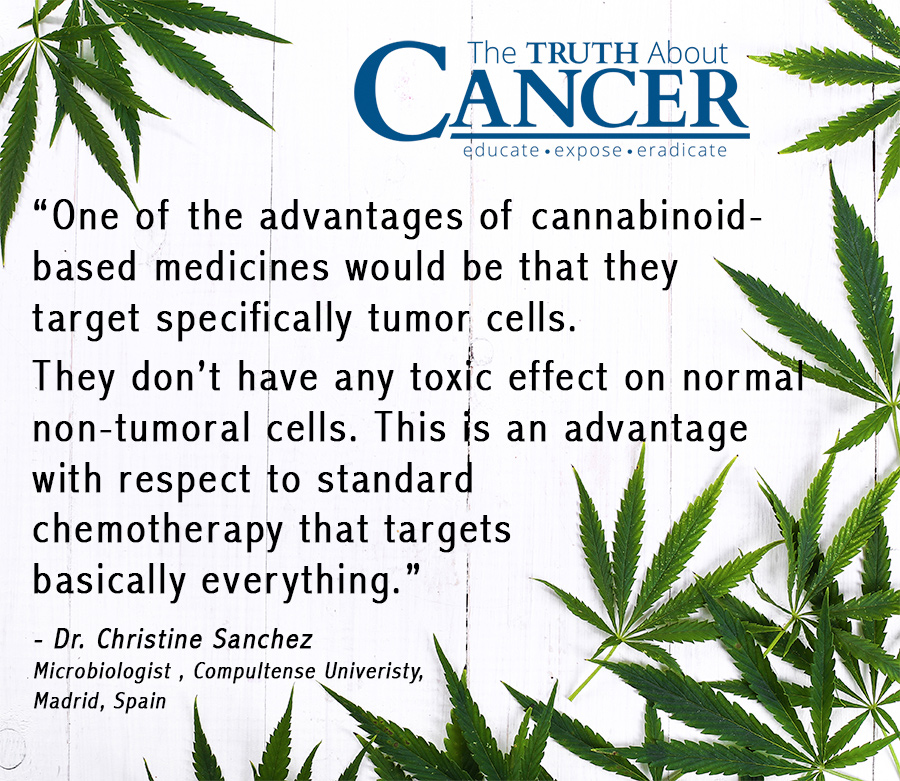
Says Dr. Sanchez: “One of the advantages of cannabinoid-based medicines would be that they target specifically tumor cells. They don’t have any toxic effect on normal non-tumoral cells. This is an advantage with respect to standard chemotherapy that targets basically everything.”

If You Use Cannabis for Cancer, Do it Right

Because cannabinoid therapy is relatively new in the mainstream, a current challenge for patients regarding its use is lack of regulation. This may change, however, with the possible passing of the Compassionate Access, Research Expansion, and Respect States (CARERS) Act, which has the support of 37 members of Congress.

CARERS would remove “marijuana” from the Controlled Substances Act Schedule I drug category, where it has been since 1970 − on par with heroin and cocaine. This classification is ridiculous since, by definition, Schedule I drugs have “no currently accepted medical uses” and the Department of Health and Human Services (HHS) holds a patent (U.S. Patent 6630507) on cannabis oil for medical use!
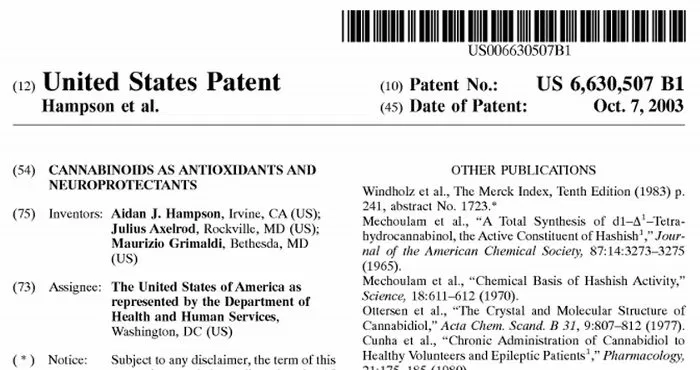


Think about it. How can HHS hold a medical use patent for cannabis oil if there are no medical uses for cannabis? OK, enough of the logic lesson. Let’s just say that there are some serious logic deficiencies in these laws.
If “marijuana” is rightfully removed from a Schedule I drug, this would open the door for more targeted, federally-funded research as well as increased patient access to this amazing healing plant.
In the meantime, if you are on a cancer-healing path and are considering using cannabinoids, here are some general guidelines that experts agree are worth considering:
  1. Do your own research. The best way to learn about the power of cannabis in healing cancer is to start digging. There are approximately 500 articles on Pubmed alone relating to cannabis and cancer. Learn about strains, qualified targeted research studies, what method of administration may be right for you, and the importance of balancing the Endocannabinoid System.
  2. Know your source. Unfortunately, because the medical cannabis industry is largely unregulated, charlatans selling bogus products definitely exist. You should not have to pay exorbitant amounts of money for any cannabis product that you buy from regulated pharmacies or online. Also, make quality a priority for you. Be sure that your product comes from an organic source and that you know that the plant has not been grown or processed using pesticides.
  3. Stick with natural cannabis products. Synthetically-produced cannabinoids such as Marinol are commercially available. However, anecdotal evidence has found that these do not work as efficiently as natural substances do.
  4. Work with a professional healthcare provider trained in cannabinoid therapy. These professionals are out there in increasing numbers, especially in states where the medical cannabis industry is well established or growing, such as California and Colorado. Reach out to a patient advocate group online if no qualified professionals are in your area.
  5. Make cannabis therapy an important part of your overall cancer-healing toolbox. A well-rounded naturally-based cancer healing protocol involves working with the body’s own healing mechanisms through a variety of means. For you, this may mean changes to your diet and lifestyle, reducing stress, getting quality sleep, moving your body, intense detoxing protocols, and using other supplements and proven natural methods in addition to the powerful healing power of cannabis.
This information is being suppressed from you by the mainstream media and the medical establishment. Be notified each week when cutting-edge articles are added by clicking here. You’ll be glad you did.

Editor’s Note: This article was initially published in September 2016 and has been updated in June 2020.

hemp extract

The hemp revolution is here! The hemp plant is loaded with beneficial cannabinoids that calm the mind and promote homeostasis (balance) throughout the body.

>>Discover our favorite organic hemp extract here

Article Summary

  • The cannabis plant has been used in just about every culture for centuries and has been cited in ancient texts as having a healing effect on over 100 ailments.
  • Currently there are 25 states where it is legal for patients to use “marijuana” for medical purposes. Pending legislation may open up opportunities for federally-funded medical research, including human clinical trials.
  • In the mid-1990s, an Israeli researcher discovered a subtle system within the body that seemed to have a balancing effect on every other system. He called it the Endocannabinoid (EC) System.
  • The EC system consists of a series of molecular receptors that are designed to receive cannabinoids. Our bodies produce some cannabinoids. Others come directly from the cannabis plant.
  • Spanish microbiologist Dr. Christine Sanchez was the first to discover the antitumor effects of cannabinoids. Cannabidiol, or CBD, which does not have a psychoactive effect, has long been known as a potent anti-cancer agent because of its ability to interfere with cellular communication in tumors as well as in its ability to instigate apoptosis (programmed cancer cell death).
  • THC (the psychoactive counterpart to CBD) has been shown to reduce tumor growth as well. Studies have been conducted on the combined effect of CBD and THC on a number of types of cancer. These studies are showing evidence of cannabinoids being powerful “herbal chemo” agents.
  • If you have cancer and are considering using cannabinoids, here are some general guidelines that experts agree are worth considering:
    1. Do your own research
    2. Know your source
    3. Stick with natural cannabinoid products over synthetic
    4. Work with a professional healthcare provider trained in cannabinoid therapy
    5. Work with your body’s own healing mechanisms through a variety of means

According to the FDA, at least 100,000 Americans die each year from the on-label use of prescription drugs. 

If you want to compare cannabis to the $300 billion drug industry, then let’s try to find the deaths from cannabis overdoses.

(tick tock, tick tock)

There aren’t any….

Please help us spread the truth. Together, we will win this fight to maintain our freedom! ;-)

Yours in health and liberty,

P.S. Please visit our online store to support the mission. 
 
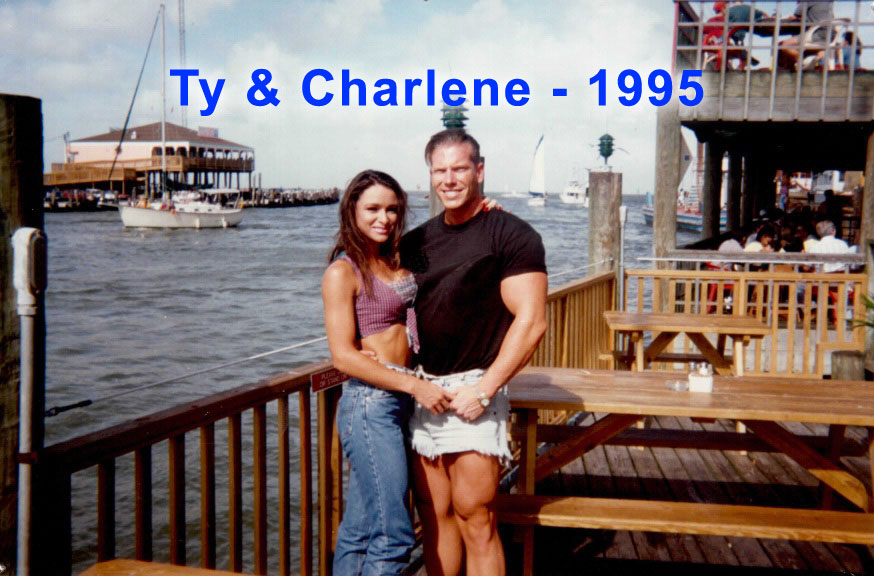
FYI, our mission actually began EXACTLY 25 years ago today, on June 23, 1995, when we met. So today is our "silver jubilee." ;-)


Here’s a photo taken in June 1995. 
 Ty & Charlene Bollinger
We met in June of 1995 in San Antonio, Texas.  
We fell in love immediately and were engaged in 9 days. 
Six months later in December of 1995 we were married.

Six months later, Ty’s Dad was diagnosed with cancer, he died 25 days later, and the rest is history...

The Truth about Vaccines:  

7 Episodes, Complete Transcripts

Front Cover

Monday, 28 December 2015

DELUDED WHITE WESTERN CHRISTIAN AND ANTICHRISTIAN YOGA, GURUS, AND ORGASMIC MARIJUANA.BUSINESS.

BBC RADIO INVESTIGATION IN TO HAMPSTEAD HOAX

Published on 23 Apr 2015
 This is the BBC Radio investigation in to the Hampstead hoax.


After the Fall: The Ripple Effect from Accusations Against Bikram and Friend

The scandals that beset gurus John Friend and Bikram Choudhury continue to ripple through the yoga community, socially, financially, and ethically. Yoga Journal takes a look at how deep the damage goes and how wrongdoing changes — or doesn’t — yogis, the practice, and the business of yoga.

Paula Carrasquillo took her first yoga class in the fall 
of 2011. A Washington, DC–area website-content developer, wife, and mother, she had decided to try Bikram Choudhury’s wildly popular brand because she thought 
it could help her right knee, which had been injured 
in a car crash and never healed. She read testimonials online of how Bikram Yoga in particular had fixed broken bodies in ways that scalpels sometimes can’t.
Within three classes her knee felt better, and within three months of practicing the 26 asanas and breathing exercises that comprise every 9o-minute, high-heat Bikram Yoga class, Carrasquillo says her blood pressure went down and she lost unwanted weight. The transformation didn’t stop there. Another month in, yoga along with therapy and writing helped Carrasquillo realize that she was suffering from post-traumatic stress disorder. The domestic abuse Carrasquillo says she experienced years prior with former partners still haunted her. “Yoga allowed the deep pain that was interfering with my whole life to surface, so I could confront it,” she says. Carrasquillo believes yoga helped wean her off anti-depressants and alcohol, too.

But by spring 2013, Carrasquillo had learned that several Bikram students had accused Choudhury of sexual harassment and rape. At first she kept practicing, refusing to associate Choudhury’s potential wrongdoings with her beloved yoga. But ultimately the allegations became too much. One day in the fall of 2013, while standing at the front of her mat, 
Carrasquillo became nauseous. She realized the practice she’d come to crave for helping her heal was hurting her instead.
Carrasquillo’s story of emotional turmoil isn’t unique. Scores 
of people who have found a practice, teacher, community, and sometimes a career through yoga have been thrown for a loop when a revered leader is accused of sexual harassment, emotional and economic fraud, and even breaking the law. Sadly, in Western yoga, there have been many such assertions.
More recently, reports of Choudhury’s alleged missteps 
alternated in the mainstream news with stories of the suspected improprieties of John Friend, the founder of Anusara Yoga, which integrates yoga therapeutics, philosophy, and alignment. In February 2o12, an Anusara employee claimed that Friend was having sexual relations with employees, leading an all-female Wiccan coven that practiced rituals of a sexual nature, freezing Anusara employee-benefit plans on the sly, and asking employees to accept shipments of marijuana. Nearly two months later, The Washington Post reported that Friend was having sex with students. In such high-profile scandals, the people directly involved—the “gurus” and their accusers—grab the public’s attention. And while we would never downplay the gravity of their experiences, those newsmakers represent only a fraction of a far bigger story. It’s the rest of the yoga community, the millions of students, teachers, and studio owners who come to the practice regularly for health, healing, and a sense of belonging, who make up the vast majority of the impacted.
See also Will Bikram Yoga Survive?
Within the community, members are left to sort through the wreckage after the polarized voices around fallen leaders finally quiet, deciding where to turn after their tribes splinter. They must maintain their identities and possibly livelihoods after some practices are abandoned, and some studios close. They have to learn from the past and better prepare—emotionally, socially, and financially—for the next upset, which unfortunately seems all but inevitable. In fact, this February, The New York Times reported a sixth civil lawsuit filed against Choudhury. (The first case is scheduled to go to trial this August.) In a world where even iconic gurus can apparently come and go, everyday yogis and teachers are the ones who need to minimize the damage, and protect the practice that they love.

A personal hit

When rumors started to surface in 2013 about Choudhury, Carrasquillo felt what many felt during the recent scandals: conflicted. She wanted to support Choudhury’s accusers, but Carrasquillo had also become attached to Bikram Yoga’s apparent healing powers. “I just didn’t want to believe it, simply because I enjoyed the yoga so much,” she says.
Carrasquillo spent nearly a year trying to convince herself 
that she could continue to practice despite her anger around the allegations. Then one day in November 2013, her yoga teacher was reading the standard Bikram teaching script in class, like usual. But this time Carrasquillo had a strong visceral reaction. “I wanted to vomit. I couldn’t do it anymore,” she says. “The healing that I had experienced up to that point was in danger.” After that class, she vowed never to go back to Bikram Yoga.
While Carrasquillo’s personal history may not mirror everyone’s, many people come to yoga for physical reasons—either to work out an injury or get in shape—and are quickly swept up in the holistic healing that yoga can provide. Research has linked the practice with improvements in stress, depression, anxiety, and even post-traumatic stress disorder. One explanation is that mindfulness methods such as yoga and meditation help us become aware of the emotional baggage we carry and teach us how to use our breath to de-stress, suggests psychiatrist Bessel van der Kolk, MD, in his new book, The Body Keeps the Score.
See also 17 Poses for Mindful Meditation 

Paradoxically, while unearthing deep-seated emotions can empower us to confront sadness, anger, or pain, such work 
can also make us more vulnerable to emotional injury when 
a trusted leader falls, explains Dave Emerson, author of Trauma-Sensitive Yoga in Therapy and director of Yoga Services at van der Kolk’s Trauma Center at the Justice Resource Institute in Brookline, Massachusetts. Witnessing a yoga leader fall may be especially painful for someone who has experienced past relationship trauma, Emerson says. “Yoga teachers often promise happiness and health, and students therefore expect them to be safe and trustworthy,” he explains. “So it can be devastating when a teacher betrays or disappoints you, throwing you back to feeling unsafe within relationships that you thought you could rely on.”
The betrayal can also make us question our sense of judgment, the validity of a healing modality, and any progress we’ve made, explains Rachel Allyn, PhD, a clinical psychologist and yoga teacher in Minneapolis, and the creator of YogaPsych psychotherapy, which uses asana and breath exercises to help stored emotions come to the surface. Initially, denial is common; it’s 
a way to minimize the discomfort that comes from believing strongly in something that becomes corrupt or disingenuous, 
but that we still want to engage in, she explains.
While Carrasquillo struggled to come to terms with how her loyalty to Bikram Yoga conflicted with her desire to empathize with those accusing the founder of rape, the resulting emotional stress and feelings of guilt and hypocrisy—something psychologists call cognitive dissonance—ate away at her. She knew that leaving her practice was the best way to show her allegiance to those claiming abuse, and yet she was scared to abandoned that which she had given so much credit for her healing. 
So Carrasquillo justified staying longer, telling herself, “[Choudhury] is not my boss, and the teachers I had were not him; I am loyal to those teachers. He created a great sequence; lots of bad people create good things.”
Cognitive dissonance is certainly part of being human, says Allyn. But when we continue to engage in behaviors that go against our morals and ethics, it can threaten our sense of identity. This can lead to feelings of shame, and from there, depression and anxiety. But here, again, yoga and meditation can help. “Yoga helps you confront yourself, both the light and dark, in a kindhearted way,” Allyn says. “It allows you to see yourself clearly, still love yourself, and want to learn.” You can learn, for example, what Carrasquillo would someday deduce: The power of one’s practice is not exclusively tied to one teacher or method.
See also How to Lead by Example

A community, fractured

William “Doc” Savage practiced various styles of yoga for four years, trying to improve his performance as an ultramarathon runner, before stumbling upon an Anusara “Grand Gathering” 
at a Yoga Journal conference in 2008. Savage was blown away by the sense of belonging he experienced there. “I looked around and thought, ‘Wow, these are my people,’” Savage says. “It was 
a community of extroverts,” he adds, describing people chatting and spending time on each other’s mats.
A retired senior noncommissioned officer in the United States Air Force, Savage is gregarious, but also admits to a longtime isolating fear of showing raw emotion. One of the tenets of Anusara, which means “flowing with grace,” is opening your heart to connect with the divine within you, and in everyone. “With Anusara, I learned how to share my emotions,” says Savage. “It was scary, but I was empowered knowing I had teachers and a community who were going to help and support me.”
When Friend’s alleged transgressions were exposed in 2012, Savage felt disappointed and frustrated—equally by Friend’s behavior and the community response and infighting. He witnessed Anusara splinter as practitioners and teachers found smaller groups they could confide in and vent to. Savage did what he found necessary to hide his deep disappointment and sadness and to retain his composure. “I was my students’ teacher, and 
I just tried to continue,” says Savage. “I compartmentalized.”
Decades of social-science research show that community, along with faith and work, is the secret to emotional well-being. At the Harvard School of Public Health, researchers have found that the keys to happiness include a supportive network 
of family and friends, and knowing how to bounce back from stressful situations. Basically, community gives us identity and 
a sense of purpose, which in turn keep us happy and healthy.
See also Yogi’s Guide to Evaluating Teacher Training Programs
Which helps explain why, as the Friend scandal broke, Savage didn’t want to reinvent his identity. He had already invested in 
an entry-level Anusara teacher training and had just entered 
into the full teacher-certification program. “Every time I tried 
to teach something other than Anusara, it didn’t feel right,” 
he says. So he continued teaching Friend’s method, even as the business was failing. Back at the Anusara headquarters in Woodlands, Texas, the administrative staff had significantly downsized, and many of the senior teachers who helped organize events and trainings had departed. Savage’s community—
and the ground beneath him—was crumbling.
In July of 2012, Savage and two other Anusara devotees started damage control. They signed a licensing agreement with Friend to use his intellectual property, and in October incorporated as First Principle, Inc., calling themselves the Anusara School of Hatha Yoga and listing themselves as the only three teachers. That number has since jumped to just over 550 today, with up to 55,000 
students—a huge decline from the nearly 1,500 teachers and 
estimated 600,000 students pre-scandal. But Savage and his colleagues are more intent on ensuring history doesn’t repeat itself. They’ve installed a board of directors, elected by teachers and global representatives, who continue to develop the Anusara curriculum. “We want to avoid a single point of failure,” a criticism many teachers had about Anusara under John Friend, Savage says. “I reformed Anusara to help people have community again.”
Of course, not everyone has returned, including former 
top Anusara teachers Elena Brower, Amy Ippoliti, and Desirée Rumbaugh, who have moved on to pursue new businesses and host non-Anusara trainings and retreats. One senior Anusara teacher who wished to remain anonymous says that she is now happy to be a part of the bigger yoga community, but also laments the loss of the tight-knit group of people she came together with to practice Anusara. “The saddest part was that the community used to be a real asset,” she says. “It was scarring and disillusioning how everyone scattered.”

A new business model

Years after the Bikram and Anusara shakeups first came to light, the founder of each yoga style continues to make the news. Choudhury—who did not respond to Yoga Journal’s requests to be interviewed—was still teaching as of April, according to his website, and he appeared on CNN in April saying that he is innocent. Friend, who admitted to at least one affair, dismissed Anusara and returned in early 2013 with a new yoga form called Sridaiva, or “divine destiny,” which he developed with a former Anusara student. “I feel good about where I am and where I’m going,” says Friend. “I will remember my faults and mistakes and try not to replicate what patterns led to pain and disharmony.”
See also Find Your Teacher:  What to Look for + Avoid in Choosing a YTT
In the wake of the scandals, many teachers and studio owners are actively trying to create a different, less rigid, more diversified way both to teach and do business, and in the process redefining the role of a “guru.” Noah Mazé, who taught Anusara from 2002 until the Friend scandal broke, is one such pioneer. Mazé resigned from Anusara because he didn’t align with Friend’s choices after the scandal. He had also expressed concern over how obstinate he felt Friend was becoming. When Friend debuted Anusara in 1997, 
it was a hybrid of alignment, therapeutics, and Tantric philosophy, but toward the end he stopped incorporating other teachings and evolving the practice. Mazé was frustrated with Friend’s inability 
to hear criticism or suggestions for improving Anusara (a critique many teachers share of both Friend and Choudhury). Mazé, who now owns YogaMazé in Hollywood, California, has developed his own style, but says it is consistently informed by other types of yoga as well as the study of biomechanics and physical therapy.
Diversification and independence seem to be paying off for 
former Bikram studio owners, too, thanks in part to Mark Drost, once a high-ranking Bikram instructor. In 2oo4, Drost owned seven Bikram studios, but by 2oo8 he says he was so put off by 
what he saw as the guru’s questionable business methods and connections with female students that he purged himself of all Bikram affiliation and converted one of his former Bikram studios, in Buffalo, New York, into Evolation Yoga (in 2oo9). Evolation offers 
hot yoga classes similar to the 26-pose Bikram sequence. In 2o11, Choudhury sued Drost for copyright infringement, but Drost refused to settle out of court, and in December 2012, a judge ruled against Choudhury having exclusive claim to a yoga sequence. Suddenly, yoga-studio doors swung wide open for anyone to offer the Bikram Yoga sequence, or any other sequence of poses. More and more onetime Bikram Yoga studio owners have quietly migrated away from Bikram affiliations and are instead offering the same 
or a similar sequence under a different name.
Still, the question remains: How did Choudhury and Friend obtain so much power in the first place? “They presented their systems as salvation paths, and people bought into the idea that their way was the best way,” explains Lola Williamson, PhD, an associate professor of religious studies at Millsaps College in Jackson, Mississippi, and co-editor of Homegrown Gurus.
Understandably, many teachers seem highly aware of the potential slippery slope between instruction and adulation. Some worry that the authority they need to deliver a profoundly deep, enduring knowledge of yoga has become off-limits. “We’re fearful of being seen as manipulative,” says the Anusara teacher who wanted to remain nameless. “I’m more wary to suggest a mentor relationship.”
See also 10-Item To-Do List for New Yoga Teachers
Mazé, too, remains sensitive about his relationship with 
students. He’ll sometimes practice at the back of the room, 
and says that a guru’s role is to stimulate dialogue and debate instead of to suppress them. “Don’t surrender your critical thinking to anyone,” he tells practitioners. “I want my students and community to be comfortable questioning any of my teachings.”
Carol Horton, PhD, a yoga teacher and former political-
science professor who writes about student-teacher relationships, suggests that teacher trainings should prepare instructors for dealing with the complex emotions that yoga can unearth. “When a student comes to class, he or she should have the assurance that the teacher is doing the work necessary to create a safe space, where students can explore how to empower themselves through yoga,” she says. Teachers also have to be grounded enough to withstand students’ projections, she adds.

A full recovery

But the responsibility of making yoga a safe place for everyone can’t lie in the hands of teachers alone. Students need to be empowered to heal themselves, instead of looking to someone 
else for salvation, says Allyn, and that requires being aware of and trusting their feelings and thoughts. Receive knowledge and wisdom from gifted instructors, says Allyn, but never credit a teacher with healing you. She suggests asking yourself, “Am I turning to my teacher, like I would a partner, to heal old wounds?” If the answer is yes, consider trying new yoga styles and communities 
to see if the healing properties of the practice carry with you. 
Or, revisit the yogic principle of aparigraha, or nonclinging. Most importantly, embrace who you are: “A strong community can only exist when the people who make up that community are strong within themselves, affirming that they are perfect in their imperfection, just as their teacher or guru is,” says Williamson.
Carrasquillo is on board. “We each have an inner guru to be discovered,” says the former Bikram devotee, who eventually developed a regular home practice, completed a non-Bikram teacher training, and, last year, started teaching vinyasa classes 
in corporate settings. “I don’t want students to look up to me. 
I want them to look within to find the answers.


By Andrew Tilin  |  

John Friend Opens Up About The Sex Scandal That Shook The Yoga World


Although the financial situation was resolved, Friend was asked to resign from Anusara. Left to his own devices, the fallen guru spent his time in solitude with his mat, until fate led him to a small studio in Denver called Vital Yoga.
The owners (and sisters) Desi and Micah Springer, invited Friend to their studio to practice, heal and own up to his mistakes — by encouraging him to take accountability for his actions.
The new alliance proved effective, and Sridaiva — a new form of alignment-based yoga — was born. As Friend, 55, gears up for the official launch of Sridava, MindBodyGreen asked him to open up about what he's learned since the scandal, and life after Anusara.
MBG: After the fall of Anusara in early 2012, did you take any downtime for yourself?
JF: I chose not to work or do any kind of revenue-generating job in the yoga world until that October. I was just practicing, studying, taking care of myself and trying to learn from what happened.
Do you have regrets about the choices you made?
I feel the pain in my heart of the mistakes I made. It was never my intention to hurt anyone or myself. When those things occur, it’s important to feel it and remember it, and that’s how we change. I’m using the pain I feel to step forward into the future in a positive way. I’m certainly not going to repeat that path.
I take accountability for my own karma — I don’t know how regret really helps. I want to remember what happened, and then do things differently.
Did you feel like you had to go into hiding?
That time to self-reflect was critical. There was a response by the [Anusara] community to ostracize, instead of work together — I didn’t have much of a choice. They didn’t want me to have any function in the organization, so I was isolated for some time. That’s why I came to Denver, where I was welcomed. I could practice and just take care of myself.
Do you want to share anything about what happened with Anusara that we might not know?
A lot that was put out there came through the Internet — through people with their own projections. I want everybody to recognize that not everything they read is true. I smoked pot and was in a Wiccan coven. My biggest mistake was having a sexual affair, and being dishonest with my girlfriend.
The Anusara scandal to me, was focused on my sex life. My sexual relationships with women were private and consensual in my eyes, but the community considered my private life as something that they should judge. So it was like a 21st century social media witch trial, which judged me as being unfit to teach yoga.
It was my personal business, but some thought that I should be ostracized forever for this transgression. I am responsible for my mistakes, and my clear intention is to be utterly transparent and have integrity in my private relationships.
If people could be open to giving me a new chance, I would appreciate that. We have to have hope in each other that we can get better and make a positive shift.
Are you still in touch with anybody in the Anusara community?
At this point I am disassociated from the Anusara organization by our mutual choice. There have been a few Anusara students and ex-Anusara students that have come to study with me at Vital.
People make mistakes; so let’s try to help each other — that’s my big focus. It’s not useful to continue to blame each other or have malicious intent, especially in a public forum.
As a yoga community, we haven’t had the best behavior in the last couple of years. I believe that we can all improve, and that’s what I’m trying to do with myself.
If you don’t forgive, there is no change.
Were you surprised that Desi and her sister Micah reached out to you?
It was amazing how Desi reached out to me — I was skeptical because I was wondering what her motives were. Very few people asked if I needed help or support. I had first met Desi when she was a student of Anusara in 2005.
Desi said that nobody would bother me if I came in and practiced. I could go there, eat properly, get sunshine and clean air, and take time to reflect, study and turn things around.
How did you start to take care of yourself?
In the past, I thought I was being somewhat moderate with my habits. I had a beer on the weekends and used marijuana, but I never felt like I was partying every day. I would eat bread and sugar, but now I recognize it’s not healthy to eat that garbage on a regular basis. I was 50 pounds heavier than I am today.
I was also working way too much, sometimes 100 hours a week, staying up past midnight on most nights on my computer. The imbalance in my life was more due to overworking than partying.
And when everything collapsed, I realized it wasn’t sustainable. I had to take full ownership of the fact I had created that situation — it was my own doing.
When you’re not feeling well it definitely affects your behavior — you’re not going to make good choices. I look back at my mistakes and see where I can improve and change. If you asked me back then, I thought I was healthy and making good decisions.
Do you have any larger takeaways from what you’ve learned?
I understand that I’m the one accountable for my own health, happiness and lifestyle I lead — there’s no one else to blame.
I can see now that I had set up a dysfunctional organization. I also considered everybody an open-friend, but I realize now that people don’t always have the same openness that I might have. I’m a lot more discerning with my associations, and I focus on my own accountability in my behavior. That was a giant wake-up call for me. My relationships are a lot happier and healthier now.
I just stick more to myself. Before, I let people into my private life and many of them — maybe because of my public image — never really said that they disagreed with anything they saw in my life or behavior.
I realized the hard way that I can’t just bring anybody into my private affairs without a long testing period first. I’ve become more skeptical about people’s motives, so I keep my affairs more private than ever. I just have association with very few people.


Aside from self-reflection, what have you been up to?
After the scandal I began studying a routine (of postures) that Desi wrote called, “The Roots.” It had so much power for transformation and health — so I started to practice it and wanted to study with Desi more closely. My ideas about alignment were totally revolutionized.
I built the Anusara system on the Universal Principles of Alignment, but I started to rethink all of these ideas and am doing the opposite of what I’ve done for years. This new alignment system has become Sridaiva.
In Sridaiva, the tailbone doesn't draw downward. You don't lengthen you spine by pulling the two ends of the spine apart. You line the spine up so that your connective tissue can pull the spine apart.
There's a rooting through the pelvis down the legs and a rising in the spine to have the maximum opening of the body. That's not to say poses in modern postural yoga are wrong. We just focus more of the engagement on the back body. After 42 years of teaching yoga, that's a big change in my view.
Are you only teaching Sridaiva at Vital, or have you begun introducing it to other studios?
We only teach Sridaiva classes at Vital — it made it much easier on the studio if we only teach one method. It’s confusing if one method says, “melt the heart” and the other, “expand the heart.”
We’re also teaching Sridaiva nationwide and worldwide. We just got back from the Netherlands, Germany, and Spain. It's making a solid expansion.
When is the official launch of Sridaiva?
Theoretically, we cofounded Sridaiva in January 2013. It’s been evolving — right now, we really have it solidified to the point where next month we’re putting up the website that shows the whole method. It’s much more open-sourced than what I’ve done in the past.
But aren’t you concerned about anyone trying to copy you?
I’m sure that’s going to happen. But if people want to learn this practice through us, they’ll come. And if they don’t give us credit, that’s their karma. With the politics of what I went through for 15 years with Anusara, I really want to avoid that situation in the future.
Where does the name, Sridaiva, which means “divine destiny” in Sanskrit, come from?
For Desi and I, divine destiny refers to fate. Like when you run into someone on the street and that person happens to have a special gift or knowledge that’s valuable for you. It seems like coincidence, but there is something really powerful in that.
It was an unbelievable, fated meeting with Desi. What were the chances at that time in my life after the fall of Anusara, when I’m open to a new path — this opportunity with Desi would just appear?
Would you say all of this happened for a reason?
The path I’m on now only happened because of a terrible scandal where I lost so much — my associations, my friendships, my lifestyle. All of it was gone. It was almost a near-death experience and I finally woke up and realized I needed to be different.
Do you consider this your comeback?
I don’t have any big vision for this — but if I can do the best I can every day and see myself making progress as a person, then that’s my comeback. I’m not judging my success on financial gain or the size of my following. My comeback is to see my mistakes and have a higher level of integrity.
I’m excited about Sridaiva — it’s the most effective work I’ve ever done. I think it’s going to spread everywhere, and that’s a blessing. I feel like this is bigger than me —people are going to use this all over the world, and a lot of them won’t even know where it came from. But that doesn’t matter… I just want to help.
This conversation has been edited and condensed.
Photo Credit: Courtesy of Vital Yoga