Showing posts with label EUGENICS. Show all posts

Sunday, 9 July 2023

ANTISEMITES, VERSAILLES, ROTHSCHILDS, HITLER, EUGENICS, LHBTQ+, JOOWIPEDIA, MYTHS, BIBLE, ILLUMINATI, VATICAN.

 1923 AND 1933 WEALTHY ZIONISM ALLIED WITH IMPOVERISHED NATIONAL SOCIALISM - A JEW COINED THE TERM NAZI!

JEW OFFICER IN HITLER'S ARMY


THOUGHTS ON WAKING UP

 BAFS - Sunday 9 July 2023


NUMBER 1

I was given the freedom to look for the Truth since I acquired the skills to do so

NUMBER 2

I very soon found out that History and Schools were propagating lies about so many things, History, Religion, Science, Geography, Space, Earth, Dinosaurs, Human Apes, Psychiatry, Psychology, Anthropology, Antarctica, Moon Landing, Space Stations, Politics and much more.

NUMBER 3

Most humans did not care about the Truth because they were terrified and chose to live under the Tyranny of the ruling Elite like the UNO, USA, EU, and others.

NUMBER 4

Most Humans joined the Synagogues of Satan consisting of blood sucking parasites and vampires.

NUMBER 5

I saw most vocal entities going crazy and repeating the same mantra for decades refusing to see practically most of their followers did next to nothing to change anything for the better

NUMBER 6

All that I saw most of us doing is to make the rich richer and the poor poorer

NUMBER 7

I saw the Elites engineer wars and diseases and killing people and babies en masse with their pharmaceutical poisons and vaccines with no freedom to chose

NUMBER 8

I hear many speak of Concentration Camps and Death Camps, but I saw the world that belongs to the Elite as the greatest of them all!

NUMBER 9

I saw the real causes were our own hypocrisy, cowardice, love for dishonestly earned money and wealth, our own immoral and demonic life-styles, our own inhumanity, the result of a new bio-tech engineered species of monsters, our pursuit of fame, and the worship of Satanic Gods.  

NUMBER 10

I also saw the solution that most of us are not brave enough to adopt as their daily life-style: the TOTAL BOYCOTT OF EVERYTHING THAT MADE THE MONSTERS SO POWERFUL AND WEALTHY!

NUMBER 11

And we do not need geniuses to find out what need to be boycotted.  Just a few hints: usury, consumerism, BigPharma, vaccines, waste, bio-engineered everything, pollution, Corporate sports, cinema, television, mainstream media, schools, tourism, brothels, sex shops, pornography, Satanic Entertainments, drugs of all kinds (including alcohol and nicotine), with one warning though.  As soon as we start doing that, they will declare TOTAL WAR against us and our families.   

NUMBER 12

But, I wasted my life on Earth looking for the Truth, when we do not have the FREEDOM to live in peace on Earth they say they own, including the Seas, Water, the Air we breathe, Nature, Antarctica, and even the Sun.


VT RADIO: Was HITLER a Rothschild? (Ep 1)

George Hobbs from The Fact Hunter Podcast joins VT Radio host Johnny Punish to ponder Adolf's possible connection to the Bankster Family

7
1479

Episode I – Episode II


Host Johnny Punish welcomes VT’s George Hobbs from The Fact Hunter Podcast to explore the persistent rumor that Nazi Dictator Adolf Hitler was part of the Rothschild Bankster Family.  Punish and The Fact Hunter get into it.  So sit back and enjoy the show!


BTW, The Rothschild family are a wealthy Ashkenazi Jewish family originally from Frankfurt that rose to prominence with Mayer Amschel Rothschild, a court factor to the German Landgraves of Hesse-Kassel in the Free City of Frankfurt, Holy Roman Empire, who established his banking business in the 1760s.

The Fact Hunter Podcast is also on Instagram, Discord, and Rumble

Video Streams:  Rumble – Facebook – YouTube (YouTube Censors Our COVID Coverage)

Audio Streams & Downloads:  Buzzsprout – Spotify – Apple Podcasts – Google Podcasts – Amazon Podcasts – IHeartRadio – Deezer – Podcast Index – Podcast Addict – Podchaser – Tune-In/Alexa


VT Radio Resources
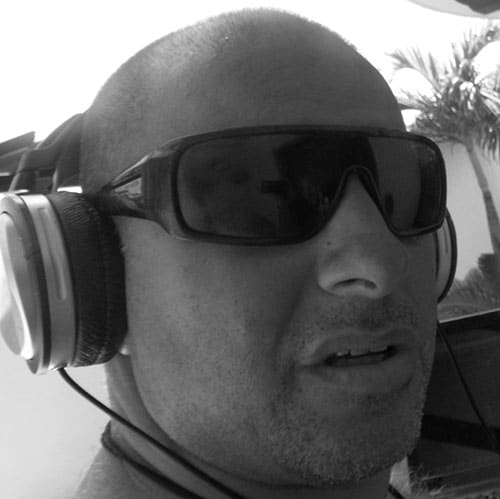
Johnny Punish, GM

Johnny Punish is the founder and owner of VT.  He is also a writer, global citizen eco-activist, visionary, musician, artist, entertainer, businessman, investor, life coach, and syndicated columnist.  Punish was educated at the University of Nevada Las Vegas (1980-81) and California State University Fullerton (1981-1984) with studies in accounting and business. Before the “internets” had been invented, he owned and ran (5) national newspapers in the United States of America from 1987-1998

Punish has over 100 original songs written. He records and produces music. A member of ASCAP, Punish has several songs placed in feature films. His music is promoted worldwide and played on all digital networks and net radio.

Resources:  YouTube – Apple Music – SoundCloud – Spotify – Instagram – Twitter

Read Johnny’s Full Bio at JohnnyPunish.com >>>


VT RADIO: Was HITLER a Rothschild? (Ep. 2)

VT's Michael Shrimpton joins VT Radio host Johnny Punish to ponder Adolf's possible connection to the Bankster Family

1
1162

Episode I – Episode II

Host Johnny Punish welcomes VT’s Michael Shrimpton to explore the persistent rumor that Nazi Dictator Adolf Hitler was part of the Rothschild Bankster Family.

Shrimpton and Punish get into it.  So sit back and enjoy the show!

BTW, The Rothschild family is a wealthy Ashkenazi Jewish family originally from Frankfurt that rose to prominence with Mayer Amschel Rothschild, a court factor to the German Landgraves of Hesse-Kassel in the Free City of Frankfurt, Holy Roman Empire, who established his banking business in the 1760s.

Michael Shrimpton was a barrister from his call to the Bar in London in 1983 until being disbarred in 2019 over a fraudulently obtained conviction. He is a specialist in National Security and Constitutional Law, Strategic Intelligence and Counter-terrorism. He is a former Adjunct Professor of Intelligence Studies at the American Military University.

Read Michael Shrimpton’s Recent Work on VT Foreign Policy

Video Streams:  Rumble – Facebook – YouTube (YouTube Censors Our COVID Coverage)

Audio Streams & Downloads:  Buzzsprout – Spotify – Apple Podcasts – Google Podcasts – Amazon Podcasts – IHeartRadio – Deezer – Podcast Index – Podcast Addict – Podchaser – Tune-In/Alexa

ACCORDING TO THE A.I., CHAT GPT SAYS: 

No, Adolf Hitler was not a Rothschild. This is a baseless conspiracy theory with no credible evidence to support it.  Adolf Hitler was born in Braunau am Inn, Austria, in 1889 and had no familial connection to the Rothschild family, a prominent European banking dynasty.

As for the support for the Nazi Party, it received some financial backing from a variety of sources, including wealthy industrialists, business leaders, and other individuals who saw the party as a means to advance their own interests. Among the prominent figures who financially supported the Nazi Party were Fritz Thyssen, a German industrialist, and Hjalmar Schacht, a prominent banker. However, it is important to note that the Nazi Party’s rise to power cannot be solely attributed to the support of a few individuals or banks. It was a complex combination of factors, including political maneuvering, economic circumstances, and the broader social and historical context of Germany at the time.

VT Radio Resources

Support the show

  • Visit VT for more Uncenosred Alternative Foreign Policy Media
Johnny Punish, GM

Johnny Punish is the founder and owner of VT.  He is also a writer, global citizen eco-activist, visionary, musician, artist, entertainer, businessman, investor, life coach, and syndicated columnist.  Punish was educated at the University of Nevada Las Vegas (1980-81) and California State University Fullerton (1981-1984) with studies in accounting and business. Before the “internets” had been invented, he owned and ran (5) national newspapers in the United States of America from 1987-1998

Punish has over 100 original songs written. He records and produces music. A member of ASCAP, Punish has several songs placed in feature films. His music is promoted worldwide and played on all digital networks and net radio.

Resources:  YouTube – Apple Music – SoundCloud – Spotify – Instagram – Twitter

Read Johnny’s Full Bio at JohnnyPunish.com >>>


Wednesday, 16 November 2022

TOO MANY BLACKS AND MUSLIMS - ADOLPHE CRÉMIEUX, BILL GATES, AND THE KHAZARIAN BIO-TECH WEAPONS MAFIA.

MEDIA PROPAGANDA STARTS WITH A FABRICATED PICTURE LIKE N.A.S.A.

CONFIRMING BILL GATES' ANNOUNCED BIO-WEAPON PLAN

W.H.O. FINANCED BY BILL GATES STARTED THE COVID-19 PLANDEMIC

THE KHAZARIAN FREEMASONIC QABBALAH EXPANDED THE CITIES

THE U.N.O. IS THE QABBALAH'S TOTALITARIAN DICTATORSHIP

ALL WAS PLANNED IN ADVANCE

PROPAGANDA ASKS QUESTIONS WHEN THEY ALREADY KNOWS THE ANSWERS

W.H.O. & BILL GATES HAD ALREADY STARTED TO DECIMATE THEM WITH THEIR DEPOPULATION GENOCIDAL JABS

THEY DO NOT LOOK LIKE MARILYN MONROE AND BRIGITTE BARDOT!

CLIMATE CHANGE IS ANOTHER HOAX ! SURVIVOR OF THE PLANNED BLACK, MUSLIM & CHRISTIAN HOLOCAUSTS


READ THE PROTOCOLS OF ISRAEL!          ADOLPHE CRÉMIEUX

THE SAMSON OPTION


8 billion and counting

This week, the world’s population ticks over a historic milestone. But in the next century, society will be reshaped dramatically — and soon we’ll hit a decline we’ll never reverse.

Updated
Published

We never know precisely how many of us are alive at any one time, but this Tuesday is the United Nations’ best estimate on when we’ll reach 8 billion human beings.  

Eight billion. It’s a number too big to imagine but think of it this way: In the time it takes you to read this paragraph, the world’s population grew by around 20 people. 

While the Earth’s population is growing quickly, the growth rate is starting to slow down. Eventually, it will start falling and our societies will shrink. 

Humanity is changing day by day in ways we can’t perceive over short periods, but in ways that will reshape our world over the coming century. 

A long-exposure photo of Tokyo at night at a heightA close up of a group of children, one with a big smile.

We’ve already hit peak child – there will never again be more children alive than there are today, with fertility rates plummeting across the globe. 

We’re getting older and older, which means there are fewer people able to work to support more people who can’t. 

Cities are expanding, chewing up arable farmland as they go. 

We’re seeing a major shake-up of the huge population centres of the world. 

“This is a fundamental transformation of what a society looks like,” Elin Charles-Edwards from the University of Queensland says. 

“We’ve gone through a pretty extraordinary period in the 20th century into the 21st century, where we’ve gone from demographic regimes in which there are lots of children and people were dying younger to a period of really rapid growth.”

We now need to grapple with the consequences — and the opportunities. 

But to understand what it all means we need to start at the beginning.  

We’ve come a long way, fast  

Homo sapiens have roamed the Earth for roughly 300,000 years, give or take (no one left a diary back then). 

We evolved to have big brains and long legs, but our population grew relatively slowly at first. 

There were perhaps 230 million of us on Earth at around the time of Cleopatra’s death, as the ancient Egyptian civilisation came to an end. 

The population had more than doubled by the Renaissance in 1500 and doubled again by 1805 when the ancient Egyptian civilisation was being rediscovered with the help of the Rosetta Stone. 

These are all pretty rough estimates — we didn’t have comprehensive censuses in the Middle Ages – but the human population has been on a slow burn, until recent centuries, when it has boomed. 

The 2 billion mark was reached just before the Great Depression in 1925, and it took just 35 years from there to get to the third billion. 

Since then, the population has been rising by another billion every 10 to 15 years. 

Where are we going? 

The world is likely to have a couple more billion mouths to feed in just a few decades.

The UN’s latest projections, released earlier this year, suggest the world will house about 9.7 billion humans in 2050.

“Demographic projections are highly accurate, and it has to do with the fact that most of the people who will be alive in 30 years have already been born,” the UN’s population division director, John Willmoth, says.

“But when you start getting 70, 80 years down the road, there’s much more uncertainty.”

A busy street.

Under its most likely scenario, the UN projects the world population will reach about 10.4 billion in the 2080s.  

From there, it’s set to plateau for a couple of decades, before falling around the turn of the 22nd century. 

But the range of reasonable possibilities in 2100 is considerably wider, between 8.9 and 12.4 billion. 

There’s another international model of population growth, published by the health data research group the IHME, which forecasts an earlier population peak and a faster decline.

“The major reason that we forecast a different global population in the last third of the century comes from how we are modelling fertility,” senior research manager Amanda Smith says.

“Our model suggests that we expect fertility to continue to decline through the end of the century in many countries, and that’s contributing to a larger and a faster global population decline than the United Nations projections.”

The magic “replacement number” is 2.1: If women on average have more children than that each, the population of the world grows. If fertility rates are lower, the population shrinks.

And that’s where we’re heading.

“We have now reached peak child,” Dr Charles-Edwards says. “There will never be more children alive on the Earth than there is today.”

Fertility peaked in the 1950s when women were, on average, having five children each.

That number varied dramatically between regions of the world.

But since then, fertility rates have reliably fallen. In fact, in some parts of the world, including Australia, Europe, North America, and some parts of Asia, fertility rates are already below that replacement number.

The differing fertility rates across regions mean that population declines will be seen in some regions before others.

It has already started in some nations.

Shrinking countries

The nations of Bulgaria, Lithuania, Latvia and Serbia are all at least 1 per cent smaller this year than they were last year, according to the UN’s figures. 

Ukraine shrunk by considerably more — a consequence of emigration sparked by the ongoing war. 

Scores more countries are expected to have smaller populations in 2050 than they have now. 

They’re the countries with low fertility rates and immigration levels that are not high enough to make up the difference.

Because fertility rates are falling everywhere, as the decades continue, more and more countries on that map will get coloured in.

And gradually, the world will get older.

We can’t shy away from old age

Humans like to focus on the start of life and not the end. We’re not good at talking about ageing and death.

But the change in the world’s demographics will transform our society, and we can’t hide from it.

“If you want to think about the future demographic challenges, I think population ageing is probably number one in terms of people needing to change the way they do things, their expectations, governments needing to change public systems that support the older population,” Mr Willmoth says.

Some of the consequences are relatively obvious, such as greater demand for health and aged care services.

The IHME’s Amanda Smith says as part of that we should expect “a shift toward a larger burden of disease coming from non-communicable diseases,” and that in many countries the COVID-19 pandemic has exposed weaknesses that will need to be addressed.

Dr Charles-Edwards says our tax base will have to support more and more people.

Countries with government-funded aged pension schemes will see welfare costs go up, and then there’s the issue of having enough workers.

“We’re going to have more and more countries where there are more older people than young children,” she says.

“This is going to really shape the way we make decisions about how we govern, how we spend our money. It’s a massive cultural change.”

Families are getting smaller, and downsizing houses for the elderly is already on the agenda in many ageing countries, Australia included.

But what about our transport systems, which are great at getting people to and from offices in capital cities but not so good at getting us to shops, parks, doctors’ clinics and across suburbs?

What happens when fewer of us go to work every day, and more of us need help to get around? 

It’s not just the makeup of our societies that will be reshaped, but the texture of our cities and the way we move around them. 

“We do need to be designing cities, for example, in somewhere like Australia, with a view that there are going to be many more older Australians here, so thinking about walkability and accessibility is all really, really important,” Dr Charles-Edwards says.

It will change workplaces, too. With fewer workers available and more caring jobs required to look after the ageing cohort, companies may have to look to automation, artificial intelligence and robotics to help fill the gaps.

Entrepreneur and artificial intelligence expert Vaibhav Namburi says workplaces may look very different with the increased use of automation.

“I think in the next 10, 20 or 30 years we’re going to see a lot of ‘mundane’ or repetitive jobs be phased out, and those people [will] be retrained to be focused on more upper-level skills,” he says.

So maybe we’ll all be working smarter, but will we also be working harder? After all, during the pandemic, remote work has led to many of us working longer hours.

“[That] was actually counter to what the entire remote flexible work lifestyle was meant to bring,” Mr Namburi says.

“I’ve fingers crossed that the next hundred years is more focused towards the mental health aspect of our work-life balance.”

The countries growing fast

Some parts of the world are facing a different problem. 

In the map we saw earlier, you might have noticed there were no nations in Africa on the population decline. 

In fact, Africa is one of the fastest-growing places on Earth right now. 

Just eight countries are projected to be responsible for more than half the world’s population increase by 2050. 

One of them is India, which is set to overtake China as the most populous country in the world next year. 

Pakistan and the Philippines are also on the list, and the remaining five are all in Africa: Nigeria, Tanzania, Ethiopia, the Democratic Republic of the Congo and Egypt. 

Sub-Saharan Africa, in particular, is growing fast. 

It is projected to contain about a third of the world’s population at the end of the century, although there is a lot of uncertainty about projections that far out. 

That’s a lot of extra people in a region of the world with some of the highest levels of extreme poverty. 

Ensuring food production keeps up with the twin pressures of a growing population and the effects of climate change is the focus of a lot of development attention. 

World Vision’s CEO Daniel Wordsworth says it’s a significant challenge in places such as Somalia, which is currently facing its worst drought in decades. 

“I think about it a little bit like a whole bunch of fishing lines that are all tangled up,” he says. 

“There’s no root-cause driver, but there are all of these interconnecting forces that are reinforcing one another and creating these gnarly knots that are making life incredibly difficult. 

“You have climate change in a place like Somalia … in a place that’s had five years of drought. 

“You also have a country that’s gone through, like all of us, two years of economic lockdown and shutdowns … and this country is in conflict.” 

Dr Rachel Carey, a sustainable food systems expert from the University of Melbourne, says growing enough food isn’t really the biggest problem.

“To date the world has managed to keep pace with food production, the world has produced enough food,” she says.

“Certainly we see local shortages of food at different times, and that could be due to issues around climate change, also conflict and war, but there has been enough food produced around the world.

“The key issue has been about how that food is actually distributed and the inequality in the way that is done currently.”

The world is also being shaped by rapid urbanisation, which accelerated in the 20th century.

More people have lived in cities than rural areas since 2017.

The share of the population in our cities will continue to grow from the 55 per cent it currently is.

Dr Carey says that’s likely to impact how much prime agricultural land is available, and could put pressure on food production in future.

“Cities are often built in fertile plains and close to rivers, close to good sources of food,” she says.

“As cities grow, many are growing out as well as growing up, and often growing into highly fertile areas of farmland.”

Researchers are working on technology that could help, including at the University of Sydney which is working on robotic farming technology.

There’s a lot of work being done, but ultimately, Dr Rachel Carey says we’re not yet doing enough.

“We need to do much more, and I think we need to do it much faster,” she says. 

Can we meet the challenges? 

So what kind of life will 9 billion people on Earth live?

Fewer babies will lead to fewer workers, and will that lead to a smaller economy? How will we solve the challenge of providing a comfortable retirement for all? Do we need to rethink how we design cities for more and more older people who aren’t commuting to offices? Will the robots and artificial intelligence of the fourth industrial revolution finally deliver the promise of less work and more leisure?

You might think this sounds like the start of a sci-fi dystopia, but the experts say it’s not all doom and gloom.

“As a demographer, we’re really optimistic people because we’ve seen massive change over the past 100 years,” Dr Charles-Edwards says.

“Everyone’s living longer, fewer babies are dying, fewer women are dying.

“Across a whole range of metrics, we’re doing better than we did. We’ve seen lots of small actions creating massive change for people.”

But, like most global problems, the impacts won’t be shared equally and richer countries face the linked challenge of what they’re prepared to sacrifice to help others.

“We know that some of the most vulnerable communities are going to be the most impacted,” Dr Elin Charles-Edwards says.

“If you’re rich, you are able to adapt in a way that you just can’t do if there’s not the resources there.

“Climate change is the big elephant in the room here. We know that some of the places that are going to face the most impact are the least resilient, and so that is something that we need to be mindful of as well.”

The challenge is set. It’s up to humanity to work out what to do next.

Watch the ABC News special on world population on iview.

Credits

Words: Casey Briggs

Photographs: Tom Joyner, Unsplash, ABC News

Editing and production: Leigh Tonkin

Odyssey format by ABC News Story Lab

Footer

More From ABC NEWS

We acknowledge Aboriginal and Torres Strait Islander peoples as the First Australians and Traditional Custodians of the lands where we live, learn, and work.

Connect with ABC News


  • Facebook

  • Twitter

  • Instagram

  • YouTube
  •  

    ABC News HomepageSearch