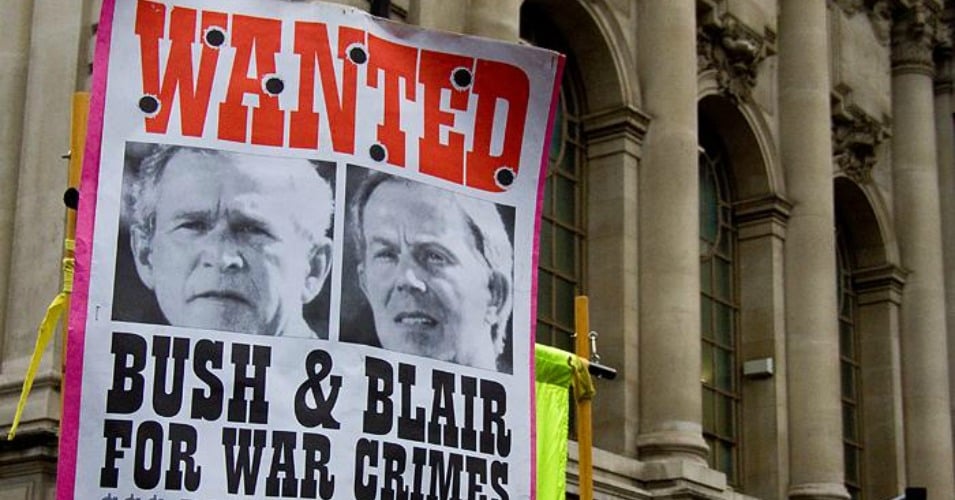
Showing posts with label BLAIR. Show all posts

Thursday, 11 November 2021

IMPERIALIST, LAWLESS, PEDOPHILE, ANUS AND WAR ORIENTED BRITAIN, BIG HARMA BBC BUSH BLAIR CABALAH, AND THEIR ROYAL SIR PRINCE KNIGHT JIMMY SAVILLE!

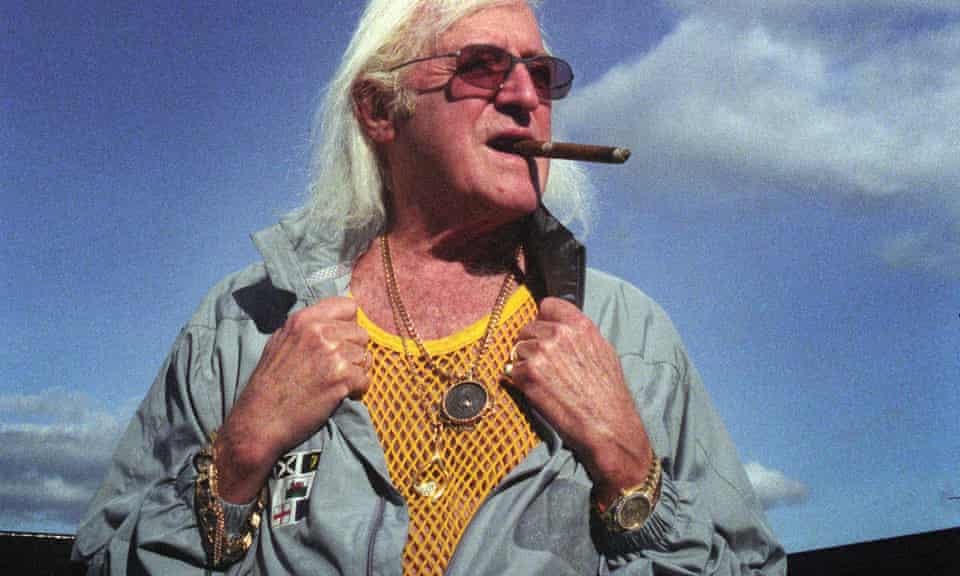
Jimmy Savile in 2007. THE SAME QABBALAH IS GUILTY OF FRANCE INSTITUT PASTEUR-US MILITARY ENGINEERED-PATENTED BILL GATES-WHO WUHAN-COVID-19 PLANDEMIC, AND GENOCIDAL BIO-WEAPON JABS, "GLOBAL" WARMING, LABTQRSTUVWXYZ, AND MORE! 

 Head and shoulders photo of Bill Gates 

MONOPOLIST William Henry Gates III


BUT, WHO GIVES A DAMN?  THE MASSES, THE CHURCHES, AND RELIGIONS ARE ALL TERRORISED BY BRUTAL MILITARY-POLICE, AND ARE ALL COMPLICIT!
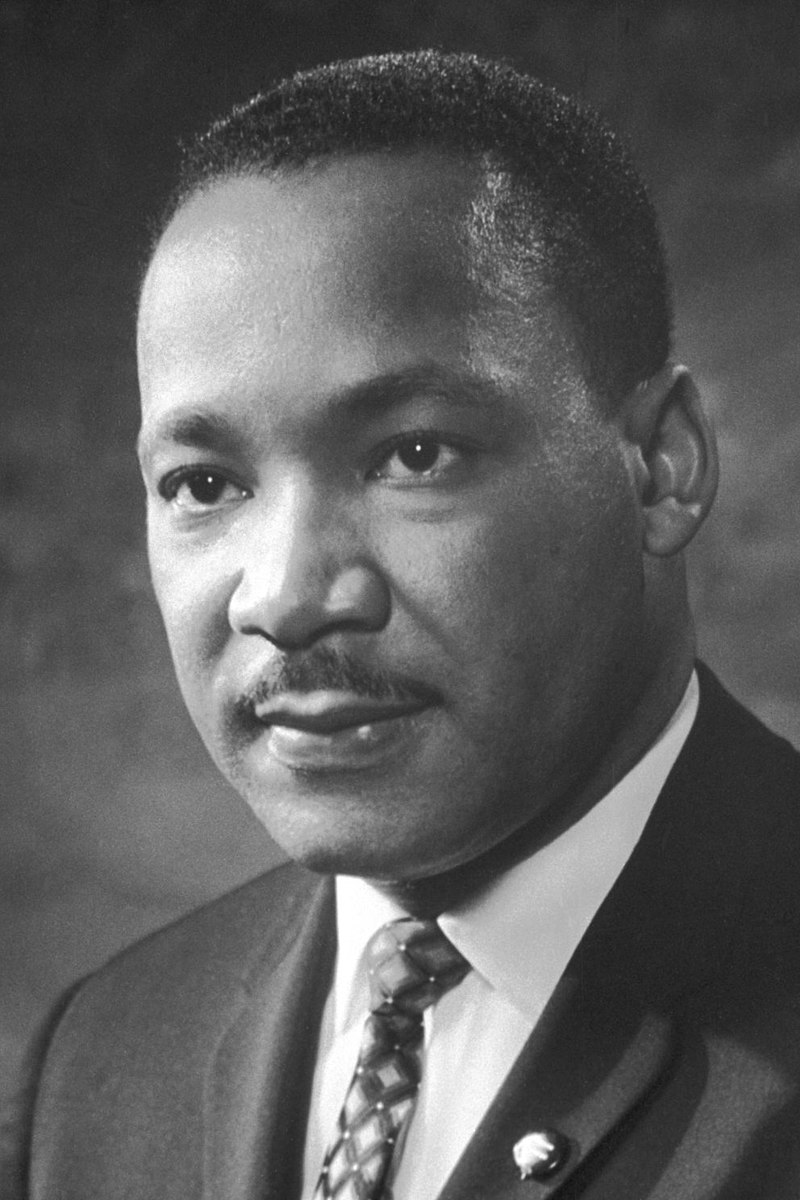
Portrait of King

RACIST PERVERTS LIKE ZIONIST COMMUNIST MICHAEL KING JR. (MLK) AND HINDU KARAMCHAND GANDHI ARE NOBELISED, AND WORSHIPPED LIKE GODS!  

 File:Mahatma-Gandhi, studio, 1931.jpg 

LONG LIVE ROYAL SIR PRINCE KNIGHT JIMMY SAVILLE!

  Jimmy Savile in 2007.

Jimmy Savile in 2007. Photograph: Gary Calton/The Observer

How two BBC journalists risked their jobs to reveal the truth about Jimmy Savile

Listening to the women who alleged abuse, and fighting to get their stories heard, helped change the treatment of victims by the media and the justice system

Tue 2 Nov 2021 06.00 GMT

On Saturday 29 October 2011, the day the entertainer Jimmy Savile died aged 84, a couple of comments were posted on the Duncroft School page of the networking site Friends Reunited. Duncroft was designated as an “approved school” by the Home Office, and offered residential care for “intelligent but emotionally disturbed girls”. “He died today, RIP no RIH yes rot in hell,” read one message. “Perhaps some closure for the childhoods that were ruined by this animal.” Over the next few days a handful more messages appeared: “You child molester – you were no better than all the other pervs who have been banged up … only your celebrity status saved you.” Someone else wrote how she would never recover from what “JS” did to her.

Across the news bulletins and weekend front pages, Savile was being given a sendoff fitting for someone who had achieved national treasure status. As BBC Radio 1 DJ, and co-presenter of the BBC’s flagship music programme Top of the Pops, Savile became a personality in the pop music scene in the 60s and 70s; his oddness and mannerisms enhanced his celebrity. As the host of the long-running Saturday evening TV show Jim’ll Fix It, he played godfather, granting the wishes to children who wrote in. On the Monday after his death, during the news editors’ 9.15 morning meeting at BBC headquarters in west London, those present were asked to take coverage of Savile’s funeral seriously. The concern was that the news editors might sneer at Savile; they were reminded that, to much of the audience, Savile was a northern hero. He had started out working in the mines, going on to earn a knighthood and befriend royalty through his television shows and charity work.

Get the Guardian’s award-winning long reads sent direct to you every Saturday morning

Meanwhile, George Entwistle, the BBC’s head of television, was trying to work out how BBC light entertainment would mark the death of one of its biggest stars. Entwistle was informed that there was no obituary ready to run on Savile – unusual for someone who had made such a contribution to British public life. The decision had been made by successive controllers, a colleague told him by email. Savile had a “dark side”, which meant it was “impossible to make an honest film to be shown so close to death”, his colleague said.

Entwistle emailed his team: the best way forward was to avoid making anything new about Savile. Someone suggested making a Fix It Christmas special hosted by a new BBC star. All agreed. Problem solved. It’d be “a real Christmas treat”, said the BBC1 controller in an email.

Rumours about Savile being a sexual predator and a paedophile had persisted for decades. In his trademark brightly coloured shell suits, scant shorts and string vests, Savile had performed his perversions almost as much as he’d hidden them. His manner almost dared people to challenge him. Because of the UK’s punitive libel laws, no one ever had. On the Monday morning after Savile’s death, in the Newsnight office at BBC Television Centre, social affairs correspondent Liz MacKean and producer Meirion Jones began to investigate Savile’s history.

Jones had a personal connection to the story: his aunt ran the Duncroft School. Over three years in the early 1970s, when he was in his mid-teens, Jones visited Duncroft on weekends with his parents and his sister. They would often see Savile’s white Rolls-Royce parked outside. His parents were concerned about Savile taking the girls off site. Jones met Savile there a few times, always finding it curious how he seemed to speak in catchphrases that created what Jones described as “a screen between him and people around him”.

In 1988, Jones became a journalist at the BBC. It soon became one of the stories he wanted to get a purchase on. Once social media arrived, he would search sites for references to Savile and Duncroft. In 2010, he found a memoir published online by a former Duncroft pupil, detailing abuse by a celebrity “JS”. Jones had spoken to MacKean at different times about pursuing the story, but they were at a disadvantage legally. Savile was part of the establishment, a leading charity fundraiser, and some of the Duncroft girls were offenders. Some had been abused from a young age, and had run away from care homes. No one would believe them against him. “Any witness would be destroyed in court so we’d never get it past the lawyers,” Jones told me. “It’s exactly why he targeted places like that.”

MacKean, then 46, from Hampshire, had two children and worked at Newsnight part-time. As a journalist she was drawn to people on the margins – people who’d been wronged and couldn’t get justice. “She was a lucky person, highly attuned to the unlucky and the unfair,” MacKean’s friend Amelia Bullmore wrote to me.

Within a few weeks of Savile’s death, MacKean had collected on-the-record testimony from 10 women who had been at Duncroft. Seven had been abused and three had witnessed abuse by Savile. It had been difficult to convince them to go public. Some told her they worried they would be seen as complicit; they were sure they wouldn’t be believed. Some feared a backlash, that people would claim they were out for something: compensation, notoriety. MacKean, a BBC journalist of 20 years’ standing, assured the women that they’d have the weight of Newsnight behind them, and the support of the BBC. But a few days before the transmission date, the Newsnight editor, Peter Rippon, told MacKean and Jones that the piece couldn’t be broadcast.

He said they needed to focus on some kind of institutional failure. What about the police investigation that had been halted? MacKean told Rippon that the women’s stories corroborated one another – they didn’t need any other elements. It all stacked up. And on top of this, they had found institutional failure by the BBC. Some of the abuse had taken place on BBC premises, in dressing rooms in Television Centre, the very building in which they were standing.

MacKean couldn’t know the extent to which she’d have to take on the BBC in order to make sure that the former Duncroft pupils were taken seriously. Nor could she know that she and Jones would be risking their careers. But in refusing to drop the story, they helped to change the culture about the way past sexual abuse is talked about, and survivors listened to, in the UK.

The BBC is now making a mini-series about Savile. One of the few details it has announced is that Steve Coogan will play Savile. Some viewers are uneasy about the BBC putting Savile back in the limelight, and have expressed concern about how people still living with the impact of his abuse will feel about it. But the BBC feels the time is right for a reckoning, and says the drama “will examine the impact his appalling crimes had on [Savile’s] victims and the powerlessness many felt when they tried to raise the alarm”.


Savile’s funeral was broadcast live on BBC News on 9 November 2011. The pavements around Leeds Cathedral were thick with mourners as his gold coffin was borne past. MacKean told the documentary maker Olly Lambert in 2014 that she watched this and thought: “The difference between that and the sort of things that people now felt able to start telling us – a gulf like that – that’s a story.”

Working with Jones and MacKean, BBC trainee Hannah Livingston tracked down about 60 former Duncroft pupils. Most immediately assumed the call would be about Savile. Those willing to talk were passed on to MacKean. Over long calls, MacKean began to understand how Savile masterminded the abuse. He would offer the girls cigarettes and trips to Television Centre in his Rolls-Royce. In return, they’d have to give him oral sex in a layby.

Among the Newsnight editorial team there were some squeamish discussions about the Savile story. Jeremy Paxman, Newsnight’s lead presenter for 25 years, whose rigorous, curmudgeonly questioning style defined the programme, told me: “I think there were an awful lot of people who felt that it was at the tabloidy end of things.” One member of the team wanted nothing to do with it on grounds of “taste”. Some thought it was too close to Savile’s death, and sensationalist. “That was one of the arguments deployed at the time,” one former senior Newsnight journalist told me. “Newsnight was meant to be serious, high-minded journalism about politics, economics, foreign affairs and culture, and this isn’t what it should be doing.” Rippon was initially enthusiastic about MacKean and Jones pursuing the Savile story, but, as MacKean told Jones in an email after a meeting she had with Rippon and a member of his editorial team, they were “[of] course concerned about the credibility of the women”.
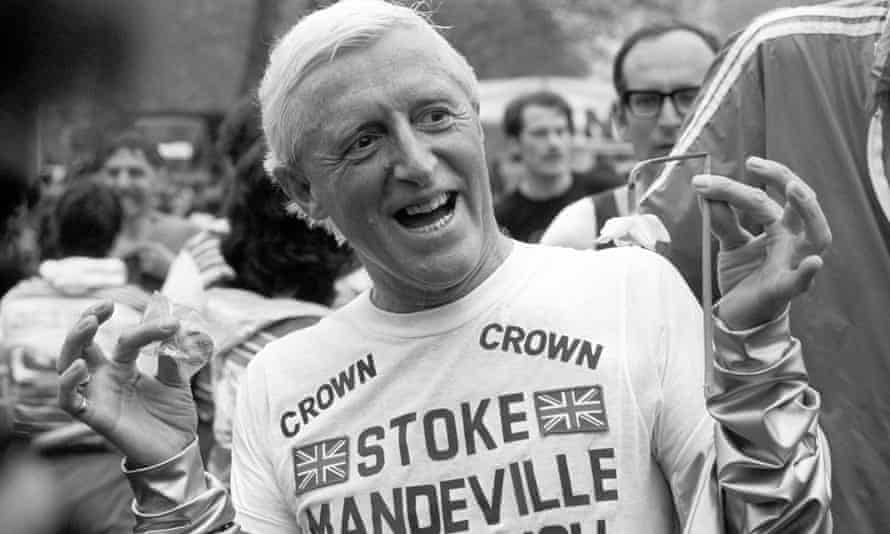
Jimmy Savile in 1981.
Jimmy Savile in 1981. Photograph: PA

MacKean told Lambert in 2014, during a long interview that he recorded but never broadcast: “The women we spoke to were middle-aged. The fact that they’d been in a school like Duncroft showed that their lives were on a difficult course. Perhaps they weren’t the most appealing interviewees for television. There is, within the mainstream establishment, a dislike of those sorts of people, an official indifference, or they just find them difficult to deal with. I think that’s why the BBC then found it so hard to admit that we were investigating Jimmy Savile, because there was a real embarrassment at admitting that the BBC, like all these other official institutions, had just shrugged its shoulders and turned away from people rather than listened.” The BBC said in a statement: “Savile’s actions were profoundly wrong and we are sorry for the pain caused to his survivors … Today’s BBC is a very different place, where complaints about any form of harassment are considered with the utmost seriousness.”

When MacKean arrived at Newsnight in 2000 after being a presenter on BBC Breakfast News, Jones had been producing investigations for the programme for five years. He noticed that she would get stories from people who didn’t usually talk to journalists. “You could absolutely 100% trust her, and the women [from Duncroft] knew they could trust her too,” he said. “And she was totally unafraid.”

While MacKean was working on Savile, I was working as a freelancer, producing another investigation with her at Newsnight. When I first met her in the office that summer, she looked at my hands, saw they were covered in scratches and asked me if I had a kitten at home. Nobody asked questions like that on first meetings at Newsnight: not personal, not domestic, not about kittens. Newsnight was a tough environment, but MacKean was disarmingly herself. She drew people out. Over the next year I would watch MacKean fight for the Savile story, see how her work went unrecognised, how she was ignored and sidelined at the BBC, and how profoundly that affected her.

“She’d always struck me as a very ordinary journalist,” a former senior news executive told me. “She wasn’t ambitious or sharp-elbowed. She didn’t fill the screen.” I put it to him that MacKean’s talents for listening to sources were one of the qualities that made her extraordinary. He considered this for a moment and said: “Listening wasn’t a quality we gave much credit to back then. It should have been.”

In 2010, Jones and MacKean won the Daniel Pearl award for investigative journalism for their report on Trafigura’s toxic waste dumping in Ivory Coast, co-authored with the Guardian. Paxman told me: “Meirion’s like a dog with a bone. I always took it as read that if Meirion said something was true, it was true. Even though there might be very expensive lawyers for the other side, I always believed him. And he worked with Liz. They were not what you’d call ‘clubbable’. I admired Liz very much. She was a difficult woman, but the best journalists very often are difficult.” Because Jones and MacKean had been given freedom to get on with their work in the past, when their editor questioned whether they had done enough on the Savile story, it was a shock.


On Monday 14 November 2011, cameraman Simon Monk picked up MacKean, Jones and Livingston from a train station in the south of England and drove them to the home of the only one of Savile’s victims they had spoken to who had agreed to record an interview on camera. Monk didn’t know what the story was that he had been booked for. “I’ve often thought about that interview,” he told me. “It stayed with me, you know, just little moments of it. I realised – I’m listening to something that happened to this lady, that I was privy to something that had maybe never been shared before.”

In the car on the way back, the team were quiet at first. Slowly they prompted one another’s responses. They had all believed her. “It was subdued,” Monk said, “and I’m thinking: we’re at the beginning of something. The lid is being prised open on this. I’ve worked there for a long time and seen how people have been dealt with, especially women in the Beeb.” Monk turned on the car radio, and by coincidence the BBC Christmas schedule was being announced – including the Savile tributes. “They’ll have to cancel those now,” someone said.

The team were working to corroborate as many fine details as possible from their collection of quotes by the former Duncroft pupils. Rippon asked Jones and MacKean to confirm claims that the police had investigated Savile. On 25 November, Jones received confirmation that Surrey police had investigated Savile in 2007, and that a file had been passed to the Crown Prosecution Service (CPS). Rippon gave the story a transmission date of 7 December. He wrote it on the Newsnight whiteboard, which meant it was certain to be going on air.

Jones sent a draft version of MacKean’s script to the BBC Impact team, which makes sure important stories are headlined on news bulletins across the network. The Impact department expected a lot of interest, and asked if MacKean could be available for live interviews across all BBC outlets on the day of transmission. Two minutes later, Rippon sent an email to his line manager: “The women are credible and have no motive for speaking to us other than they want the truth to be known … We also think that Sky are chasing the story too so we don’t want to sit on it.”

Rippon received a reply from his manager Stephen Mitchell, the deputy head of news, saying he’d call later. At the 2012 inquiry into the BBC’s conduct over the Newsnight investigation, both said they could not remember whether any subsequent conversation took place. Nick Pollard, chair of the inquiry, wrote in his review: “The inability of both … Mr Rippon and Mr Mitchell to provide any recollection of whether they did or did not speak and, if so, what was said, was frustrating.” (When I approached Stephen Mitchell for comment about this, he said: “I would refer you to the two inquiries carried out into these events and the published outcomes of these, as I recall the reports were clear on how the item was handled.”)

But the next day, Rippon had pulled back. He emailed MacKean and Jones asking them to confirm if it was true that the CPS had dropped the case because of Savile’s old age, as some of the Duncroft women had been told. “That makes it a much better story,” he wrote to Jones and MacKean. “Our sources so far are just the women.”
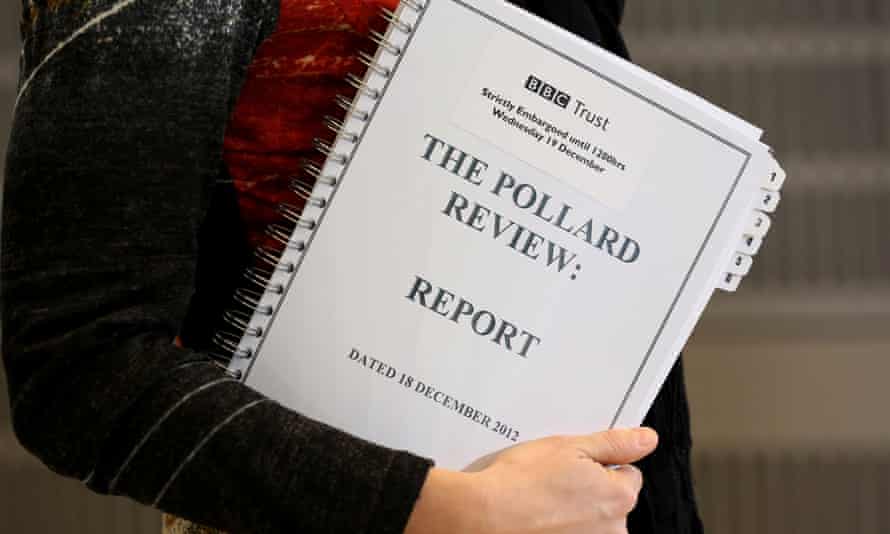
A copy of the Pollard review, published in 2012.
A copy of the Pollard review, published in 2012. Photograph: Reuters

Pollard quoted Rippon’s testimony in his review: “The extent to which we had to rely on the testimony from [the on camera interviewee] was stark. She was the only victim in vision we had and would be the face of our allegations and I remained concerned about how well her testimony would stand up to the scrutiny it would get.”

MacKean, however, was enraged by that phrase “just the women”. She walked into Rippon’s glass-walled office, leaving the door open. “Liz would have been grandstanding,” Jones recalled, “making sure the whole office could hear. He’d have been looking at his toes. Liz, with big arm gestures, was saying: ‘How dare you talk about “just the women”?’ … I don’t remember whether I’d ever seen her bawling out the editor before.”

MacKean asked Rippon to watch their interview with Savile’s victim, but he refused. Pollard wrote in his review: “Mr Rippon told me: ‘I don’t think seeing the interview … seeing something with an eye … gives you any more help in making a judgment about whether something is true or not … I think the kind of concerns that I had, that I was weighing, would not have been swayed by having sat down and watched the interview.’ I think this is a strange thing for a television news journalist and editor to say. Common sense and experience would surely suggest the opposite.”

Rippon wiped the Savile story from the Newsnight whiteboard and told Jones and Mackean to stop work on it until they heard back from the CPS. They didn’t stop. For them, the police investigation was superfluous. They had the story: Savile had been a paedophile and numerous institutions had facilitated his crimes. Jones hired a white Rolls-Royce and filmed it the next day pulling up outside Duncroft.

MacKean and Jones were beginning to realise that Savile’s abuse had taken place on a bigger scale than they’d thought. “By then, we’d also heard rumours about Broadmoor, and quite serious allegations about Stoke Mandeville [hospital],” MacKean told Lambert. “Meirion thought there could be 100 victims … I said, I don’t know, but certainly dozens. And of course we’d both wildly underestimated it, as it turned out. But there was certainly enough there to think, right, a lot of institutions have questions to answer: clearly the BBC, certainly the NHS, and also the Home Office.”

For the next few days, the atmosphere in the Newsnight office was tense. MacKean and Jones quietly continued working on the story as they waited to hear back from the CPS. On 9 December that email came. The CPS said they had dropped the investigation into Savile because of lack of evidence.

“I knew that was the kill,” Jones said.

“This statement [from the CPS about lack of evidence] specifically denied the allegation that the investigation was dropped because of his age,” Rippon later wrote in the Editors’ blog on the BBC website. “I felt it was significant the guidance was included and we had not established any institutional failure and I judged it weakened the story from a Newsnight perspective. I took the decision not to publish.”

The Pollard review recorded that Rippon told them that “the decision to drop the Savile story was his, and his alone”. Pollard found that there was no inappropriate pressure or interference from BBC senior management with the editorial decision not to broadcast the Savile Newsnight programme. MacKean had to ring the women she’d convinced to trust her and tell them the story wasn’t going on air.

“It was crushing and disappointing, but I didn’t accept it,” MacKean told Lambert. “Now she was on a mission to get this story out and to get the truth told, she really was,” MacKean’s wife, Donna Rowlands, told me. There were still a few weeks before Christmas, and MacKean wanted her sources’ voices to be heard before the tributes could air. She leaked the cancellation of her Newsnight investigation to the press. Reporter Miles Goslett got hold of the story and pitched it to seven Fleet Street editors. All turned it down, also on grounds of taste, and because getting into a tussle with the BBC so close to Christmas would cause problems. Even with Savile dead, the story was too much for the British press at that time of year.

On Boxing Day evening, after the regional news and before the family film Madagascar: Escape 2 Africa, 5 million people tuned in to BBC One to watch the actor Shane Richie present the Jim’ll Fix It Christmas special.

In the new year, MacKean and Jones, with more than four decades of service to the BBC between them, gave all their research on Savile to the BBC’s rival, the commercial channel ITV. “Now, obviously that doesn’t make us feel very good as BBC journalists,” MacKean told Lambert. “But given that by then, we really had the feeling that the BBC didn’t want to run this story, the only chance for us to get it out was going to be through someone else.”


On Wednesday 3 October 2012, ITV ran a documentary in their Exposure strand titled The Other Side of Jimmy Savile. Five women, two from Duncroft, spoke about how Savile had sexually assaulted them as underage girls. Not long into the 49-minute programme, the NSPCC helplines began to light up and didn’t stop ringing. And so began a gradual national outpouring of people, mainly women, talking about their own experiences of past sexual abuse, by high-profile figures, or people in their communities, workplaces or families, which many had kept silent about for decades.

The weekend before the Exposure documentary aired, the tabloids had splashed on the Savile allegations. “Sensation as TV legend Jimmy Savile is accused of underage sexual assaults” was the front page of the People. The broadsheets joined in, too, but their focus was specifically on Newsnight’s dropped investigation: “BBC ditched Newsnight investigation into Jimmy Savile,” was the Times’s headline. “BBC denies cover-up over claims Savile targeted underage girls” was the Independent’s.

To tell the Savile story, the BBC had been looking for a case of contemporary institutional failure. By not running it, they had created one. MacKean and Jones were now greeted by cameras and a press mob every time they entered Television Centre. The BBC press office was doing all it could to deflect the story. It put out statements saying that Newsnight had been investigating Surrey police’s Savile investigation, not Savile himself. On 2 October, Peter Rippon published the blog explaining his decision. “Newsnight is not normally interested in celebrity exposé,” he wrote. MacKean was horrified that the former Duncroft pupils, who’d trusted her with painful stories, were being ignored once again by the BBC. And now her and Jones’s work was being publicly undermined. In November, Chris Patten, then chair of the BBC Trust, and George Entwistle, since promoted to director general, were called before a House of Commons select committee to explain what had happened.

Journalists were calling MacKean and Jones, wanting to know their side of the story. Jones ignored the calls at first. MacKean didn’t. MacKean told Lambert: “I remember I had a two-week period of journalists ringing up around the clock, knocking on my door at home, and there was absolutely no one at the BBC I could talk to or get any sort of advice from because we were seen as the enemy within. I remember driving home on Sunday and the phone going, and it was someone from one of the national newspapers to say that a senior member of BBC management had told him that the investigation had been run by a work experience person, and I almost drove off the road.”

The BBC told me that after this year’s investigation into Martin Bashir’s 1995 Panorama interview with Diana, Princess of Wales, which identified profound failures in the application and oversight of editorial values, the BBC Board had commissioned the Serota review “to look at how to further strengthen BBC processes and practices”. The remit of the Serota review was to establish whether the BBC had learned from the mistakes of the past, and to consider whether current practice addressed the challenges that had arisen since 1995. It considered the BBC’s oversight of, and accountability for, editorial decision-making processes; the mechanisms in place for staff and others to raise concerns about editorial issues; the effectiveness of the BBC’s whistleblowing procedures; and the culture within the BBC that supported compliance with the BBC’s editorial values and standards. The Serota review was published in late October, and one of its key findings was that many BBC employees “are apprehensive that speaking up could impact negatively on their career”.

Back in 2012, MacKean and Jones wrote to Rippon, Mitchell and Entwistle trying to correct what they felt were inaccuracies in the BBC’s statements. But the same BBC lines kept appearing in the press. “We were feeling huge pressure from the machine basically saying: go along with what we’re saying,” Jones said. “We were under a lot of scrutiny. There was incredible stress on both of us. And then we decided to do something which meant we’d incur the wrath of management, which was to make the [programme for] Panorama.”
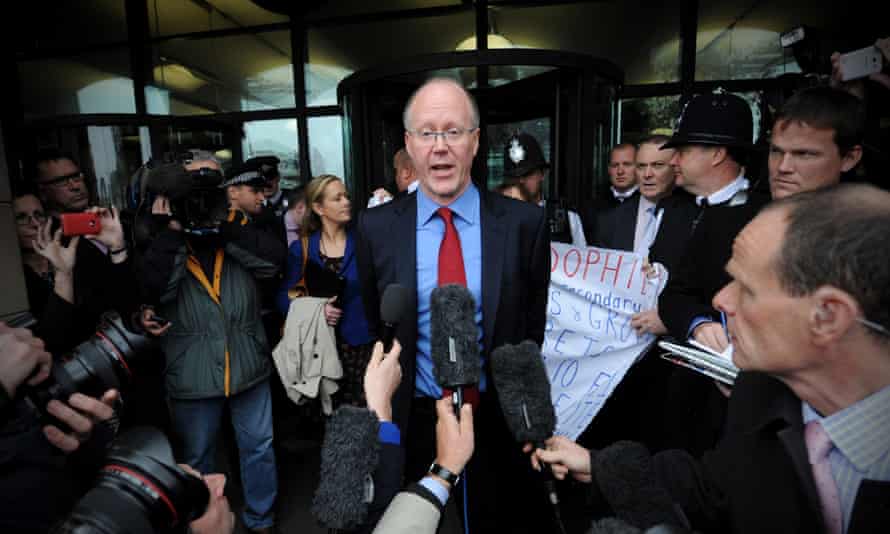
George Entwistle, then director general of the BBC, after attending a Commons culture committee in October 2012.
George Entwistle, then director general of the BBC, after attending a Commons culture committee in October 2012. Photograph: Carl Court/AFP/Getty Images

MacKean and Jones had convinced Tom Giles, the editor of Panorama, the BBC’s investigative current affairs programme, to make a programme about what had happened to Newsnight’s Savile investigation. They handed over to Panorama all their emails and paperwork. MacKean and Jones were told by Panorama that a senior manager had said that if they gave interviews to Panorama, they’d lose their jobs.

“We stopped worrying about her BBC career,” Rowlands, MacKean’s wife, told me. “And I’m not just saying that. That was going to fall the way it fell. OK, it fell more disappointingly than we’d hoped. But the important thing was that the women were heard – that was her number one. And then number two, that the truth was told about what the BBC had done, and the cover-up.”

The BBC press office was split. Part of it promoted the Panorama programme that MacKean and Jones were speaking on, while the other put out the BBC’s corporate reaction to the programme. “It was a baroque arrangement,” one former senior BBC manager said.

“It felt weird, like we’d gone beyond the looking-glass,” one former senior Newsnight journalist remembered, “and we didn’t quite know what the rules were. It was very tooth and claw. You could see there were desperate people among management.”

The weekend before the Panorama investigation was broadcast, Jones received a call from a journalist with a “tipoff” that someone from the BBC press office had told him that the reason Newsnight hadn’t run the Savile investigation was because Jones was trying to conceal the fact that his aunt had been complicit in Savile’s abuse. Jones received official permission to deny it from senior news editor Peter Horrocks, who had come over from the World Service to take on editorial oversight of the Panorama film to avoid a conflict of interest, as senior BBC news managers were the subjects of its investigation. On 21 October, the Mail on Sunday ran the story, and noted that the “BBC civil war intensified,” as the BBC press office and a BBC journalist gave out information that entirely opposed each other.

“It’s just massive pressure,” Jones told me, “when it feels like all your bosses, the whole press office, were fighting a war against you. I would have collapsed over it if I had been on my own – and they would have got away with their pack of lies. But it felt like Liz and I were covering each other’s backs. And there was never a feeling that Liz would crack. She was rock solid on this.”

On Monday 22 October, the Panorama film, Jimmy Savile: What the BBC Knew, was broadcast on BBC One at 10.35pm. On the programme, MacKean said the BBC had been “misleading” the public. Viewers watched as the BBC seemed to be criticising itself. Meanwhile, MacKean amplified her criticisms of what she saw as the BBC’s deafness to the victims of past sexual abuse. She said: “[The] women collectively deserved to be heard, and weren’t heard, and that was a failure. We’d convinced them to talk to us, we’d believed them, and we let them down.”

Rippon stepped down as the Newsnight editor a few hours before the Panorama film went out. (Pollard would later write in his review that Rippon was already “becoming something of a ‘fall guy’”.) The BBC put out a statement saying that the BBC Newsnight investigation had not started out by looking at Surrey police. It was a small admission, but on that point the record had been corrected.

“We were both pretty smashed up after all that,” Jones told me. He remained on a short-term contract with Panorama while MacKean returned to Newsnight alone. “Overnight my relationship with the BBC changed,” MacKean told Lambert. “All of a sudden I was persona non grata, and people who knew me wouldn’t talk to me. I’d sort of sit down and all the usual chit-chat of an office seemed to just fall away.”

MacKean felt that for many in management, and colleagues who were fearful of management, she was now tainted. “It became a world where people were disappearing – you didn’t know if all your bosses were going to be sacked,” a former senior Newsnight journalist told me. He talked about the awkwardness of bumping into MacKean and Jones at the time: “You didn’t know what to say. You didn’t know what they wanted, or how far they wanted to take this.”

MacKean was hurt. “She wasn’t a rebel. So to suddenly be so outside the tent was quite hard,” Rowlands explained. ‘She was so determined that all the truth would come out and all the people who’d lied would be held accountable. But it suddenly put her in a position that wasn’t comfortable for her. Because really, I mean, it sounds corny, but she was a team player. You know she’d always liked the collegiate nature of the BBC.” Her former colleague Jackie Long told me: “It was the one period in the time I knew her that she sounded at all fragile. That inner confidence was rocked.”


Dee Coles was abused by Savile in his campervan when she was 14, while on holiday with her mother in Jersey. When she saw that the Exposure documentary was coming out, she noticed scepticism in some of the papers, and worried that the women coming forward wouldn’t be believed. She wrote to the independent news production company, ITN, and in early October 2012 spoke about her own abuse by Savile on ITV news.

She felt MacKean and Jones’s intervention on Panorama was crucial for building victims’ confidence if they were going to come forward. “Nobody else was fighting that particular corner.” Coles said she saw interviews with people who had been at the BBC when Savile was alive saying they hadn’t seen anything, or there was nothing they could have done. “And so it became massive that someone with a journalistic background who had nothing to gain and everything to lose said [that Savile abused children]. It underpinned the whole thing going forward, because otherwise it would just be a bunch of women saying ‘me too’ before it was hash-tagged. It was so courageous.”

“A lot of how the BBC behaved was as other institutions behaved,” MacKean told Lambert, “whether the courts, the police and NHS hospitals, even within families, people making the complaints are sidelined. They’re disbelieved. And in that way, the BBC behaved exactly as other institutions did.”

A mental shift was now taking place. In a rushed attempt to catch up, Newsnight tried to do a film about another sexual abuse case involving a wealthy industrialist, based on victim testimony. But after the accuser said he got the wrong person, the BBC issued an apology. On 11 November 2012, Entwistle, the BBC director general, resigned.

The Pollard review was commissioned by the BBC to look into “the management by the BBC of a Newsnight investigation relating to allegations of sexual abuse of children by Jimmy Savile”. Pollard, a journalist at Sky, took the chair on 16 October 2012 and collected testimony from all the BBC players involved. On 18 December 2012, he released his findings.

MacKean and Jones turned up at the door to Pollard’s press conference in Broadcasting House. A press officer stopped them from entering. “We were shocked,” Jones said. “But we couldn’t do anything about it.” MacKean and Jones stood together at a television set in another part of the building and watched the press conference, live on the news, together. Pollard told the room: “The Newsnight investigators had got the story right. They had found clear and compelling evidence that Jimmy Savile was a paedophile. The decision by their editor to drop the original investigation was clearly flawed, though I believe it was done in good faith.”

After being barred from Pollard’s press conference, MacKean and Jones decided to address the members of the media who were waiting on the forecourt outside Broadcasting House. A BBC press officer told them that their statements needed to be approved first by the acting head of BBC News. MacKean turned and said: “I think you’ll find they won’t.” She and Jones walked out through the revolving doors to the microphones and stood in front of the flashing cameras. MacKean said: “I think the decision to drop our story was a breach of our duty to the women who trusted us to reveal that Jimmy Savile was a paedophile … Our editor didn’t watch the interview with our main witness. Nick Pollard did, and found her credible and compelling, as did we … I welcome the recommendation that the BBC should trust its journalists.”
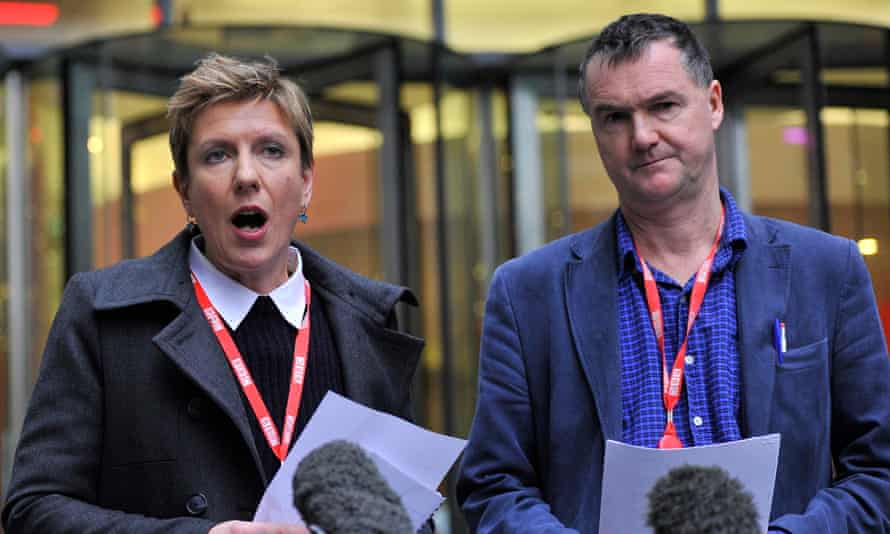
Liz MacKean and Meirion Jones making their statement outside BBC Broadcasting House in London on 19 December 2012 after the release of the Pollard report.
Liz MacKean and Meirion Jones making their statement outside BBC Broadcasting House in London on 19 December 2012 after the release of the Pollard report. Photograph: Toby Melville/Reuters

MacKean and Jones were both invited to individual meetings with the then-acting (and now current) director general of the BBC, Tim Davie. Jones said: “We were both half-expecting that he might say: ‘We’ve got new hands on the tiller, it’s all going to change. Congratulations for going after that really important story. And – I’m sorry.’ But we got the opposite of that. It was new face, same suit.”

In a statement, the BBC said: “In response to Pollard’s findings, BBC management dealt with the issues appropriately at the time setting out a number of actions including the replacement of the senior editorial team at Newsnight; the introduction of regular reports from the Director-General to the BBC Management board about the highest risk programmes and investigations across the BBC.”

Newsnight moved into Broadcasting House in central London in mid-October 2012. The old Television Centre in White City had been sold, and would later be rebuilt into a complex of high-end apartments and restaurants. MacKean was asked to stay behind, sitting in Paxman’s old chair, ready to present the programme should the satellite link fail in the new studio. MacKean called it the “Miss Havisham” role – she’d done it before when presenters were on location. But as she sat there alone in the empty studio, an understudy, it was her story that made the headlines. The Metropolitan police had launched Operation Yewtree on 9 October to investigate Savile and other establishment figures, and 450 people would come forward to give testimony about being abused by Savile. The NSPCC said that in November and December 2012 it intervened to protect 800 more children than in a similar period in previous years. And since its establishment in 2013, the child sexual abuse review panel has sent 78% of cases referred to them to be reopened by the police or CPS because of flaws in the original investigations.

MacKean and Jones had reframed the Savile story. It could no longer be dismissed as a celebrity sex exposé. Now the victims were at the centre. From that moment on, when women spoke out about past sexual abuse, the media, the police and the courts were prepared to listen.

“I think the scandal really did change things,” a senior journalist told me. “In our world, the idea that you wouldn’t run a story where you interviewed victims is now very unusual. Certainly if you have lots and lots of adult women saying something like that – you would run that story now. Weinstein was done partly by the New Yorker and the New York Times – the most heavyweight outlets in the world now do that kind of story.”
MacKean left the BBC in 2013. She went on to make award-winning documentaries for Channel 4’s Dispatches, but she missed the daily grind of the news and her world at the BBC. In 2017, she and her friend and former Newsnight Northern Ireland producer Michael Hughes were watching the BBC’s general election coverage together. “Liz was sad about it,” Hughes said. She wished she was mucking in, reporting the results with her colleagues on election night. “She always had her head held high, but I think she was sad that the Beeb hadn’t fought harder to keep her.” In August 2017, at the age of 52, MacKean had a stroke and died.

I had seen how MacKean’s sense of justice, courage and incisiveness had set off a chain of events that helped to bring justice, and reduce isolation, shame and repression for countless women across the UK and beyond. When I miss Liz’s friendship, I look online for an account of what she helped to achieve through her work on Savile, but I can never find one. So here it is.

Follow the Long Read on Twitter at @gdnlongread, listen to our podcasts here and sign up to the long read weekly email here.

You've read 5 articles in the last year
Article count

… we have a small favour to ask. Tens of millions have placed their trust in the Guardian’s high-impact journalism since we started publishing 200 years ago, turning to us in moments of crisis, uncertainty, solidarity and hope. More than 1.5 million readers, from 180 countries, have recently taken the step to support us financially – keeping us open to all, and fiercely independent.

With no shareholders or billionaire owner, we can set our own agenda and provide trustworthy journalism that’s free from commercial and political influence, offering a counterweight to the spread of misinformation. When it’s never mattered more, we can investigate and challenge without fear or favour.

Unlike many others, Guardian journalism is available for everyone to read, regardless of what they can afford to pay. We do this because we believe in information equality. Greater numbers of people can keep track of global events, understand their impact on people and communities, and become inspired to take meaningful action.

We aim to offer readers a comprehensive, international perspective on critical events shaping our world – from the Black Lives Matter movement, to the new American administration, Brexit, and the world's slow emergence from a global pandemic. We are committed to upholding our reputation for urgent, powerful reporting on the climate emergency, and made the decision to reject advertising from fossil fuel companies, divest from the oil and gas industries, and set a course to achieve net zero emissions by 2030.

If there were ever a time to join us, it is now. Every contribution, however big or small, powers our journalism and sustains our future. Support the Guardian from as little as £1 – it only takes a minute. If you can, please consider supporting us with a regular amount each month. Thank you.


Friday, 25 April 2014

Lawsuit Against Bush and Blair for War Crimes

Lawsuit Against Bush and Blair for War Crimes? International Lawyers Seek Justice for Iraqis

 973
 107  5
 1207
us-army-jared-rodriguez
(Image: Jared Rodriguez / t r u t h o u t; Adapted: Tech. Sgt. Molly Dzitko / U.S. Army, Master Sgt. Andy Dunaway / U.S. Army)

International lawyers and activists converged at a conference titled The Iraq Commission, in Brussels, Belgium, April 16 and 17, with the primary aim of bringing to justice government officials who are guilty of war crimes in Iraq.

“Within a few days of this, a lawless atmosphere developed within my unit,” Ross Caputi, a former marine who took part in the brutal November 2004 siege of Fallujah told the Iraq Commission. “There was a lot of looting going on. I saw people searching the pockets of the dead resistance fighters for money. Some people were mutilating corpses.”

The conference represents the most powerful and most current organized attempt in the world to bring justice to those responsible for the catastrophe in Iraq, and included powerful international lawyers like International Court of Justice lawyer Curtis Doebbler and Louie Roberto Zamora Bolanos, a lawyer from Costa Rica who successfully sued the government of his country for supporting the war in Iraq.
Their goal for the conference was to begin taking concrete steps toward international lawsuits that will bring former UK Prime Minister Tony Blair and former US President George W. Bush, along with those responsible in their administrations, to justice for the myriad war crimes committed in Iraq.
“I was very misinformed and uninformed about the goals of our mission, about who our enemy was and about the danger that we posed to civilians,” Caputi said of the context for his actions. “My command told us that all civilians had left Fallujah and that the only people who remained in the city were combatants. This was not true, though. The Red Cross estimated that up to 50,000 civilians remained trapped in the city. But nobody in my unit knew that.”

“Now is a time for us to close the net on the war criminals,” Dirk Adriaensens, a long-time Iraq activist who cofounded the conference, told Truthout. “If we don’t do that, the fish will get away. But if this is only a legalistic thing, without the activism, it won’t work because people won’t know that it is happening.”

Adriaensens is aiming to generate one massive lawsuit that condemns former (and current) members of the US and UK governments for war crimes, crimes against humanity and crimes against peace for their roles in the Iraq invasion and occupation.

“The conclusions of such a court case would lead to reparations being paid to the state and people of Iraq,” added Adriaensens, who is also a member of the executive committee of the Brussels Tribunal. The tribunal is an international network of intellectuals, artists and activists who denounce and organize against the logic of permanent war promoted by the US government that is currently targeting the Middle East. “We’re here to condemn the original sin: the illegal invasion and occupation of Iraq and how we can bring the perpetrators to court.”

While several people’s tribunals, citizens arrests, and other forms of ongoing activism around Iraq have been helpful and necessary in the absence of the implementation of international law, they have not been enough, the conference organizers believe.

“Legal action is essential and can take many forms: universal jurisdiction, defending Iraqi victims in court, seeking arrest warrants when former US politicians want to travel outside the US,” Adriaensens said.

The “other measures” he references are reparations for the millions of Iraqis who have suffered from the invasion and occupation of their country, as well as former government officials like Bush and Blair spending the remainder of their lives in jail.

International Context
The conference was held at Vrijie University in Brussels, and coincided with the 18th Congress of the International Association of Democratic Lawyers (IADL), where hundreds of lawyers from more than 60 countries gathered in the same venue, with many attending the Iraq Commission.

2014 0418jamail2Dirk Adrieaensens, with the Brussels Tribunal, organized the conference, and has been an Iraq human rights activist for more than two decades. (Photo: Dahr Jamail)

“March 20 marked the 11th anniversary of the US invasion of Iraq, a brutal act of aggression that will be remembered as one of history’s worst crimes,” Sabah al-Mukhtar, chairman of the Iraq Commission and president of the Arab Lawyers Association said during his opening remarks for the conference. “The first decade of the 21st century will probably be viewed as the decade when rules of international law were brought into disrepute like no other time.”

Al-Mukhtar stated that the UN was used “illegally and unethically” to destroy Iraq, a country that was a founding member of the UN.

“Aside from the Abu Ghraib catastrophe; the gang rape and killing of the teenage girl Abeer al-Janabi and her family in Yusufiyah; aside from the targeted killings of academics, media professionals and ethnic or religious minorities, the legacy is more than 4 million Iraqi refugees, more than 3 million orphans and more than a million widows,” he stated to the audience.

While the United States is not a member of the International Criminal Court, former president George W. Bush, along with several members of his cabinet including Donald Rumsfeld, Colin Powell and Condoleeza Rice, to name but a few, are guilty of war crimes for their roles in creating the conditions for the invasion and occupation of Iraq, according to lawyers at the conference.

“Lest current events cloud principles, and in order to restore focus on the rules of international rules, such as state responsibility, human rights, war crimes, crimes against humanity, there will be no justice for the victims of this crime against peace,” Al-Mukhtar stated, in concluding his opening remarks. “We will discuss practical approaches to ensure accountability and put an end to impunity.”

Tun Mahatir Muhammad, the fourth prime minister of Malaysia (and also the longest-serving prime minister of the country), backs the Kuala Lumpur Initiative to Criminalize War, which aims to make all acts of war illegal. Mahatir provided the conference a video message for the occasion.

“We must criminalize war because we consider the killing of one person by another as murder, and we are even prepared to punish him by taking his life,” Mohammed said. “But if you kill a million people in war, it is glorified, and the killers are given medals and statues and honored. There is a contradiction here, and it is time that killing be made a crime, whether it be in peace or in war. And if it is a crime, whoever starts an aggressive war should be considered a criminal and tried in a court of law. That is why our tribunal has tried Mr. Bush and Mr. Blair and found them both guilty as war criminals.”

Muhammad added that their tribunals in Malaysia that reached guilty verdicts on Bush and Blair are valid, because even during the Nuremburg trials, when the prosecutions were unable to find the offender, he was still tried en absentia.

Adrieaensens told Truthout that the war against Iraq “was not just immoral, it was properly illegal and fits the Nuremberg definition of a crime against peace. Such a war should have its legal consequences for the aggressors and rights for the victims under international law.”

2014 0418jamail1Sabah al-Mukhtar is the president of the Arab Lawyers Association and chair of the Iraq Commission. (Photo: Dahr Jamail)

Nevertheless, to date, no government official from any country that were members of the so-called “coalition of the willing” have been brought to justice for war crimes, crimes against humanity or for waging a war of aggression, which is the supreme international crime.

“We have to change that equation,” Adrieaensens said. “All those who are responsible for the invasion of Iraq should be held accountable for the destruction of the country’s infrastructure, its economic and social structures, its historical past and its health and education. Reasonable legal experts should work towards the goal of making reparation with the Iraqi people who have been so deeply affected by this war and its aftermath, and they should bring the perpetrators to justice.”

His group, the Brussels Tribunal, brought together international legal experts to explore possibilities for legal actions against those responsible for the war against Iraq, in hopes that the conference might serve as a working meeting to generate concrete results for future prosecutions.

Michel Chossudovsky, a professor of economics at the University of Ottawa and an author and adviser to governments of developing countries, spoke of what he believes is a “world crisis” caused primarily by the United States’ “long war,” which “threatens the future of humanity.”

“This ‘war without borders’ is being carried out at the crossroads of the most serious economic crisis in world history, which has been conducive to the impoverishment of large sectors of the world population,” he said. “The Pentagon’s global military design is one of world conquest. The killing of civilians is part of that agenda. The US agenda in the Middle East is to change countries into territories, this is the basis of destabilizing country after country across the world, and instituting PAX Americana.”

Chossudovsky believes that US worldwide militarization is part of a global economic agenda, and the invasion of Iraq was but one component of this agenda.

Prior Attempts to Attain Justice
Several attempts have been made to bring the responsible parties to court. A few examples include:
• 2005: The Association of Humanitarian Lawyers filed a petition at Organization of American States (OAS) against the United States for attacks on hospitals and clinics in Fallujah.

• September 2005: German court declared that the Iraq war violated international law.
• November 2006: Center of Constitutional Rights (CCR) filed a war crimes complaint against Donald Rumsfeld in Germany.
• March 2007: Spanish judge called for the architects of the Iraq invasion to be tried for war crimes.
• October 2007: International Federation of Human Rights Leagues (FIDH) and CCR have filed a lawsuit in France alleging that former US defense secretary Donald Rumsfeld allowed torture at US-run detention centers in Iraq and Guantanamo Bay.
• November 2011: In Kuala Lumpur, after two years of investigation by the Kuala Lumpur War Crimes Commission (KLWCC), a tribunal (the Kuala Lumpur War Crimes Tribunal, or KLWCT), consisting of five judges with judicial and academic backgrounds, reached a unanimous verdict that found George W. Bush and Tony Blair guilty of crimes against peace, crimes against humanity and genocide as a result of their roles in the Iraq War.

While it is clear that the International Criminal Court is not being used appropriately to bring justice to those responsible for the disaster in Iraq, there have been several hopeful signs.

• The Chilcot Inquiry, an open inquiry investigating the government of Tony Blair for its role in the invasion and occupation of Iraq, should generate its conclusions, hopefully very soon.

• In January 2014 a devastating 250-page dossier, detailing allegations of beatings, electrocution, mock executions and sexual assault, was presented to the International Criminal Court (ICC) and could result in some of Britain’s leading defense figures facing prosecution for “systematic” war crimes. This formal complaint to the ICC is the culmination of several years’ work by Public Interest Lawyers (PIL) and the European Centre for Constitutional and Human Rights (ECCHR). It calls for an investigation into the alleged war crimes, under Article 15 of the Rome Statute.

• In 2013, American lawyer Inder Comar, who is representing Sundus Shaker Saleh, an Iraqi single mother who is now a refugee in Jordan, as plaintiff against officials in the former administration of former president George W. Bush, filed a class action lawsuit Saleh v. Bush.  The primary complaint revolves around the international precedent that all violent actions by sovereign nations must either be performed in self-defense or with approval of the United Nations Security Council, specifically “no act of aggression.”

“Justice has to prevail, for the sake of our children, for the Iraqi people and for the sake of the future of mankind,” Adrieaensens said. “No justice, no peace. During this commission we will not address the current situation in Iraq. We’re here to condemn the original sin: the illegal invasion and occupation of Iraq and how we can bring the perpetrators to court.”

Crimes Committed in Iraq Since 1991
The first session of the conference highlighted war crimes that have been committed in Iraq since the 1991 Gulf War, but also included the US occupation.

Ross Caputi spoke at length about the war crimes and atrocities he witnessed during the November 2004 US military siege of Fallujah.

2014 0418jamail3Ross Caputi served in the US military, from 2003 to 2006, and participated in the massive military siege of Fallujah in November 2004. (Photo: Dahr Jamail)


He went on to explain that he and his fellow soldiers were not told that US military personnel, who were manning the checkpoints that surrounded Fallujah, were not allowing any “military-aged males” to flee the city, despite a lack of evidence proving they may have been resistance fighters.

“This contributed to the indiscriminate nature of the operation,” Caputi said, of the siege that, according to the Iraqi Fallujah-based human rights and environmental NGO Conservation Center of Environmental and Reserves in Fallujah, resulted in approximately 5,000 residents being killed, at least 60 percent of them civilians.

“We called in airstrikes and used tanks and bulldozers in residential neighborhoods,” Caputi told a silent audience populated by many Iraqis. “There could have been civilians trying to hide out in their homes, but we never took any precautions to make sure there wasn’t. We simply fired wherever we thought there were combatants.”

Caputi told of a tactic used called “reconnaissance by fire,” which is, as he explained, “when you fire somewhere, into a building for example, to see if any combatants are there. This tactic is obviously indiscriminate, but we never even considered the possibility that there might be civilians in these houses that we were firing into.”

“I even saw a unit bulldozing an entire neighborhood, one house after another without checking to see if anyone was inside,” Caputi, who has since founded theJustice for Fallujah project, added.

Caputi went on to tell of the use of the restricted weapon white phosphorous in civilian areas, as well as another incident: “When a 10-year-old boy was bunkered inside a house with two resistance fighters. We demolished the house on top of all three of them.”

He concluded his remarks by telling the audience his life since that time has been about “finding and facing the truth” and working to make amends to the people of Fallujah.

Eman Khamas, an Iraqi author, journalist, human rights activist, and director of the International Occupation Watch Center in Baghdad from 2003 to 2006, also provided eyewitness accounts about war crimes during the occupation, as well as the suffering witnessed during the US-backed sanctions between 1991 and 2003, where more than half a million children died from malnutrition and preventable disease.

She spoke of the US occupation and the lasting consequences of it, including the intentional US policy of “provoking and exploiting sectarian tensions,” which have led Iraq into the disaster that it is today.
Khamas spoke directly of war crimes she was eyewitness to, in addition to the “invisible crime” of killing the Iraqi’s identity by the fracturing of the country, mass detentions of Iraqis by US forces and rampant US air strikes in Iraqi cities resulting in large numbers of civilian casualties.

Ghazwan al-Mukhtar, a well-known Iraqi anti-sanctions activist and editor of theIraq Sources website, addressed the crimes of the sanctions period.

2014 0418jamail4Ghazwan al-Mukhtar spoke of the “genocidal” impact of the sanctions period upon the Iraqi people. (Photo: Dahr Jamail)

Al-Mukhtar addressed the wide-spread starvation that occurred during the US-backed sanctions, the war crime of the US military destroying 90 percent of Iraq’s electrical generating capacity during the 1991 war, and the fact that, according to the Brooking’s Institute, well over half of all Iraqi doctors fled the country after the US-led invasion of 2003.

“My estimate, based on the fact that in five years 500,000 Iraqi children (100,000 per year) were killed by the sanctions, as Madeline Albright admitted, on national television, that since 1996, at that rate, another 900,000 have died, even if we estimate a lower rate of 50,000 per year, but no one takes an action against it.”
“We are a nation that has been tortured, splattered with human feces, exposed naked to the world, and we are a people who have been crucified,” al-Mukhtar concluded.

Legal Action
Dr. Curtis F. J. Doebbler is an international lawyer who, with other lawyers from the conference, is working toward finding a way to bring the war criminals to justice.

Dr. Doebbler practices law before the International Court of Justice, the African Commission and Court of Human and Peoples’ Rights, the European Court of Human Rights, the Inter-American Commission and Court of Human Rights, the United Nations Administrative Tribunal, and the United Nations Treaty bodies.

“International law provides an increasing number of means to redress serious violations of human rights, including those caused by armed conflict,” Doebbler said. “The US and allies’ illegal aggression against Iraq has resulted in the death of at least an estimated 1.5 million Iraqis. It is one of the most serious attacks on the human rights of a people in recent time and perhaps the most serious attack against a people since the adoption of the Charter of the United Nations.”

Doebbler explained that although UN Secretary General Kofi Anan said the invasion of Iraq had violated the UN Security Charter, states must consent to come to the International Criminal Court. And the US did not consent to come before the ICC.

While this doesn’t mean other states could not be brought before the ICC, it would require another country working toward justice to bring the United States before the court. Doebbler had spoken with members of the Iraqi government about bringing the United States before the ICC, but these efforts never got off the ground.

2014 0418jamail5Dr. Curtis F. J. Doebbler, an expert in international law who practices law before the International Court of Justice, believes avenues for prosecuting those responsible for the Iraq war and occupation remain open. (Photo: Dahr Jamail)

One avenue to be pursued toward bringing obvious war criminals to justice is to zero in on instances where a state uses force that threatens someone’s right to life. “If you say the use of force is illegal, then the state should be bound by the restrictions imposed on a state to use force during peacetime, and the threshold [for prosecution] is much lower,” Doebbler explained.

Arbitrary detention of Iraqis, denial of health and education and their right to participate in their own government by overthrowing their government by a foreign intervention, all of these are human rights. Hence, according to Doebbler, “All of these in Iraq could be brought to an international lawyer to be used against states involved in the invasion and occupation of Iraq that led to these actions.”

“I met Nelson Mandela several times,” Doebbler said. “I witnessed discussions he had, and what always struck me was a comment he made regarding the strategies he used for his people’s revolution was that it was important to have a domestic political base. That it’s important to use all necessary means, including the use of force, to be able to achieve self-determination.”

Under international law, the use of force to achieve self-determination is legal.

Mandela also told Doebbler, “We would still be slaves to the white minority in South Africa if we’d been unable to bring our case in front of the international community.”

This [point that nothing has or will be changed to alleviate the suffering of the Iraqi people] is why it is important to continue to aim to bring the case of Iraq before the ICC, whether it be sooner or even later, Doebbler concluded.

Louie Roberto Zamora Bolanos, a lawyer from Costa Rica who is pursuing peace in his country as a constitutional right, has sued the government in Costa Rica and won a “right to peace” under the Costa Rican constitution. He has also sued his government for supporting the war on Iraq, and has ongoing lawsuits against it for production of nuclear fuel for reactors; for allowing the US military to perform duties in Costa Rica, which has no military; and for signing CAFTA, which includes weapons forbidden in Costa Rica.

2014 0418jamail6Costa Rican lawyer Louie Roberto Zamora Bolanos successfully caused the Supreme Court of his country to rule that Costa Rica’s support of the Iraq war was unconstitutional. (Photo: Dahr Jamail)
His work caused the Costa Rican Supreme Court to rule that the country’s support of the Iraq war was “unconstitutional,” and ordered the US government to withdraw Costa Rica’s name from the so-called coalition of the willing.

Lindsey German, the convener of the British antiwar organization Stop the War Coalition, testified about the various legal cases, especially the most recent war crimes evidence from Public Interest Lawyers.

“The constant legal and political challenges to what has gone on in Iraq has helped us to keep the Iraq war in public awareness,” German testified. “There is evidence that the attorney general of the UK gave advice in 2002 and 2003 that the war would be illegal without a second UN resolution.”

She said it was well known to her group that Elizabeth Wilhurst resigned because of the illegality of the war, and this was borne out in the Chilcot Inquiry, whose findings should be reported in the first half of this year.

There have been several legal cases brought against high-ranking British officials, and there has been an ongoing campaign of citizen arrests of Tony Blair. Under British law, people have the right to try to arrest people for crimes, and so far five people have attempted to arrest Blair.

“There have now been three official British inquiries about the war, but we know that these tend to hide the truth rather than reveal it, so we’re not really holding out much hope,” German explained. “But the Chilcot is by far the most wide-ranging, and is investigating the legal advice Blair was given and giving about the decision to invade Iraq. Chilcot still hasn’t reported because Bush and Blair have thus far blocked it from doing so.”

She expects the Chilcot results, even if they are watered down by the time they are made public, will still serve as an indictment of Tony Blair.

Jose Antonio Martin Pallin, a well-known Spanish jurist, was a public prosecutor at the Spanish Supreme Court, and he is judge emeritus at the Supreme Court.

“In April 2003, Jose Couso, a Spanish cameraman, was shot dead by a US tank while he was working in Baghdad during the US invasion,” Pallin explained, of the legal process of Couso’s killing.

The Pentagon acknowledged its responsibility for the act as an act of self-defense. However, Pallin hopes that the complex judiciary process of this case, not closed today, will eventually show the possibilities of international indictment for the “criminals.”

2014 0418jamail7Spanish public prosecutor Jose Antonio Martin Pallin, a well-known Spanish jurist, is hoping for an international arrest warrant for the US military members who killed Spanish journalist Jose Couso in Baghdad during the US invasion of Iraq. (Photo: Dahr Jamail)

“There’s an international arrest warrant against Thomas Gibson, Captain Philip Wolford and Lieutenant Philip de Camp, Couso”s assassins,” Pallin stated. “The judge in charge, Mr. Pedraz, accuses them of assassination and of a crime against the international community as the US military attacked journalists, all who stayed at the Palestine Hotel.”

On that day, US military attacks on journalists in Baghdad killed three, while wounding several others.
“The charges are murder and crime against the international community,” he added. “After different setbacks, a new indictment was filed in October 2011.”

Judge Pallín denounced “the extremely hard pressures from the US embossing in Spain that Judge Pedraz has been receiving from the very beginning of this investigation,” but he remains committed to his work despite “the almost complete abolition of universal jurisdiction.”

Couso’s case could set international precedent for future legal cases against individual members of the US military who committed murder and other crimes in Iraq.

Niloufer Bhagwat, professor of comparative constitutional law at the University of Mumbai and vice president of the Indian Lawyers Association in Mumbai, provided testimony at the end of the conference session on international law.

“The international legal system as it exists today has been created in the last 25 years, and it is in this period that the Nuremburg principles of justice have been set aside,” said Bhagwat, who also served as a judge with the Tokyo International Tribunal for War Crimes in Afghanistan. “We are in a similar situation as they were in the 1920′s and ’30′s. Successive wars of aggression, and a system that gives impunity to the real war criminals while lining up the usual suspects of certain African countries to be tried.”

She described the current international system as “victors’ justice” that supports western colonization and does not take into account the US ultimatum to Japan during World War II that led to the nuclear bombings. “This system is haunting us today,” she told the audience.

The reason the shift has been made in the international justice system, stated Bhagwat, was to support a financial system that, after the cold war, distorted the UN charter and began creating a new legal system that would work in favor of the “new liberal imperialism.”

2014 0418jamail8Niloufer Bhagwat, professor of comparative constitutional law, told the conference how international law has been manipulated by the United States and its allies so as to avoid international prosecution for crimes they have committed. (Photo: Dahr Jamail)

Regarding Iraq, Bhagwat had this to say:
The entire regime of sanctions in Iraq was in gross violation of the right to life under Article six of the International Covenant on Civil and Political Rights, 1966; Article two of the European Covenant for the Protection of Human Rights and Fundamental Freedom 1950 and Article four of the African Charter on Human Rights.
She explained that special tribunals were selectively established by the UN Security Council in pursuit of the strategic and economic interests of “some of the permanent members, in violation of the basic norms of national and international criminal law; consequently special interests, via their governments, have waged successive wars nullifying all human progress through death and destruction.”

Bhagwat said a privatized form of intervention and warfare by hired mercenaries and fascistic special forces has also been used, and to restore civilization, it is necessary to try those responsible through a transparent process involving the people and countries who are victims insuring legal liability and deterrent sentences, either internationally, or within national legal jurisdictions of those accused of war crimes or the countries where those crimes were committed.

“As for Iraqi Prime Minister Maliki’s government,” she concluded. “Even Muqtada al-Sadr said the situation has been reduced to the dark ages, and there is no other solution but for everyone in Iraq to unite and remove the government of President Maliki.”

The final speaker of the first day of the conference was Professor Gurdial Singh Nijar, a senior practicing lawyer and lead prosecutor of the Kuala Lumpur War Crimes Tribunals on Iraq.

Nijar summarized the importance of the commission and of the work activists and lawyers have ahead of them, as they strive to bring justice to George W. Bush, Tony Blair and all other members of their cabinets who are responsible for the violations of international law that have occurred, and continue to occur, in Iraq.

“There has been a rollback of international law,” Nijar explained. “And this is why the role of the people’s tribunal now takes on an important role. Because the people alone are the motivating force in making world history.”

Copyright Truthout. Reprinted with permission.

DON'T WE NEED "REGIME CHANGE" IN THE UK TOO?  WESTERN IMPERIALISM AND COLONIALISM NEVER ENDED!

Dear Ghyslaine,

The G8's New Alliance for Food Security and Nutrition: it hides its ugly purpose behind a benevolent-sounding name. But in reality, the New Alliance is a dangerous group of corporations bent on taking control of Africa's land and resources—and the UK is funding it.

Tell Secretary of State Greening to withdraw its £600m of support for the New Alliance.

The New Alliance is, at its heart, supporting policies that will force African farmers to bow down to corporate whims, no matter how much it hurts them.

It's about taking land, seeds, and resources out of African hands and putting them into those of multinationals. 100 African civil society groups said it best: the New Alliance is nothing but a new wave of colonialism.

Let's put colonialism back where it belongs: the past. Sign the petition demanding a halt to the UK's funding of the neocolonial New Alliance today.
“Rosa”
Thanks for all you do,

Rosa K.
Care2 and ThePetitionSite Team

Stop the Corporate Takeover of Africa's Food

Stop the Corporate Takeover of Africa's Food

  • author: World Development Movement
  • target: Justine Greening, Secretary of State for International Development
  • signatures: 18,228
18,228
25,000
we've got 18,228 signatures, help us get to 25,000
The UK government is helping corporations take over Africa's food. In the name of tackling hunger, UK-funded initiatives like the G8's New Alliance for Food Security and Nutrition are helping multinational companies grab African land, seeds and resources.

For corporate giants like Unilever and Monsanto, this means vast profit. But for small-scale farmers, who feed most of the population, it means losing control of their livelihoods and the resources needed to grow food. Over 100 African farmers' groups have called this a "new wave of colonialism".

Send a message to Justine Greening, Secretary of State for International Development, urging the government to stop funding this corporate takeover. 

THIS IS WHAT HAPPENS WHEN CHRISTIANS BETRAY CHRIST AND GIVE THE JUDAICS ALL POWER OVER THE ENTIRE PLANET THEY HAVE CONQUERED! 

Vickie Jacobs shared a link.
2 hrs ·
Things come apart so easily when they have been held together with lies. (Dorothy Allison, b. 1949.) On 7th September 2002, speaking at a Press Conference…
globalresearch.ca

Iraq: US, UK Fabricated WMD Threat – Created the Reality

 58
 14  2
 
 120
Iraq-WMD
Things come apart so easily when they have been held together with lies. (Dorothy Allison, b. 1949.)
On 7th September 2002, speaking at a Press Conference flanked by Prime Minister, Tony “dodgy dossier” Blair, President George W. Bush stated that Saddam Hussein was just six months away from an Iraqi nuclear age. (1) The timeline, said Bush, had come from the International Atomic Energy Agency Report issued that morning.
Blair confirmed
“ . . . The threat from Saddam Hussein and weapons of mass destruction … that threat is real. We only need to look at the Report from the International Atomic Energy Agency (IAEA) this morning, showing what has been going on at the former nuclear weapon sites to realize that.”


There was no Report from the IAEA “that morning.” The Report to which Bush and Blair were referring was from 1998 and included:
 . . . based on all credible information available to date . . . the IAEA has found no indication of Iraq having achieved its program goal of producing nuclear weapons or of Iraq having retained a physical capability for the production of weapon-useable nuclear material or having clandestinely obtained such material.
The pair continued to stress the lie of the immediacy of the Report with Bush replying to a question from an AP journalist with the preamble: “We just heard the Prime Minister talk about the new Report …” (2)
When the story was further challenged a White House spokesperson even stated the Report might, in fact, have come from 1991. The chief IAEA spokesman denied any such 1991 Report.

THE IRRADIATION OF IRAQ.
Of course in 1991 every factory, including those making glass, cement, bricks, every military facility, chicken farm, agricultural processing unit, the whole industrial infrastructure, was erased by coalition bombs, with the US and UK liberally spreading radiation throughout the region with their depleted uranium missiles. Iraq had no nuclear capability but the country and the region would pay the price in cancers and birth deformities until the end of time, poisoned by up to 900 tonnes of residual radioactive and chemically toxic dust, also seeping in to water tables, earth, thus fauna flora – thus inhaled and ingested by the population. Black ironies do not come darker.
2003’s scorched earth onslaught, the invasion and subsequent years of bombings brought further radioactive pollution in orders of magnitude. The US is now bombing again.
Iraq’s French built Osirak nuclear reactor at Tuwaitha had been destroyed by Israel on 7th June 1981, before it came on line. The warehouse in France housing the wherewithal for the reactor, awaiting shipment, was blown up. As the US, Israel calls its destructions by silly names, this one was called “Operation Opera.” The Tuwaitha complex was bombed again by the US in 1991.
Imad Khadduri, author of “Iraq’s Nuclear Mirage”, eminent Iraqi nuclear scientist is adamant that the nuclear programme was abandoned on the orders of Saddam Hussein after the 1991 war, with those involved directed to sign a commitment to that effect by President Saddam.
The relevance of the above is, of course, that Iraq was destroyed on a nuclear lie, whilst the nuclear reality is that the actions, primarily of the US and the UK, have poisoned the land, the people – and those of the region – with nuclear and chemical lethality for all time. The half life of depleted uranium is 4.5 Billion years. The soaring cancers and birth defects have been linked to this nuclear nightmare.

NUCLEAR CATASTROPHE.      
When the US invaded, the first mission of the troops was to secure the Oil Ministry, the oil fields and oil industrial infrastructure.
Weapons of mass destruction, the lie for the war, came a distand second in concerns. The Tuwaitha complex, developed as the Baghdad Nuclear Research Facility in the early 1960s, an approximately 120 acre complex around eighteen km south of Baghdad was ignored. A decision of criminal negligence.
The large complex in which numerous buildings held decades worth of lethal nuclear materials from the abandoned nuclear programme had been sealed by the IAEA, was further protected by steel doors and over four hundred round-the-clock guards.
Five weeks after the invasion, The Washington Post’s Barton Gellman wrote (3):
Before the war began last month, the vast Tuwaitha Nuclear Research Center held 3,896 pounds of partially enriched uranium, more than 94 tons of natural uranium and smaller quantities of cesium, cobalt and strontium, according to reports compiled through the 1990s by inspectors from the International Atomic Energy Agency.
Immensely valuable on the international black market, the uranium was in a form suitable for further enrichment to ‘weapons grade’, the core of a nuclear device.
The other substances, products of medical and industrial waste, emit intense radiation. They have been sought, officials said, by terrorists seeking to build a so-called dirty bomb, which uses conventional explosives to scatter dangerous radioactive particles.
Tuwaitha, with its at least 409 barrels of nuclear materials would be a terrorists dream.
Defense officials acknowledge that the U.S. government has no idea whether any of Tuwaitha’s potentially deadly contents have been stolen, because it has not dispatched investigators to appraise the site.
What it does know, according to officials at the Pentagon and U.S. Central Command, is that the sprawling campus … lay unguarded for days and that looters made their way inside.  (Emphasis added.)
As “Operation Iraqi Liberation” (OIL) engulfed Iraq, the guards had fled for their lives.
Incredibly:
“Disputes inside the U.S. Defense Department and with other government agencies have slowed the preparation of orders for a team of nuclear experts to assess Tuwaitha, officials said. Though it anticipated for months that war would leave it with responsibility for Iraq’s nuclear infrastructure, the Bush administration did not reach consensus on the role it would seek at those facilities.”
Corey Hinderstein, Deputy Director of the Institute for Science and International Security, found it “extremely surprising” when told that U.S. nuclear experts had not yet been to Tuwaitha.
“I would have hoped that they would try to assess as quickly as possible whether the site had been breached. If there is radiological material on the loose, with the chance that it may be transferred across borders, it would be extremely important to know that (in order) to prevent it from crossing a border or being transferred to a terrorist or another state.” (Emphasis added.)
In addition to their scarcely believable fecklessness with the most lethal of materials, the US and UK insurgents left the borders wide open – a situation remaining thirteen years on.

TERRIFYING FALLOUT.
Defence analyst Andy Oppenheimer, a specialist in counter-terrorism and chemical, biological, radiological, nuclear weapons and explosives wrote a meticulously detailed, chilling document on the resultant tragedy published in October 2003. (4) Radiological material was certainly “on the loose in Iraq” and the results were locally catastrophic. What might have happened – or might still happen – further afield is seemingly unknown.
What is known is that hundreds of barrels were stolen from the abandoned plant, the radioactive and chemical content tipped out, and the barrels used to collect water for cooking,  to wash in, for storage. Water treatment plants, facilities, had been bombed and water was collected by any means from rivers, rain – the lethally contaminated barrels were a boon.
Oppenheimer wrote:
There has been growing concern over radiation poisoning in the neighbourhoods near al-Tuwaitha. Local doctors have reported cases of radiation sickness in nearby villages. There are also fears that local farms as well as the water supply may have been contaminated in the post-war chaos. According to local doctors, as many as 2,000 residents in the villages near the site have been showing the telltale symptoms of acute radiation sickness – nosebleeds, rashes, hair loss, respiratory distress, and vomiting. People have drunk water stored in plastic barrels stolen from the complex. One local fruit merchant’s children fell ill after drinking the water.
Doctors fear that hundreds could have been contaminated and may have ingested radioactive material. An Iraqi nuclear engineer and a founder of the al-Tuwaitha site, Dr. Hamid Al-Bah’ly, interviewed on Al-Jazeera TV, witnessed the spread of nuclear contamination firsthand. At one home, Al-Bah’ly discovered radioactive contamination in clothes and beds. In others, he recorded radiation levels 500 to 600 times higher than acceptable levels. Iraqi and foreign doctors are to conduct a major health survey in the affected areas near al-Tuwaitha; during June there was talk of evacuating villagers. Radiation sickness aside, the risk of Iraqis who have been contaminated contracting leukaemia and other cancers at a later date appears very high.
The paper highlights:
“the danger of radioactive materials falling into the hands of terrorists seeking to make radiological dispersion devices (RDDs – dubbed ‘dirty bombs’). There is clearly potential for looted materials to be sold on by looters to terrorist groups seeking to make RDDs.”
US intelligence had shown Al Qaeda’s interest in the use of radioactive weapons. Intelligence whose priority was non-existent in protecting the wherewithal to create such horrors – in a region where Al-Qaeda literally seemed to enter Iraq with the troops and whose offspring is now ISIS whose adherents regard death as a prize, not a fear and surely would not have a moment’s concern in irradiating entire regions, adding to the burden of what the the US has already done.

NOVEMBER 2015 – ANOTHER POTENTIAL NUCLEAR NIGHTMARE.
Now Iraq has a new nuclear threat. The theft has come to light: “of a highly dangerous radioactive source of Iridium -192 with highly radioactive activity from a depot…in the Rafidhia area of Basra province.” (5) Though the material went missing in November, the disappearance has only just come to light.
The material is classed as a Category 2 radioactive by the International Atomic Energy Agency – meaning it can be fatal to anyone in close proximity to it in a matter of days or even hours.
Moreover: “A security official said the initial investigation suggested the perpetrators had specific knowledge of how to handle the material and how to gain access to the facility” where it was stored. Army and police are working “day and night” to locate the stolen material, a spokesman for Basra Operations Command told Reuters. Nearly four months on it seems they are not doing too well.
Iridium-192 is used in industrial photography to locate flaws in metal components as well as in radiotherapy. It seemingly belonged to the giant Turkey based SGS group whose:
“ …  robust technology, knowledge-based approach and dedication to quality and safety allow us to provide innovative solutions to every part of the oil and gas industry” and was being used to test pipes at an oil field.”
It was reportedly being kept in a protective laptop-sized case in a depot belonging to US oilfield services company Weatherford. The isotope was apparently being used to check for flaws in oil piping etc., in Basra’s great oil industry, so speedily secured by the invaders.
However, both SGS and Weatherford deny responsibility for the disastrous loss, and according to Reuters are trading recriminations. (6)
Supremely ironically, under the decimating embargo years, Iraq was not even allowed chemotherapy for the rocketing cancers, X-rays or any therapeutic radiation. Saddam would somehow transform them into nuclear weapons US-UK Inc., fantasized.
Iraq now lives in an uncontrollable, nightmare nuclear age, delivered by Bush and Blair’s lies, bombs and actions.
Footnote: Extensive inquiries have so far failed to confirm whether an inventory of what went missing from Tuwaitha and other sites from the abandoned nuclear programme, was undertaken, or whether there were efforts to follow up on the ills from the affected areas or attempts to clean them. Inquiries will continue.
Notes
  1. http://www.celticguitarmusic.com/MlandCampDavid.htm
  2. http://transcripts.cnn.com/TRANSCRIPTS/0209/07/bn.01.html
  3. http://www.washingtonpost.com/wp-dyn/content/article/2006/06/12/AR2006061200896.html
  4. http://www.acronym.org.uk/dd/dd73/73op03.htm
  5. http://www.independent.co.uk/news/world/middle-east/isis-nuclear-dirty-bomb-iraq-oil-field-a6879481.html
  6. http://uk.reuters.com/article/uk-mideast-crisis-iraq-sgs-sa-idUKKCN0VR1IP?feedType=RSS&feedName=worldNews

Comment on Global Research Articles on our Facebook page
Become a Member of Global Research