

Both BAFS Mother's two Muslim brothers fought in the Joodeo-British Imperialist Army of Assassins in the Muslim Arab world!
AFRICAN BAFS - A HINDU MUSLIM OF HINDUSTANI BIHARI, GUJARATI AND AFRICAN LINEAGE - THE TYPE ENGLISH EDUCATED RANBIR SINGH HATES!
HOW CONVENIENT TO WIPE OUT COMPLETELY MUGHAL (100%) AND MUSLIMS (200 MILLION) OFF HINDUSTANI POLITICS?
HINDUSTAN WAS AN ESTABLISHED MUGHAL CREATION ENCOMPASSING ALL NATIVES AND THEIR RELIGIONS!
I WAS A MUSLIM "HINDOO" BEFORE RACISTS MONOPOLISED THAT TERM!
Illuminati and the CFR-A 1967 Audio Lecture By Myron C. Fagan HQ FULL



GENOCIDE, THE BRITISH DON’T WANT YOU TO KNOW ABOUT – THEY SYSTEMATICALLY STARVED TO DEATH OVER 60 MILLIONS OF EASTERN INDIANS!
British Colonials Starved to Death 60 million-plus Indians, But, Why?
by Ramtanu Maitra
July 3, 2015 EIR
The chronic want of food and water, the lack of sanitation and medical help, the neglect of means of communication, the poverty of educational provision, the all-pervading spirit of depression that I have myself seen to prevail in our villages after over a hundred years of British rule make me despair of its beneficence. — Rabindranath Tagore
If the history of British rule in India were to be condensed to a single fact, it is this: there was no increase in India’s per-capita income from 1757 to 1947.[1]
Churchill, explaining why he defended the stockpiling of food within Britain, while millions died of starvation in Bengal, told his private secretary that
“the Hindus were a foul race, protected by their mere pullulation from the doom that is their due.”[2] Madhusree Mukerjee, Churchill’s Secret War: The British Empire and the Ravaging of India during World War II, New York: Basic Books.
June 27— During its 190 years of looting and pillaging, the Indian
Subcontininent as a whole underwent at least two dozen major famines,
which collectively killed millions of Indians throughout the length and
breadth of the land. How many millions succumbed to the famines cannot
be fully ascertained. However, colonial rulers’ official numbers
indicate it could be 60 million deaths. In reality, it could be
significantly higher.

British colonial analysts cited droughts as the cause of fallen agricultural production that led to these famines, but that is a lie. British rulers, fighting wars in Europe and elsewhere, and colonizing parts of Africa, were exporting grains from India to keep up their colonial conquests—while famines were raging. People in the famine affected areas, resembling skeletons covered by skin only, were wandering around, huddling in corners and dying by the millions. The Satanic nature of these British rulers cannot be overstated.
A Systematic Depopulation Policy
Although no accurate census figure is available, in the year 1750 India’s population was close to 155 million. At the time British colonial rule ended in 1947, undivided India’s population reached close to 390 million. In other words, during these 190 years of colonial looting and organized famines, India’s population rose by 240 million. Since 1947, during the next 68-year period, Indian Subcontininent’s population, including those of India, Pakistan, and Bangladesh, has grown to close to 1.6 billion. Thus, despite poverty and economic depravity in the post-independent Indian Subcontininent, during those 68 years population has grown by almost 1.2 billion.
Records show that during the post-independence period, the Subcontininent has undergone drought conditions in parts of the land from time to time, but there was no famine, although thousands still die in the Subcontininent annually due to the lack of adequate amount of food, a poor food distribution system, and lack of sufficient nourishment. It is also to be noted that before the British colonials’ jackboots got firmly planted in India, famines had occurred but with much less frequency—maybe once in a century.
There was indeed no reason for these famines to occur They occurred only because The Empire engineered them, intending to strengthen the Empire by ruthless looting and adoption of an unstated policy to depopulate India. This, they believed would bring down the Empire’s cost of sustaining India.
Take, for instance, the case of Bengal, which is in the eastern part of the Subcontininent where the British East India Company (HEIC, Honorable East India Company, according to Elizabeth I’s charter) [Check Brendon Lee O'Conell about this one! BAFS] had first planted its jackboots in 1757. The rapacious looters, under the leadership of Robert Clive—a degenerate and opium addict, who blew his brains out in 1774 in the London Berkley Square residence he had procured with the benefits of his looting—got control of what is now West Bengal, Bangladesh, Bihar, and Odisha (earlier, Orissa), in 1765. At the time, historical records indicate India represented close to 25% of the world’s GDP, second only to China, while Britain had a paltry 2%. Bengal was the richest of the Indian provinces.
Following his securing control of Bengal by ousting the Nawab in a devious battle at Plassey (Palashi), Clive placed a puppet on the throne, paid him off, and negotiated an agreement with him for the HEIC to become the sole tax collector, while leaving the nominal responsibility for government to his puppet. That arrangement lasted for a century, as more and more Indian states were bankrupted to facilitate future famines. The tax money went into British coffers, while millions were starved to death in Bengal and Bihar.
Clive, who was made a Fellow of the Royal Society in 1768 and whose statue stands near the British Empire’s evil center, Whitehall, near the Cabinet War Room, had this to say in his defense when the British Parliament, playing “fair,” accused him of looting and other abuses in India:
Consider the situation which the Victory of Plassey had placed on me. A great Prince was dependent upon my pleasure; an opulent city lay at my mercy; its richest bankers bid against each other for my smiles; I walked through vaults which were thrown open to me alone, piled on either hand with gold and jewels! By God, Mr. Chairman, at this moment I stand astonished at my own moderation.
However, Clive was not the only murderous British colonial ruler. The British Empire had sent one butcher after another to India, all of whom engineered looting and its consequent depopulation.
By 1770, when the first great famine occurred in Bengal, the province had been looted to the core. What followed was sheer horror. Here is how John Fiske in his American Philosopher in the Unseen World depicted the Bengal famine:
All through the stifling summer of 1770 the people went on dying. The husbandmen sold their cattle; they sold their implements of agriculture; they devoured their seed-grain; they sold their sons and daughters, till at length no buyer of children could be found; they ate the leaves of trees and the grass of the field. . . . The streets were blocked up with promiscuous heaps of the dying and dead. Interment could not do its work quick enough; even the dogs and jackals, the public scavengers of the East, became unable to accomplish their revolting work, and the multitude of mangled and festering corpses at length threatened the existence of the citizens…. [3]
Was there any reason for the famine to occur? Not if the British had not wanted it. Bengal, then, as now, harvested three crops a year. It is located in the delta of the Gangetic plain where water is more than plentiful. Even if drought occurs, it does not destroy all three crops. Moreover, as was prevalent during the Moghul days, and in earlier time, the surplus grain was stored to tide the population over if there were one or two bad crops.
But the looting of grains carried out by Clive, and his gang of bandits and killers, drained grain from Bengal and resulted in 10 million deaths in the great famine, eliminating one-third of Bengal’s population.
It should be noted that Britain’s much-touted industrial revolution began in 1770, the very same year people were dying all over Bengal. The Boston Tea Party that triggered the American Revolution had taken place in 1773. The Boston Tea Party made the Empire realize that its days in America were numbered, and led Britain to concentrate even more on organizing the looting of India.
Why Famines Became So Prevalent During the British Raj Days
The prime reason why these devastating famines took place at a regular intervals, and were allowed to continue for years, was the British Empire’s policy of depopulating its colonies. If these famines had not occurred, India’s population would have reached a billion people long before the Twentieth Century arrived. That, the British Empire saw as a disaster.
To begin with, a larger Indian population would mean larger consumption by the locals, and deprive the British Raj to a greater amount of loot. The logical way to deal with the problem was to develop India’s agricultural infrastructure. But that would not only force Britain to spend more money to run its colonial and bestial empire; it would also develop a healthy population which could rise up to get rid of the abomination called the British Raj. These massive famines also succeeded in weakening the social structure and backbone of the Indians, making rebellions against the colonial forces less likely. In order to perpetuate famines, and thus depopulate the “heathen” and “dark” Indians, the British imperialists launched a systematic propaganda campaign. They propped up the fraudster Parson Thomas Malthus and promoted his non-scientific gobbledygook, “The Essay on Population.” There he claimed:
This natural inequality of the two powers of population and of production in the earth, and that great law of our nature which must constantly keep their effects equal, form the great difficulty that to me appears insurmountable in the way to the perfectibility of society. All other arguments are of slight and subordinate consideration in comparison of this. I see no way by which man can escape from the weight of this law which pervades all animated nature.
Although Malthus was ordained in the Anglican Church, British Empire made him a paid “economist” of the British East India Company, which, with the charter from Queen Elizabeth I under its belt, monopolized trade in Asia, colonizing vast tracts of the continent using its well-armed militia fighting under the English flag of St. George.
Malthus was picked up at the Haileybury and Imperial Service College, which was also the recruiting ground of some of the worst colonial criminals. This college was where the makers of British Empire’s murderous policies in India were trained. Some prominent alumni of Haileybury include Sir John Lawrence (Viceroy of India from 1864-68) and Sir Richard Temple (Lt. Governor of Bengal and later, Governor of Bombay presidency).
While Parson Malthus was putting forward his sinister “scientific theory” to justify depopulation as a natural and necessary process, The British Empire collected a whole bunch of other “economists” who wrote about the necessity of free trade. Free trade played a major role in pushing through the Empire’s genocidal depopulation of India, through the British Raj’s efforts. In fact, free trade is the other side of the Malthus’ population-control coin.
By the time the great famine of 1876 arrived, Britain had already built some railroads in India. The railroads, which were touted as institutional safeguards against famines, were instead used by merchants to ship grain inventories from outlying drought-stricken districts to central depots for hoarding. In addition, free traders’ opposition to price control ushered in a frenzy of grain speculation. As a result, capital was raised to import grains from drought-stricken areas, and further the calamity. The rise of price of grain was spectacularly rapid, and grain was taken from where it was most needed, to be stored in warehouses until the prices rose even higher.
The British Raj knew or should have known. Even if the British rulers did not openly encourage this process, they were fully aware of it, and they were perfectly comfortable in promoting free trade at the expense of millions of lives. This is how Mike Davis described what happened:
The rise [of prices] was so extraordinary, and the available supply, as compared with well-known requirements, so scanty that merchants and dealers, hopeful of enormous future gains, appeared determined to hold their stocks for some indefinite time and not to part with the article which was becoming of such unwonted value. It was apparent to the Government that facilities for moving grain by the rail were rapidly raising prices everywhere, and that the activity of apparent importation and railway transit, did not indicate any addition to the food stocks of the Presidency . …retail trade up-country was almost at a standstill. Either prices were asked which were beyond the means of the multitude to pay, or shops remained entirely closed.
At the time, Lord Lytton, a favorite poet of Queen Victoria who is known as a “butcher” to many Indians, was the Viceroy. He wholeheartedly opposed all efforts to stockpile grain to feed the famine-stricken population because that would interfere with market forces. In the autumn of 1876, while the monsoon crop was withering in the fields of southern India, Lytton was absorbed in organizing the immense Imperial Assemblage in Delhi to proclaim Victoria Empress of India.
How did Lytton justify this? He was an avowed admirer and follower of Adam Smith. Author Mike Davis writes that Smith
a century earlier in The Wealth of Nations had asserted (vis-à-vis the terrible Bengal droughtfamine of 1770) that famine has never arisen from any other cause but the violence of government attempting, by improper means, to remedy the inconvenience of dearth, Lytton was implementing what Smith had taught him and other believers of free trade. Smith’s injunction against state attempts to regulate the price of grain during the 1770 famine had been taught for years in the East India Company’s famous college at Haileybury.[4]
Lytton issued strict orders that “there is to be no interference of any kind on the part of Government with the object of reducing the price of food,” and “in his letters home to the India Office and to politicians of both parties, he denounced ‘humanitarian hysterics’.” By official diktat, India, like Ireland before it, had become a Utilitarian laboratory where millions of lives were gambled, pursuant to dogmatic faith in omnipotent markets overcoming the “inconvenience of dearth.”[5]
The Great Famines
Depicting the two dozen famines that killed more than 60 million Indians would require a lot of space, so I limit myself here to those that killed more than one million:
The Bengal Famine of 1770: This catastrophicfamine occurred between 1769 and 1773, and affected the lower Gangetic plain of India. The territory, then ruled by the British East India Company, included modern West Bengal, Bangladesh, and parts of Assam, Orissa, Bihar, and Jharkhand. The famine is supposed to have caused the deaths of an estimated 10 million people, approximately one-third of the population at the time.

The Chalisa Famine of 1783-84: The Chalisa famine affected many parts of North India, especially the Delhi territories, present-day Uttar Pradesh, Eastern Punjab, Rajputana (now named, Rajasthan), and Kashmir, then all ruled by different Indian rulers. The Chalisa was preceded by a famine in the previous year, 1782-83, in South India, including Madras City (now named Chennai) and surrounding areas (under British East India Company rule), and in the extended Kingdom of Mysore. Together, these two famines had taken at least 11 million lives, reports indicate.
The Doji Bara Famine (or Skull Famine) of 1791- 92: This famine caused widespread mortality in Hyderabad, Southern Maratha Kingdom, Deccan, Gujarat, and Marwar (also called Jodhpur region in Rajasthan). The British policy of diverting food to Europe, of pricing the remaining grain out of reach of native Indians, and adopting agriculture policy that destroyed food production, was responsible for this one. The British had surplus supplies of grain, which was not distributed to the very people that had grown it. As a result, about 11 million died between 1789-92 of starvation and accompanying epidemics that followed.
The Upper Doab Famine of 1860-61: The 1860-61 famine occurred in the British-controlled Ganga-Yamuna Doab (two waters, or two rivers) area engulfing large parts of Rohilkhand and Ayodhya, and the Delhi and Hissar divisions of the then-Punjab. Eastern part of the princely state of Rajputana. According to “official” British reports, about two million people were killed by this famine.
The Orissa Famine of 1866: Although it affected Orissa the most, this famine affected India’s east coast along the Bay of Bengal stretching down south to Madras, covering a vast area. One million died, according to the British “official” version.
The Rajputana famine of 1869: The Rajputana famine of 1869 affected an area of close to 300,000 square miles which belonged mostly to the princely states and the British territory of Ajmer. This famine, according to “official” British claim, killed 1.5 million.
The Great Famine of 1876-78: This famine killed untold numbers of Indians in the southern part and raged for about four years. It affected Madras, Mysore, Hyderabad and Bombay (now called, Mumbai). The famine also subsequently visited Central Province (now called, Madhya Pradesh) and parts of undivided Punjab. The death toll from this famine was in the range of 5.5 million people. Some other figures indicate the number of deaths could be as high as 11 million.
Indian famine of 1896-97 and 1899-1900: This one affected Madras, Bombay, Deccan, Bengal, United Provinces (now called, Uttar Pradesh), Central Provinces, Northern and eastern Rajputana, parts of Central India, and Hyderabad: six million reportedly died in British territory during these two famines. The number of deaths occurred in the princely states is not known.
The Bengal Famine of 1943-44: This Churchill-orchestrated famine in Bengal in 1943-1944 killed an estimated 3.5 to 5 million people.
Relief Camps, or Concentration camps
There were several policy-arrows which Adolf Hitler might have borrowed from the British quiver to kill millions, but one that he borrowed for certain in setting up his death camps (???), was how the British ran the camps to provide “relief” to the starving millions. Anyone who entered these relief camps, did not exit alive.
Take the actions of Viceroy Lytton’s deputy, Richard Temple, another Haileybury product imbued with the doctrine of depopulation as the necessary means to keep the Empire strong and vigorous. Temple was under orders from Lytton to make sure there was no “unnecessary” expenditure on relief works.
According to some analysts, Temple’s camps were not very different from Nazi concentration camps (???). People already half-dead from starvation had to walk hundreds of miles [???] to reach these relief camps. Additionally, he instituted a food ration for starving people working in the camps, which was less than that was given to the inmates of Nazi concentration camps.
The British refused to provide adequate relief for famine victims on the grounds that this would encourage indolence. Sir Richard Temple, who was selected to organize famine relief efforts in 1877, set the food allotment for starving Indians at 16 ounces of rice per day—less than the diet for inmates at the Buchenwald concentration camp for the Jews in Hitler’s Germany. [???] British disinclination to respond with urgency and vigor to food deficits resulted in a succession of about two dozen appalling famines during the British occupation of India. These swept away tens of millions of people. The frequency of famine showed a disconcerting increase in the nineteenth century.[6]
It was deliberate then, and it’s deliberate now.
______________
1. Davis, Mike. Late Victorian Holocausts: El Nino Famines and the Making of the Third World, London, Verso Books, 2001.
2. Madhusree Mukerjee, Churchill’s Secret War: The British Empire and the Ravaging of India during World War II, New York: Basic Books.
3. Davis, op. cit.
4. Ibid.
5. Ibid
6. Bhatia, B.M., Famines in India, A Study in Some Aspects of the Economic History of India, 1860-1945, Asia Publishing House, Bombay, 1963.
Dr Ramtanu Maitra [AN IGNORAMUS REGARDING HITLER & THE GERMAN COMMUNISTS MOSTLY JOOZ!]
A specialist on South Asian Affairs who operates out of Washington D.C. Ramtanu Maitra specialises on strategic and infrastructural developmental studies with the focus on South Asia.
He holds a Masters Degree in Structural Engineering [DID HE CHECK THE HOMICIDAL GAS CHAMBERS MYTH? BAFS] and was working as a Senior Project Engineer with the Nuclear Power Services, Secaucus, NJ.
Ramtanu Maitra participated in developing a document, India: An agro-industrial superpower by 2020, in 1981.
He established and published a quarterly journal, Fusion Asia, on science, technology, energy and economics from New Delhi for more than 10 years (1984-1994).
He wrote and published the first feature report on India’s high-energy physics program based in PRL, Ahmedabad. Prepared and published a detailed report on Ganges River Valley Development that was presented at an international conference inaugurated by the late president of India, Shri K.R. Narayanan, then Minister for Planning.
He participated on behalf of Fusion Asia on a feasibility study that also involved the Mitsubishi Research Institute (Tokyo) and the Thai Citizen Forum. Presented papers at a number of international conferences on strategic infrastructures in Bogota, Colombia, Tokyo, Japan, Kolkata, Indore, Madurai, Indore, New Delhi, among other Indian cities.
In 1994, Shri Maitra established New Delhi bureau for Asia Times, a Bangkok-based news daily published simultaneously from Bangkok, Hong Kong, Kuala Lumpur and New York.
Presently, he conducts research, analysis, writing on international economic and strategic developments for publications internationally, including: Foresight (Japan); Aakrosh, Agni, Indian Defense and Technology (India); Asia Times Online (Hong Kong); and Executive Intelligence Review (USA).
http://www.sasfor.com/about.htmlRamtanu Maitra is a regular columnist with the Executive Intelligence Review (EIR), a news weekly published from Washington DC. He writes columns for Asia Times of Hong Kong, Frontier Post of Peshawar and some other newspapers in Asia on South Asian political economy and Asian security. He has written on terrorism in a number of publications in the United States and India.
HOW CONVENIENT TO WIPE OUT COMPLETELY MUGHAL (100%) AND MUSLIMS OFF HINDUSTANI POLITICS?
Civilising the ‘Hindoo’ Savage : Part One

To speak of Left and Right is in many cases outdated and irrelevant. It no longer reflects the political reality. Even when it did there were no neat compartments.
The Right is regarded as variously conservative, libertarian, lack of state intervention, nationalist, militarist, imperialist, neo-colonialist, racist and even fascist. Left-wingers however are seen as anti-establishment, progressive, socialist, communist, Marxist, state interventionist, feminist, and above all supportive of minority rights.
Yet even from its inception these neat categories blurred, merged, or failed to understand political and social machinations, especially in non-western situations.
 In
fact both Left and Right wings of the western political spectrum end up
pushing the same agenda, which is rooted in western imperialism,
colonialism, ideas of racial superiority, and attempts to create a
utopian New Order out of the unfathomable polytheistic mess that they
see around them. Its roots lie in seeing divine intervention and
providence in their ‘scientific’ and ‘rational’ view of the world.
In
fact both Left and Right wings of the western political spectrum end up
pushing the same agenda, which is rooted in western imperialism,
colonialism, ideas of racial superiority, and attempts to create a
utopian New Order out of the unfathomable polytheistic mess that they
see around them. Its roots lie in seeing divine intervention and
providence in their ‘scientific’ and ‘rational’ view of the world.
And this ‘divine’ does not have to be supernatural being. It just has to be an idea. Because the ‘idea’ is basically the same, Left and Right have negligible difference when it comes to viewing ancient civilisations and cultures such as Hinduism. The conclusions are actually very similar if not the same.
 For
example, animal welfare and environmental issues are classic left-wing
causes. These range from the Green political movements to campaigns
promoting vegetarianism and veganism.
For
example, animal welfare and environmental issues are classic left-wing
causes. These range from the Green political movements to campaigns
promoting vegetarianism and veganism.
Case files of data are produced to prove the soil erosion, climatic change, and ecological dislocation caused by clearing the Amazon rain forest to make way for large scale cattle ranching in Brazil.
 The
rearing of cattle destined for the slaughter house to produce
hamburgers and beef steak is condemned for the senseless cruelty which
the animals endure in the abattoir, as well as the destructive clearing
of rain forest to leave swathes of wasteland and desert due to soil
despoliation.
The
rearing of cattle destined for the slaughter house to produce
hamburgers and beef steak is condemned for the senseless cruelty which
the animals endure in the abattoir, as well as the destructive clearing
of rain forest to leave swathes of wasteland and desert due to soil
despoliation.
Indeed the treatment of animals destined for the dinner plate is one of the classic Left environmental causes. Secret film shows cows being skinned alive in the abattoir.
Or chickens packed so close together that they contract skin conditions by being in constant contact with their own excrement.
Vegetarianism and veganism is seen as the only ethical choices as against a western capitalist consumer society that treats humans as commodities, and animals as mere ‘things’ to serve their needs.
It is closely tied with how such industrial scale agriculture and slaughter house are negatively impacting on our environment, with the resultant rise in food prices as well as food shortages.
 Above
all it is tied in with how the ‘noble’ savage of Rousseau knew how to
farm ethically, and extract what was needed from nature. The noble
savage was in a state of nature and a part of nature. So with the
Amazon, we are informed of how the Native Americans could take what they
wanted from the forest without destroying the whole ecosystem.
Above
all it is tied in with how the ‘noble’ savage of Rousseau knew how to
farm ethically, and extract what was needed from nature. The noble
savage was in a state of nature and a part of nature. So with the
Amazon, we are informed of how the Native Americans could take what they
wanted from the forest without destroying the whole ecosystem.
Cattle ranching and the slaughter house by contrast permanently  upset this delicate balance, destroying it for generations in perpetual.
The beef industry is built on the backs of forests being cleared en masse and the indigenous peoples forced into poverty, drugs and prostitution as their lands are taken over by settlers.
This makes it all the more surprising that these same Leftists denounce Hindus for stopping the killing of cows in India as intolerant and inspired by backward obscurantist religious fundamentalism.
The same animal welfare sentiments are suddenly flipped to demand that raising cows for beef consumption is now progressive. Why in India is eating beef a sign of progress but elsewhere the trade mark of unsustainable exploitation?
 The
Left believe that their credentials provide them with some sort of
immunity from criticism. How can they be racist? It is the Right that is
racist.
The
Left believe that their credentials provide them with some sort of
immunity from criticism. How can they be racist? It is the Right that is
racist.
The reality is not so clear cut. Whilst those of conservative hue were often loyalists of empire, whites only immigration and apartheid, the Left is hardly innocent.
After all what is Nazism? Portrayed as ‘right-wing’ extremism, in the original German (as with its French antecedents) it is national ‘socialism’. In the 1930s Hitler was seen as a progressive.
 Eugenics,
racial segregation and even genocide were seen as the means to which
humanity would get rid of the backward elements and move forward to a
brighter world – which usually meant a whiter world.
Eugenics,
racial segregation and even genocide were seen as the means to which
humanity would get rid of the backward elements and move forward to a
brighter world – which usually meant a whiter world.
Thus when the Left behemoth condemns Hindus, it says more about this ideological cul-de-sac than about the accuracy of their data and reports.
Without the need for holy war and well funded evangelism, the multiple character of Hinduism has impacted in western countries for decades. Just by looking at facts of life such as yoga, meditation, vegetarianism, a fascination with ancient cultures, it is clear that among the western public Hindus ideas have deep resonance.
 The
ideas of Maharishi Mahesh Yogi were taken up by the Beatles and Beach
Boys. The former were also influenced by the raga scale of Indian
classical music, which itself has deep spiritual roots.
The
ideas of Maharishi Mahesh Yogi were taken up by the Beatles and Beach
Boys. The former were also influenced by the raga scale of Indian
classical music, which itself has deep spiritual roots.
Going back even earlier to the late nineteenth century, Swami Vivekananda propounded Hindus ideas to the West. So overall the view of Hinduism is positive.
However this is certainly not the case in academic circles, politics and the media.
 When
we examine these aforementioned areas, it is as if we have been
catapulted back in time, to an era when the White Man as intrepid
explorer and missionary carried the teachings of his superior
civilisation to the dark heathen savages who were wallowing in
superstition, backwardness and crass ignorance. The superior race had to
elevate these subhumans from the animalistic cultures in which they
were mired.
When
we examine these aforementioned areas, it is as if we have been
catapulted back in time, to an era when the White Man as intrepid
explorer and missionary carried the teachings of his superior
civilisation to the dark heathen savages who were wallowing in
superstition, backwardness and crass ignorance. The superior race had to
elevate these subhumans from the animalistic cultures in which they
were mired.
 The
strange thing is that we find these views in the most surprising
places, not least among the Left who would eschew any idea that they
were racist and stuck in a colonial mindset.
The
strange thing is that we find these views in the most surprising
places, not least among the Left who would eschew any idea that they
were racist and stuck in a colonial mindset.
This includes the Guardian, BBC and
Labour Party to name but a few. However a closer examination reveals
that this is exactly the case.
A major difference between the old school colonial racism that saturated mainstream academic discourse and its contemporary manifestation is that the present form of anti-Hindu hate is fronted not by whites but by the ethnicity and community for whom such vitriol is deemed politically correct.
Macaulism did not just create an elite who were Indian in appearance but British and colonialist in their mentality. It spawned what has become the accepted and indeed only way of looking at Hindu issues.
It is for this reason that we see the most uncompromising Hindu hate inexorably intertwined with self-abasement in the need to escape one’s past by writers and thinkers with obvious Hindu names, especially on the Left.
Pankaj Mishra, Sanjoy Majumdar, Shami Chakrabarti, Anish Kapoor and Aditya Chakrabortty are just some of the culprits. In this warped political correctness their anti-Hindu animus is protected by virtue of their ethnicity and brown skin.
No white commentator would get away with the stuff they come out with.Indeed if this was directed at any other community, there would at least be equitable space for a counter argument. Not so with Hindus.
Macaulite Spawn – Stephen Syndrome
Quentin Tarantino’s 2012 film Django Unchained showed the brutality of slavery in America. Calvin J. Candie is the charming but cruel owner of the Candyland plantation in Mississippi, where slaves are forced to fight to the death in brutal wrestling matches called Mandingo fights.

Stephen
But in reality Candie is but the secondary villain. The main evil character in this is his head slave Stephen who actually runs the plantation. Samuel L Jackson , who played this character, explains this to Anthony Breznican of Entertainment Weekly:
“Calvin’s major concern is just to go out and stage Mandingo fights. Stephen, when you see him, he’s sitting there writing checks. So he’s the guy who makes that plantation run.
Within those 75 miles that are Candieland, he understands he’s king. He can do anything he wants to there.
Even the white people obey him. But if he steps foot outside that 75 miles, he’s just another slave in the South. He’s smart enough to know he needs to keep up his own kingdom. The institution of slavery works for him.”
“He might be an early instance of Stockholm Syndrome. He has bought into it all and just has to keep things status quo. That’s why when Django rides up on a horse, with a gun, speaking out of turn, the first thing Stephen has to do is let those other negroes around there on the plantation who see Django know that they can’t aspire to that.
The first thing Stephen wants to do is pull him down off that pedestal: Y’all can’t aspire to be that type of person.”
While this is a work of fiction the fact is that slavery in the South did have blacks who remained loyal to their white masters and even fought in the Confederate army.
 This
does not prove that the South was not racist nor that slavery was not a
central cause of the war. In South Africa, apartheid relied heavily on
blacks serving in the police to crush resistance.
This
does not prove that the South was not racist nor that slavery was not a
central cause of the war. In South Africa, apartheid relied heavily on
blacks serving in the police to crush resistance.
The defense forces also recruited heavily among the very people they were oppressing. But apartheid was more than just white supremacy. Blacks were forced out of having citizenship of their ancestral land.
Instead they were assigned to designated homelands. These required collaboration by a new bureaucracy and security apparatus staffed by blacks, and headed by those designated by the whites as ‘traditional’ leaders.

Lucas Mangope
Those who agreed such as Lucas Mangope and Mandela’s own nephew Kaiser Mathanzima were made presidents of their homelands – Bophuthatswana and Transkei, respectively.
Those who refused such as Chief Albert Luthuli of the Zulus suffered a rather more grim fate.
In his case it was to be killed by mysteriously falling under a train. Mangope was to resist negotiations to end apartheid even while former hard-line white separatists such as PW Botha and FW De Klerk put in reforms that would dismantle the system.
This went as far as inviting neo-Nazi militia into Bophutaswana to  stop his private kingdom being reintegrated back into South Africa.
For that reason we should not be misled by Indian ethnicity, brown faces and ‘Hindu’ names when examining where some of the most vitriolic anti-Hindu verbiage comes from.
We should not be distracted from the roots of such language at a time of colonial dominance and ‘scientific’ racism. India may have become independent but the Macaulite brainwashing has multiplied like bacteria.

Anish Kapoor
Such writers collude in their own oppression and mental slavery. It is very hard to see this because it has become mainstream.
Yet look at the writings of Pankaj Mishra, Amrit Wilson, Anish Kapoor, Sanjoy Majumdar and many others to see how that common thread develops.
These Macualite writers are as cut off from their Hindu roots as much as the skinny latte drinking, Guardian reading, bohemian types were from the masses when Britain voted to leave Europe. Any other point of view is simply unacceptable.
It is also a threat. It threatens the fairy-tale world they have so carefully constructed and profited from.
Just like ‘Stephen’ if they put one foot outside this false utopia, then they are nothing. They have scant value. They are just another brown face. Their ‘expert’ knowledge is of no value. Hence the defences must be maintained at all costs.

Sita Ram Goel
For that reason they readily employ
swearology such as reactionary, regressive, Hindu fascist, Hindu
fundamentalist and much else.
These terms are just words picked at random to denigrate.
They are divorced from any accuracy. Sita Ram Goel wrote about this extensively in his book ‘Perversion of India’s Political Parlance’:
“…..one discovers very soon is that people and parties who call themselves Leftist also claim to be progressive, revolutionary, socialist, secularist and democratic.
At the same time they accuse the “Rightists” of being reactionary, revivalist, capitalist and fascist. At this stage, the labels cease to be merely descriptive.
They become laudatory and denunciatory instead. Labels like progressive and revolutionary, etc., acquire an aura of virtue and holiness. On the other hand, labels like reactionary and revivalist etc., start smelling of vice and sin.”
 In
like manner the Macaulite writers regard themselves as progressive,
secular, democratic, socialist and revolutionary. Anyone who opposes
them is backward, religious obscurantist, fascist, capitalist and
reactionary. There is often precious difference in reality. Goel:
In
like manner the Macaulite writers regard themselves as progressive,
secular, democratic, socialist and revolutionary. Anyone who opposes
them is backward, religious obscurantist, fascist, capitalist and
reactionary. There is often precious difference in reality. Goel:“They hail as socialist only those countries where totalitarian states have reduced the communities to conglomerations of dumb-driven slaves.
In India, the Leftists describe the public sector as a signpost of Socialism, self-satisfied bureaucrats and swollen-headed babus who are bribed and/or bamboozled by another cartel of freebooters known as the private sector.
The two cartels fatten together with utter disregard for the suffering and privation they inflict on the community.”
“One is not secular unless one harbours and expresses a pronounced anti-Hindu animus. One should lodge an immediate protest against the least little expression of Hindu religion or culture in public media and at government functions.

RSS
One should frown upon every government dignitary performing a pooja in a Hindu temple or going to Hindu place pilgrimage.
One should accuse all educational, cultural and research institutions of hiding Hindu communalists. One should put the blame squarely on the RSS for every communal riot.”
The language of Macaulites sounds reasonable on the surface. But
you only have to scratch this surface to find that it merely takes the
ideology so beloved of Rudyard Kipling’s White Man’s Burden to 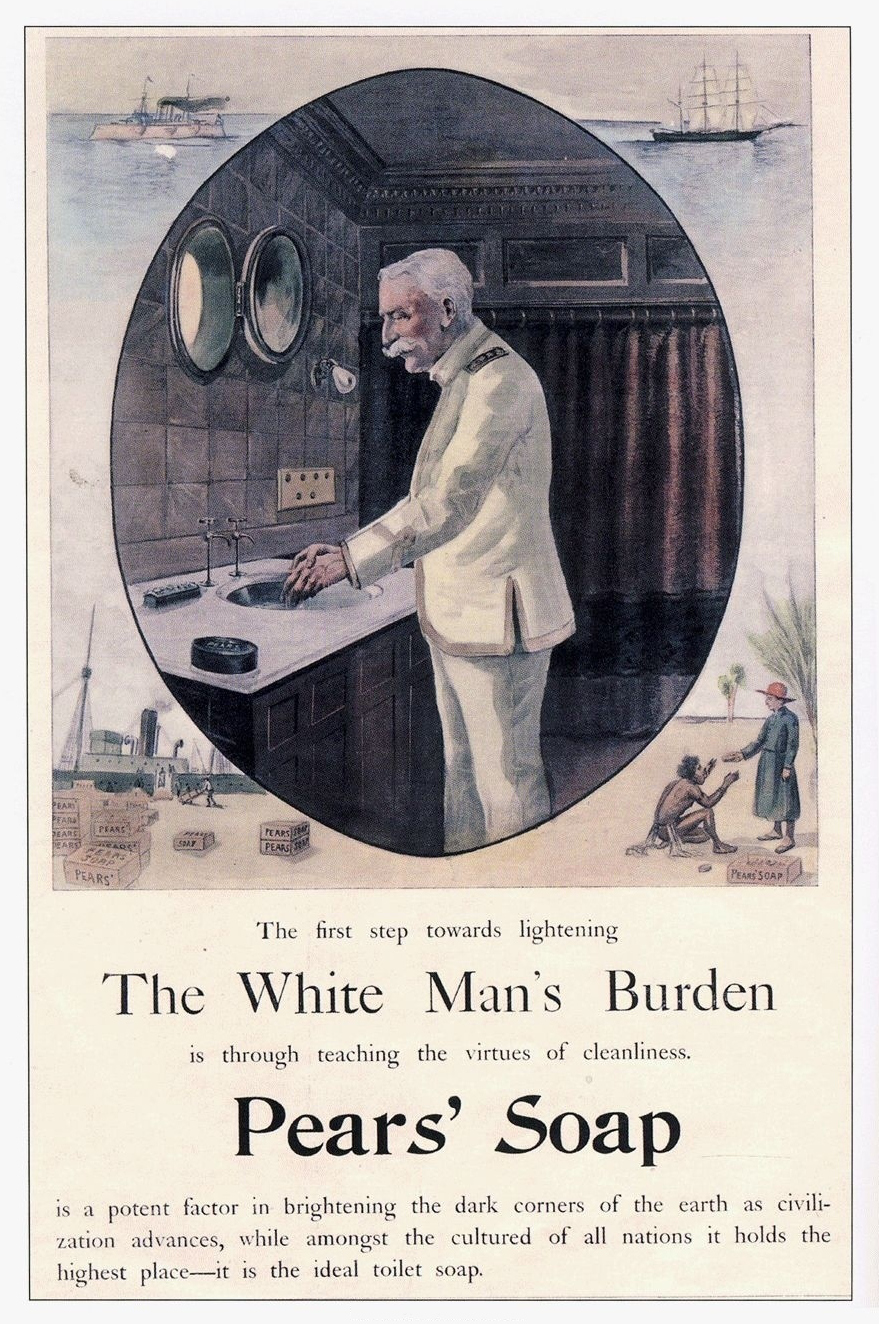 see that it is nothing more than colonial style arrogance and racism revamped.
The fact it might be done by people with brown faces, of Indian origin, and having ‘Hindu’ names does not exonerate it.
If anything it shows just how brainwashed and anti-Hindu these so called secularists really are. Whether they are Left or Right is inconsequential. That is why the Telegraph, Times and Daily Mail rigorously exclude the Hindu viewpoint as much as the Guardian or BBC.
 From
one political upheaval to another. The election of Narendra Modi as
prime minister of the world’s largest democracy, India, sent shockwaves
not least among the western commentators who espousing their so-called
progressive and liberal views denounced him as a fascist, Nazi and
latter day Hitler.
From
one political upheaval to another. The election of Narendra Modi as
prime minister of the world’s largest democracy, India, sent shockwaves
not least among the western commentators who espousing their so-called
progressive and liberal views denounced him as a fascist, Nazi and
latter day Hitler.
But in this whole quagmire it has been forgotten that it has never been about Modi who is just a convenient scapegoat in an anti-Hindu campaign.
Go back just over a couple of centuries and we see that the advanced democratic nations were busy burning thousands of women and girls as witches and in league with Satan.
Now instead of burning people they vilify them with all sorts of colourful language that makes them the very Devil incarnate. Such is the case with Modi. The witch-hunts which lasted right into the modern era were brought about by a state and established church which was determined to root out the ‘Other’: that faceless shape shifting evil which represented the demonic.
This mantle has now been taken up across the political spectrum against Hinduism. Whether Left or Right the ideological arsenal is the same. Hinduism represents what they cannot understand and what they feel threatened by. Like the witches it has to be rooted out.
 The
trial of witches took a very interesting method from which there was no
escape. Bound in heavy chains the unfortunate victim was flung into the
river.
The
trial of witches took a very interesting method from which there was no
escape. Bound in heavy chains the unfortunate victim was flung into the
river.
If she sank and drowned she was innocent. However if she floated this was proof of her guilt. Exactly the same methodology is now used with regards to Hinduism by supposedly advanced democratic nations.
You are presumed either guilty or extremely guilty. Innocence is not an option. The absurdity used to establish the guilt of a witch by modern Europe and America is now used to attack Hinduism and all it stands for.
This is not a fair trial or rational debate. It is a witch-hunt gorged full of the rotting stench of superstition and paranoia.
 Even
in these largely secular societies the Christian world view remains.
Infected with monotheistic self-righteousness the theological residue
enforces the idea that there is good and evil. For Left and Right, the
opposite is always evil. But when it comes to Hindus they all gang-up
like the witch-hunting mobs that heralded the arrival of modern Europe
and America.
Even
in these largely secular societies the Christian world view remains.
Infected with monotheistic self-righteousness the theological residue
enforces the idea that there is good and evil. For Left and Right, the
opposite is always evil. But when it comes to Hindus they all gang-up
like the witch-hunting mobs that heralded the arrival of modern Europe
and America.
Hinduism is the ultimate evil. Witch-hunts were a result of a threatened church and an absolutist state which claimed the divine right of kings such as Charles I of England.
Attacking folk beliefs and long-held traditions the churches were determined to root out all trace of the heathens and pagans. Hinduism therefore represents the ultimate abomination.
It is proud of its pagan traditions and without apology. The absolutist state and its ecclesiastical support may have ebbed away but the mentality remains. Secularism was merely the same dogma in a different format.
Indeed we still live in a world dominated by monotheistic secular ideologies of the nineteenth century. Therefore to look at this through the prism of just Left and Right is a false dichotomy.
 Catholics
and Protestants declared each other heretics and killed each other in
wars of religion. Germany suffered economic, political and above all
demographic catastrophe as a result of the Thirty Years War.
Catholics
and Protestants declared each other heretics and killed each other in
wars of religion. Germany suffered economic, political and above all
demographic catastrophe as a result of the Thirty Years War.
The result was an unseasy peace known as secularism. Catholics and Protestants may have hated each other. But when it came to burning witches there was no difference. When it came to converting the pagan infidels there was no difference.
One therefore should not be swayed by the cosmetic outer layer, because what lies beneath is something monstrous and toxic waiting to emerge. The same with political badges. Here again there is scant if any difference when it comes to Hindus.
The non Racist Racist
 For
examples it will be no surprise to learn that Social Darwinists,
imperialists, colonialists and those who supported elimination of whole
races by eugenics supported the rule of India by the racially superior
British.
For
examples it will be no surprise to learn that Social Darwinists,
imperialists, colonialists and those who supported elimination of whole
races by eugenics supported the rule of India by the racially superior
British.
But this was a view held by Karl Marx
as well. Indeed it was the liberals and progressives who supported
eugenics as a means of improving society by getting rid of inferior
stock. Genocide was a just a stepping stone in this process to make
utopia. This attitude only wears new masks but has not fundamentally
changed.
For example which westerners are eager to come to India. There are the
classic missionary types who take up the White Man’s Burden of Rudyard
Kipling to convert and baptise the benighted heathen with his witchcraft
and false gods.
To these idealistic yet at the same time rather stupid and naive idiots Hinduism is Satan-worship the adherence of false gods which will lead its followers into hellfire.
Ignoring of course the fact that it was the church that literally stoked the fires which burned thousands if not millions of decent women and children condemned as witches, it ignores the fact that this very religion has long been in decline in western nations.

Hendrik Verwoerd
It only survives in places such as poor
areas of France and Britain where there has been an influx of Third
World immigrants, or where the welfare state has been rolled back so
that millions of needy rely on food banks run by charities. So how can
these people ever hope to solve India’s magnitude of problems?
Despite secularisation, western nations are eager to take the
missionary position when it comes to Hinduism. Just as France eagerly
used the Catholic Church which it so vilified on its home turf with
laicism, yet had no problem using these very same religious nutcases to
enforce their laughable beliefs onto their colonial subjects, secularist
ideas see Hinduism as the ultimate evil.
It is backward, regressive and an impediment to the modern world. Hence these secular social engineers come to India to again solve the Hindu ‘problem’.
In 1901 a young boy accompanied his missionary parents as they left their home in the Netherlands and moved to South Africa. This immigrant would grow up and attempt to remould the native masses among whom he lorded over with his unique recipe to the demographic complexity in which he found himself. That boy was Hendrik Verwoerd who became prime minister of South Africa. His solution was apartheid.
Continues in
Civilising the ‘Hindoo’ Savage : Part Two
Civilising the ‘Hindoo’ Savage : Part Two

The Zoo Keeper and Tourist
 In
India’s case we have William Dalrymple, a complete social misfit in his
own native land, so he decided to transplant himself in the same manner
which bubonic plague once ravaged Europe by hitching a free ride on
fleas infesting rats. Dalrymple has suddenly become the spokesperson on
what he calls Hindu ‘extremism’ when he really has no knowledge of the
subject and has immense hatred of this land which he has adopted to
spread his own special form of hate.
In
India’s case we have William Dalrymple, a complete social misfit in his
own native land, so he decided to transplant himself in the same manner
which bubonic plague once ravaged Europe by hitching a free ride on
fleas infesting rats. Dalrymple has suddenly become the spokesperson on
what he calls Hindu ‘extremism’ when he really has no knowledge of the
subject and has immense hatred of this land which he has adopted to
spread his own special form of hate.
Good old William has this genteel way of showing how concerned he is for India and how these Hindu ‘fascists’ will ruin it for the minorities. Such spin and soft-faced hate are nothing new.
It was after all Verwoerd himself who described apartheid as a misunderstood “policy of good neighbourliness”. Dalrymple lauds Mu’in al-Din Chishti in the thirteenth century as compiling Treatise on Nature of Yoga which stressed the compatibility of Islamic and Hindu mysticism. Yet what this hooray Henry type negates is that Muhammad Ghuri to invade and despoil the land in the name of Islam. Literature on the true fanatic nature of Sufis such as that of the Chishti order abound.
 Sculpted
stones, apparently from a Hindu temple, are incorporated in the Buland
Darwãza of Muin-ud-din’s shrine and his tomb is built over a series of
cellars which may have formed part of an earlier temple. A tradition,
first recorded in the ‘Anis al-Arwãh, suggests that the Sandal Khãna is
built on the site of Shãdî Dev’s temple.
Sculpted
stones, apparently from a Hindu temple, are incorporated in the Buland
Darwãza of Muin-ud-din’s shrine and his tomb is built over a series of
cellars which may have formed part of an earlier temple. A tradition,
first recorded in the ‘Anis al-Arwãh, suggests that the Sandal Khãna is
built on the site of Shãdî Dev’s temple.
Four Islamic mystics namely Moinuddin (d. 1233 in Ajmer ), Qutubuddin (d. 1236 in Delhi ), Nizamuddin (d.1335 in Delhi ) and Fariduddin (d.1265 in Pattan now in Pakistan ) accompanied the Islamic invaders in India . All of them were from the Chistiya order of Islamic mysticism. Not just satisfied with presenting an anti-Hindu bigot as somehow the epitome of communal harmony, this joke of a writer also claims that Aurangzeb was “a pragmatic ruler who frequently patronised Hindu institutions, whose reign was less orthodox, less tyrannical and centralised than previously thought”.

Josef Mengele
The comparison with Holocaust deniers
is undeniable and disturbing. Holocaust denying ‘revisionists’ say there
was no Holocaust and that Hitler merely planned to resettle the Jews.
Any deaths that did occur were just due to the unfortunate vicissitudes
of war. Such talk would get a person jailed in many parts of the western
world. David Irving himself has been subject to the full force of the
law in this regard. But Dalrymple has the audacity and freedom to preach
his anti-Hindu revionism within India itself. In that sense Dalrymple
is worse than Irving.
Just because Dalrymple claims to be an admirer of Indian culture does
not mean he is a not a racist. After Germany started liquidating the
Jewish communities, in what is now the Czech Republic, Dr. Augustin
Stein suggested to the Germans that they set up a Jewish Museum to hold
all the objects that the Germans were confiscating from the synagogues
in Bohemia and Moravia.
Hitler approved the project and in 1942, the Central Jewish Museum was created, he museum which Hitler allegedly wanted to call “the Museum of an Extinct Race.” Dr Mengele kept a 3 year old Gypsy boy as a mascot for which he used to entertain guests.
When he got bored however he threw him into the gas oven along with other victims of the Holocaust. Dalrymple’s work therefore echoes that of the Ahnenerbe, the Nazi pseudo-scientific institute in Nazi Germany set up by Himmler and purposed to research the archaeological and cultural history of the hypothesized Aryan race. Dalrymple, unsurprisingly, adheres to this Nazi view of an Aryan race who invaded India. Strangely he calls anyone who disagrees with this racist idea, a Hindu fascist. But Mr Dalrymple, in the light of all the evidence just who is the fascist now?
Westerners who defend Hinduism

Dr David Frawley
However it is important to remember that a lot of westerners unlike Dalrymple truly respect the world’s oldest surviving civilisation. Just because of the actions of misguided demagogues like Dalrymple we cannot condemn entire nations and ethnic groups. But media outlets like the BBC never speak to these people.
Instead they always speak to the revisionist-negationist types like Dalrymple and the Indian-born co-conspirators who always mingle in the same clique: Romilla Thapar, Sunny Hundal, Priyamvada Gopal, Chetan Bhatt.
Born into a German-Irish American family, Dr David Frawley was
fascinated with Hinduism form an early age. He taught himself Sanskrit
and felt so connected to this ancient culture that he took the name
Vamadeva Shastri. Frawley is the author of many books and founder of the
American Institute of Vedic Studies which disseminates knowledge on
Indian astrology and ayurveda. Yet he is never consulted in such
matters. Instead that deadbeat has-been Dalrymple gets wheeled out of
his intellectually bankrupt sarcophagus to spout a few unintelligible
words and then put back in the closet until needed next time.

Dr Koenraad Elst
Dr Koenraad Elst was born into a Catholic Flemish family in Belgium. He later gained his PhD from an Indian university, in Varanasi. Once again the author of many groundbreaking books, Dr Elst is effectively blacklisted for no towing the line with regards to Hinduism. Francois Gautier left his native France at the age of 19 and has since lived in India.
Again because he identifies with this country and its ancient culture he is frozen pit of all discussion. But most fascinating of all is William A Gans, born in Chicago in 1950.
At age 18 Gans travelled to India and in 1971 became the first foreigner to be initiated into India’s ancient order of yogis and shamans, the Naga Sannyasis, during the Allahabad Maha Kumbh Mela in 1971. He since became Baba Rampuri and hosts an international camp at the Kumbh Mela.
Yet do we ever hear of him? There are many western Hindu swamis and gurus around the world has any been approached. These are just a few examples. But that is the whole point. A westerner who identifies with Hinduism is vilified, marginalised and takes the kiss of intellectual ostracism. In Hawaii there is a whole community of western Hindu monks who run Hinduism Today magazine. But one again they never get approached on matters of relevance. The difference is not just a matter of misunderstanding. It is at a deeper metaphysical level.
Monotheism as Theory

Laplace
French physicist Laplace was eerily accurate when Napoleon asked him where god fitted into his idea of the universe. He replied that he had no use for that “hypothesis”. God did not need to be a spiritual being, real or imaginary to take the binary opposites now offered by the religious/secular divide. This demiurge only needed to be a theory, a hypothesis, an idea, a concept. But of course where arguments failed arms win.
Through coercion, cultural appropriation, and physical elimination of the pagan gods and their followers, Europe was pushed under the monotheist imperialist doctrine as the Roman Empire crumbled. Its roots had already been seen in the imperial cult which gave a single, central focus that the Church filled with ease.
The same elements were taken as Christian Europe expanded into the New World and then Africa, Asia, and the Pacific to crush indigenous cultures underfoot. Hinduism is the last large survival of these polytheist and pagan religions. Unlike the rest it would not die and hence remains under attack under those same forces which have taken on new garb.
 Of
course within this monotheist behemoth there are bitter divisions. The
Reformation set Europe ablaze as Catholics and Protestants battled each
other for supremacy. Now that same battle remains but along new fault
lines: Left and Right, religious and secular, statist and market, and a
host of others.
Of
course within this monotheist behemoth there are bitter divisions. The
Reformation set Europe ablaze as Catholics and Protestants battled each
other for supremacy. Now that same battle remains but along new fault
lines: Left and Right, religious and secular, statist and market, and a
host of others.
While Catholics and Protestants killed each other, destroyed half of Germany in the Thirty Years War and burnt women and girls at the stake for being witches, nevertheless when it came to the pagan savages such as Hindus they were united in their odium.
Hence we see the atheist and militantly anti-clerical Marxists uniting with their erstwhile enemies in the form of evangelical Christian missionaries to show Hinduism as evil caste ridden and full of superstition. India has been portrayed as the rape capital of the world. The images of evil sexually obsessed beasts preying on their own women, but especially preferring white women (foreign tourists), is repeated ad nauseam. It is all part of the same myth making and denigration. It was as if western sexual mores have been set by Peter Sutcliffe, Fred West and Marc Dutroux.

Marc Dutroux.
These were among the many violent sexual predators and child molesters who got away with their crimes. But one rape in India condemns an entire country, civilisation, culture, people and belief system. In the case of Dutroux, there was widespread anger and frustration among Belgians due to police errors, the general slowness of the investigation and the disastrous outcome of the events.
This suspicion that Dutroux had been, or was being, protected was raised when the public became aware of Dutroux’s claims that he was part of a sex ring that included high-ranking members of the police force and government, to which he supplied girls. What is known is that he kidnapped them, raped them and tortured them in a specially built dungeon. .
On the witness stand, Jean-Marc Connerotte, the original judge of the case, broke down in tears when he described “the bullet-proof vehicles and armed guards needed to protect him against the shadowy figures determined to stop the full truth coming out. Do these same Leftists portray Belgium, let alone the whole of Europe in the same manner as India, even when worse crimes are committed?
What the Mainstream Media Omits – and the Alternate Follows
 The
popularity of alternative media such as RT News from Moscow and the now
largely banned Press TV from Tehran is due to the fact that mainstream
news channels no longer appeal to those seeking accurate information.
But when it comes to Hindus they might as well be part of the same
behemoth. Now while RT and Press TV are funded by countries, Russia and
Iran respectively, where democracy and free speech is heavily censored,
the BBC, Sky, CNN, France 24, Channel 4 News and a host of others pride
themselves on their ‘impartiality’ and ‘independence’. But how far is
this actually the case?
The
popularity of alternative media such as RT News from Moscow and the now
largely banned Press TV from Tehran is due to the fact that mainstream
news channels no longer appeal to those seeking accurate information.
But when it comes to Hindus they might as well be part of the same
behemoth. Now while RT and Press TV are funded by countries, Russia and
Iran respectively, where democracy and free speech is heavily censored,
the BBC, Sky, CNN, France 24, Channel 4 News and a host of others pride
themselves on their ‘impartiality’ and ‘independence’. But how far is
this actually the case?“On the other hand, in the day-to-day reporting on the communal situation in India, there is a lot of bonafide copying of the anti-Hindu views dominant in the Indian English-language press. A typical mixed case of some complicity and some gullibility was the TV documentary about Hindu fundamentalism made by BBC correspondent Brian Barron, and broadcast in the week of the first round of the Lok Sabha elections in May 1991.
Brian Barron is an otherwise meritorious journalist, witness his revelations in October 1991 about the massacre of thousands of Buddhist monks in the early years of communist rule in Mongolia. But his programme about the Hindu movement was second-rate and biased. For a start, it contained some factual mistakes (like a map meant to show the trail of Hindu leader L.K. Advani’s procession in support of the Ram Janmabhoomi cause, which drew a line unrelated to the actual trail, apart from placing Delhi on the Ganga river), exemplifying the carelessness which Western correspondents can afford when it comes to India reporting.”
 “At
the time of the 1991 Lok Sabha elections, the German left-leaning
weekly Der Spiegel summarized the communal riots in independent India as
follows:
“Since 1947, Indian statisticians have counted 11,000 riots with 12,000
Muslim victims.” Hindu victims are not even mentioned, as if you were
reading a fundamentalist paper like Muslim India or Radiance.”
“At
the time of the 1991 Lok Sabha elections, the German left-leaning
weekly Der Spiegel summarized the communal riots in independent India as
follows:
“Since 1947, Indian statisticians have counted 11,000 riots with 12,000
Muslim victims.” Hindu victims are not even mentioned, as if you were
reading a fundamentalist paper like Muslim India or Radiance.”Western journalists have always used anti-Hindu demagogues as their source, knowing that this does not risk retaliation from the same group they are always painting as intolerant and fundamentalist. If they had done this with any other non-western and above all indigenous culture, they would be labelled racist and colonialist.

Sanjoy Majumdar
However the western media has as its defence the offspring of British civil servant Macaulay, who wanted to create an administrative class to help continue rule by the superior white master race, formulated an English-medium education system that would create brown sahibs – Indian by race but Englishmen in their mentality. That is exactly the sort of person who is pushed forward by the BBC and others as the authentic native voice, such as with this piece by that corporation’s Sanjoy Majumdar. On 12 August 2014 he wrote ‘Why is Sanskrit so Controversial’:
But
then why is the teaching of Latin and ancient Greek not seen as a
‘right-wing’ issue by the BBC? Is this because Sanskrit is in essence a
‘Hindu’ language and its teaching would go against the Macaulite class
on whom the BBC relies on for its distorted anti-Hindu image? It was  the
BBC who created the brand known as Mother Teresa, when its reporter
Malcolm Muggeridge when to the then Calcutta in 1967 to interview
Albanian missionary Sister Agnes who like so many before her used
poverty and sickness to force backward Roman Catholic dogma on her
hapless victims. It was a rerun of the classic colonialist and racist
doctrine that only superior religion by a superior race could civilise
these jungle type savage Hindus.
the
BBC who created the brand known as Mother Teresa, when its reporter
Malcolm Muggeridge when to the then Calcutta in 1967 to interview
Albanian missionary Sister Agnes who like so many before her used
poverty and sickness to force backward Roman Catholic dogma on her
hapless victims. It was a rerun of the classic colonialist and racist
doctrine that only superior religion by a superior race could civilise
these jungle type savage Hindus.
Mother Teresa’s sinister work and unethical financial dealings were later exposed by secular writer Christopher Hitchens. Yet the BBC mythology surrounding Sister Agnes stuck as it suited the anti-Hindu agenda.
The BBC like so many others has reported on the terrorism in Kashmir, using such soft terms as insurgency. But there are comparatively few reports on how the entire indigenous Hindu community of Pandits were forced out at gunpoint. Look at this from BBC’s Zubair Ahmed in April of this year:

Amrit Wilson
However the BBC’s anti-Hindu stance is nothing when compared with that bastion of liberal and left opinion, the Guardian. This detestable propaganda broadsheet actively excludes Hindu opinion –while simultaneously welcoming contribution from all other communities. If anything remotely Hindu does manage to get past its anti-Hindu gutter journalism, it will always be from the submissive Gunga Din type who should not be too uppity and think they are the intellectual equal of Hindu-baiter’s.
If you really want to make your career in journalism by acting in ways that if it were any other community, it would be deemed racist, then the Guardian is your route to fame and advancement. On 3 July 2014, Amrit Wilson wrote ‘When will the Kashmiri nightmare end?’:

Kashmiri Pandit Hindus
What Wilson calls a popular uprising was a holy war and ethnic cleansing against Hindus? Yet she accuses the government of initiating demographic shifts. She mocks that this land was their ancestral place. To cap it all she says this will go against the wishes of the ‘majority’ in Kashmir. Well this majority is a minority in India, where the majority elected the present democratic government. Now according to the Guardian itself:
“Amrit Wilson is a writer and activist on issues of race and gender in Britain and South Asian politics. She is a founder member of South Asia Solidarity Group and the Freedom Without Fear Platform, and board member of Imkaan, a Black, South Asian and minority ethnic women’s organisation dedicated to combating violence against women in Britain. She was a founder member of Awaaz and an active member of OWAAD.”
Anish Kapoor

Nida Najar
Nida Najar is a freelance journalist based in Delhi who writes for the New York Times, another classic ‘progressive’ piece. On 13 February 2015 she penned another one of her classics condemning the attacks on churches in Delhi:
Now there are legion other examples. But it is not just the media that is affected. If Hindus try and exercise their democratic rights in Britain they soon hit another brick wall, not faced by other communities. This was the case with the writer of this piece who in February 2014 was invited to the newsroom to be interviewed by broadcaster Lucy Hocking.

Lucy Hocking
This was for a live broadcast on BBC World News over the recall (not banning) of Wendy Doniger’s insulting book ‘The Hindus’ which revamped the usual Hinduphobic muck-raking and gutter writing which this American demagogue is known for. She had already been backed by revisionist historian William Dalrymple.
When pointed out that back in 2003 Doniger herself had demonstrated unashamed intolerance by stopping inconvenient questions at SOAS (backed by Dalrymple), Hocking was having none of it and instead kept trying to return to the same straw man arguments which she and her BBC paymasters had so carefully constructed. As a result the interviews Hocking conducted with Dalrymple and Doniger can be found on YouTube. The one with HHR has mysteriously disappeared.
Is the West intrinsically anti-Hindu?

John Grey
In Black Mass, John Grey wrote on how modern secularism and scientific atheism could not have been conceived outside a Christian and therefore monotheistic environment. As much as the revolutionary creds of the past three centuries which by their aspirations to create an earthly utopia, should rightly be seen as political religions, modern secularism, liberalism, atheism and the very idea of progress has more in common with religious movements such as evangelical Christianity than it would want to admit or confess. On pages 189 and 190:
“Like other ideas, secularity has a history. Pre-Christian Europe lacked the distinction between the secular and the sacred in much the same way that other polytheist cultures do. The world itself was sacred, and there could be no question of confining religion to a private sphere – the very idea of religion as a set of practices distinct from the rest of life was lacking. A domain separate from the sacred was recognized only when Augustine distinguished between the City of Man and the City of God.
In this sense secular thinking is a legacy of Christianity and has no meaning except in a context of monotheism. In East Asia, polytheism has lived side by side with mystical philosophies in much the same way that the two coexisted in pre-Christian Europe, and the clash between science and religion that has polarized western societies has not taken place. It is no accident that Darwinism has not triggered culture-war in China or Japan.”
Indeed despite the best efforts of ‘secularists’ it has failed in many respects in India, where the Hindu ethos that does not bifurcate the world into sacred and profane (hence secularism and religion) stands at odds with the west.
 Hence
India’s rationalists were up in arms when Dr K Radhakrishnan, chairman
of India’s space program ISRO and its mission to Mars, offered special
paryers and performing pooja with the replica of Mars Orbiter Mission at
the Lord Venkateshwara temple in Tirupati, a day before the successful
launch of the spacecraft from Sriharikota.
Hence
India’s rationalists were up in arms when Dr K Radhakrishnan, chairman
of India’s space program ISRO and its mission to Mars, offered special
paryers and performing pooja with the replica of Mars Orbiter Mission at
the Lord Venkateshwara temple in Tirupati, a day before the successful
launch of the spacecraft from Sriharikota.
The anger of the ‘rationalists’ was a mirror image of the American creationists who denounce evolution as just another ‘theory’ at best, and a complete lie because it contradicts the Bible. The ‘rationalists’ were upset at their religion being offended; and this religion was at the heart of the clash between Hinduism and the west.
Despite the much reported clash between western democracies and radical Islam there is more commonality than both sides would care to admit. Page 71 of Black Mass:
Just as the ancient Greeks, on whom the west bases its civilisation (and the rationalists base their humanism and atheism), saw the zero concept as chaotic and at odds with their nice geometric view of the cosmos, so Hinduism is seen as dysfunctional and contradictory.
It lacks the reason and order if seen through the monotheistic paradigm. Despite the war on terrorism, Islamophobia and culture clash over issues such as the burkini, the western mindset understands Islam even if it disagrees or even opposes it. This is true of the ‘secular’ as much as the ‘religious’.
The ground shifts often. Much of the
recruitment to radical Islam came from the militant Left such as the
staunchly Trotskyist Socialist Workers Party. But other examples are
legion. In his 1944 classic Road to Serfdom, FA Hayek noted how communists and Nazis seemed to interchange quite happily. Many
neoconservatives were once staunch Trotskyists. Atheists can easily
become the most hardcore evangelicals.
how communists and Nazis seemed to interchange quite happily. Many
neoconservatives were once staunch Trotskyists. Atheists can easily
become the most hardcore evangelicals.
What they have in common is an inbuilt animus to Hindu concepts, especially that of Dharma and Rta, which upset their view of their entire universe, their moral compass and above their sense of ‘progress’. For that reason America and Britain always felt closer to Pakistan than India.
The former followed a fellow monotheistic creed and hence was essentially part of the ‘west’. Despite the present war on terror and fears of jihad, it must be remembered that these countries backed those very same holy warriors and their Salafist ideology. In the media the mujahedeen were portrayed as freedom fighters resisting the Soviet invasion of Afghanistan. This same media was warning of the dangers of militant Hinduism; a complete warping of the facts and reality.
In the not so recent past we have examples of how other indigenous ancient peoples suffered. Until the latter part of the twentieth century, Native Americans and Native Australians were wrenched form their families. Put into boarding schools or foster care by a state that was determined to ‘progress’ them into the modern world, they were compelled to forget their language, religion, culture and gods.
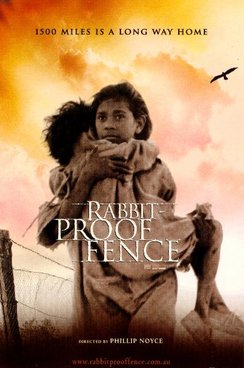 The
films Rabbit Proof Fence and The Sapphires shows the poignant and
harrowing severe social dislocation caused by this state programme in
Australia. Such policies are now denounced as racist. Liberal and
bohemian types lament that such fine specimens of humanity can only be
found in museums.
The
films Rabbit Proof Fence and The Sapphires shows the poignant and
harrowing severe social dislocation caused by this state programme in
Australia. Such policies are now denounced as racist. Liberal and
bohemian types lament that such fine specimens of humanity can only be
found in museums.
Yet these same people look at Hindus in the same manner an earlier generation of colonialists, missionaries, scientific racists and progressives saw these ancient non-western peoples and cultures.
It is for that reason that only those deemed ‘assimilated’ and ‘integrated’ are deemed the acceptable brown face. They are then pushed as the experts on India and Hinduism. All else is backward and primitive, even fascist (forcing a label which came from the genocidal loins of the western civilisation which gave birth to it, and much else). Ram Swarup, writing in 1991:
 unity.
They know that before they can subvert India, they must subvert
Hinduism, that the country’s balkanization is not possible without prior
fragmentation of the Hindu society.
unity.
They know that before they can subvert India, they must subvert
Hinduism, that the country’s balkanization is not possible without prior
fragmentation of the Hindu society.But above all it is fuelled by a fear of an alternative cosmological paradigm with its own set of metaphysics that are seen as an eternal threat to eschatology, millenarianism and utopianism that is integral to western thought, because that false vision has finally reached its Armageddon. It has failed and unlike other ancient cultures Hinduism has withstood it. It is something which the high priests that dictate western values simply cannot contemplate.
Civilising the Hindoo Savage : Part 3
Civilising the ‘Hindoo’ Savage : Part One
Civilising the Hindoo Savage : Part 3

In previous parts we have looked at how the Left, including liberals and those deemed as ‘progressive’, continue to look at Hindu civilisation through the prism of outdated colonialism and its associated racism and superiority. In fact we can see this currently with the CNN broadcast of Reza Aslan’s ‘Believer; in which he reduces Hinduism to sect of cannibalistic hermits of the Shaivite Aghori sect.
Now it is an affliction of western thinking that if one side is wrong the other must hold absolute truth. Such binary simplicity falls flat on its face.
The Left uses colonial constructs in its seeming ‘progressive’ and liberationist view of humanity. Therefore Hinduism is evil because of caste system, superstition, and India’s poverty. Whatever differences may exist in the western political spectrum, they do not translate into opposing views when looking at India and Hinduism. Indeed if not one and the same, they overlap at various levels.
The Guardian may style itself
as a liberal mouthpiece and the Daily Mail as that of conservatism
(unlike in the 1930s when its owner lord Rothermere was proud to back
the British Union of Fascists, and be photographed with Hitler). So when
it comes to Hindus,  this Left-Right divide fails to have any significance.
The Right it must be remembered has been the traditional haunt of those who espouse racism, xenophobia, imperial glories, values of Little England, the sanctity of the British Empire, white supremacy, racism, eugenics, anti-Semitism, Christian values, and the belief that only under British rule was India civilised. Opposed as they may be to the trendy latte sipping bohemian types that read the Guardian, that does not make them any less guilty of Hindu-baiting.
 William Dalrymple is a patron of the Palestinian Solidarity Campaign, “a
community of people working together for peace, equality, and justice
and against racism, occupation, and colonisation” by Israel, by working
in “opposition to racism, including anti-Jewish prejudice and
Islamophobia, and the apartheid and Zionist nature of the Israeli
state.” On 12 March 2002 Dalrymple wrote in the Guardian about “Being
Bullied into Silence on Israel”.
William Dalrymple is a patron of the Palestinian Solidarity Campaign, “a
community of people working together for peace, equality, and justice
and against racism, occupation, and colonisation” by Israel, by working
in “opposition to racism, including anti-Jewish prejudice and
Islamophobia, and the apartheid and Zionist nature of the Israeli
state.” On 12 March 2002 Dalrymple wrote in the Guardian about “Being
Bullied into Silence on Israel”.
He attended the inaugural Palestine Festival of Literature in 2008 – giving readings and taking workshops in Jerusalem, Ramallah and Bethlehem.
In 2015 he was one of more than 700 creative professionals who signed up to a pledge to  boycott
collaboration with Israeli state-funded projects. Andrew Roberts on the
other hand is a founder member of José Maria Aznar’s Friends of Israel
Initiative: a high level group which met in Paris the leadership of
former Spanish Prime Minister José María Aznar, in the middle of 2010 to
launch a new project in defence of Israel’s right to exist: “This
Initiative arises out of a sense of deep concern about the unprecedented
campaign of delegitimation against Israel waged by the enemies of the Jewish State and, perversely, supported by numerous international institutions.”
boycott
collaboration with Israeli state-funded projects. Andrew Roberts on the
other hand is a founder member of José Maria Aznar’s Friends of Israel
Initiative: a high level group which met in Paris the leadership of
former Spanish Prime Minister José María Aznar, in the middle of 2010 to
launch a new project in defence of Israel’s right to exist: “This
Initiative arises out of a sense of deep concern about the unprecedented
campaign of delegitimation against Israel waged by the enemies of the Jewish State and, perversely, supported by numerous international institutions.”
Denigrating the Hindu Sacred
 On
4 February 2017, Roberts wrote in the Spectator, a conservative
magazine and right-wing publication in Britain. His patronising ‘Indians
are getting post-truth history about Winston Churchill’ ended with
“after such splendid hospitality, I wasn’t about to tell 3,000 Indians
that it was time to grow up.” What was this hospitality? It was Roberts
being invited to the Jaipur Literary Festival to speak on a panel
discussion entitled ‘Churchill: Hero or Villain?’. He then reveals how
he got there:
On
4 February 2017, Roberts wrote in the Spectator, a conservative
magazine and right-wing publication in Britain. His patronising ‘Indians
are getting post-truth history about Winston Churchill’ ended with
“after such splendid hospitality, I wasn’t about to tell 3,000 Indians
that it was time to grow up.” What was this hospitality? It was Roberts
being invited to the Jaipur Literary Festival to speak on a panel
discussion entitled ‘Churchill: Hero or Villain?’. He then reveals how
he got there:Dalrymple is well-known for his
anti-Hindu bias, indulging in nefarious activities that he would not
dare with other communities and belief systems, including negationism of
 historical
crimes against Hindus. It was like having David Irving of Robert
Faurrisson teaching Holocaust studies . So true to form Roberts’ article
in the right-wing weekly was embellished with the desecration of
goddess Durga just to push the point home that Hinduism is in every way
inferior to western civilisation and values, and Hindus had better learn
to accept this colonialist and racist thinking.
historical
crimes against Hindus. It was like having David Irving of Robert
Faurrisson teaching Holocaust studies . So true to form Roberts’ article
in the right-wing weekly was embellished with the desecration of
goddess Durga just to push the point home that Hinduism is in every way
inferior to western civilisation and values, and Hindus had better learn
to accept this colonialist and racist thinking.
This of course begs the question would the Spectator and Roberts denigrate other sacred imagery in this way? Now this does of course dredge up the issue of freedom of speech and one cannot help but make comparisons with the satirical French magazine Charlie Hebdoe which attracted criticism and indeed violent reaction for its 2006 publication of the Jyllands-Posten cartoons, and in 2011 and 2102 cartoons deemed to insult Islam.
 The
desecration of Durga by the Spectator magazine was in fact consistent
with Roberts’ own view of India and its culture. In his piece he
criticises suttee, claiming it was abolished by the British. This
ignores that under British rule, the practice was initially tolerated
and in Bengal, burnings were attended by a colonial government
officials. Efforts against it were led by Raja Ram Mohan Roy founder of
the Brahmo Samaj, and Sahajanand Swami the founder of the Swaminarayan
sect.
The
desecration of Durga by the Spectator magazine was in fact consistent
with Roberts’ own view of India and its culture. In his piece he
criticises suttee, claiming it was abolished by the British. This
ignores that under British rule, the practice was initially tolerated
and in Bengal, burnings were attended by a colonial government
officials. Efforts against it were led by Raja Ram Mohan Roy founder of
the Brahmo Samaj, and Sahajanand Swami the founder of the Swaminarayan
sect.
Indeed Europe itself had its
own problem with putting innocent women to the torch under the pretext
of them being witches and scheming with Satan against Christ. In England
and Scotland between 1542 and 1735, a series of Witchcraft Acts
enshrined into law the punishment of individuals practising witchcraft and
magic. The Witchcraft Act of 1735 remained in force in Britain well
into the 20th century, until its eventual repeal in 1951. The last
execution for witchcraft in England was in 1682, but the last one in
Europe is recorded as being in 1811 in Germany.
The ‘Gift’ of Democracy
 “Those
involved in this ludicrous case should recognise that the British Crown
Jewels is precisely the right place for the Kohinoor diamond to reside,
in grateful recognition for over three centuries of British involvement
in India, which led to the modernisation, development, protection,
agrarian advance, linguistic unification and ultimately the
democratisation of the sub-continent.”
“Those
involved in this ludicrous case should recognise that the British Crown
Jewels is precisely the right place for the Kohinoor diamond to reside,
in grateful recognition for over three centuries of British involvement
in India, which led to the modernisation, development, protection,
agrarian advance, linguistic unification and ultimately the
democratisation of the sub-continent.”On 23 February 2013, Roberts had already said that Prime Minister David Cameron should not apologise for the Amritsar Massacre by General Dyer in 1919, because the massacre at Jalianwala Bagh during the Vaisakhi festival avoided a much greater disaster.
It is a theme he takes up in his 2006 book, ‘A History of the English-Speaking Peoples Since 1900’, saying that the massacre pacified Punjab and thereby had overall beneficial effects of stopping other disturbances and the loss of life that would have entailed. For that reason his is very negative about how India received independence with the massacres that took place, and Mountbatten’s inaction to bring the culprits to justice.
 He
sees it as a shameful episode in what was otherwise a glorious
achievement. In the BBC 1998 Timewatch programme presented by Kirsty
Wark Andrew Roberts praised “the young men of the Indian civil service”
who dedicated their lives to India with “fairness, decency and
astonishingly little interest in personal gain”. British rule led to,
eventually, modern commerce, railways, a free press, democratic
politics, the abolition of suttee and infanticide, and an excellent
English- speaking education system designed by Thomas Macaulay. In the
Telegraph dated 25 November 2001, Chris Hastings and Susan Bisset quote
Roberts as infuriated that the Indian film Lagaan has been nominated for
an Oscar:
He
sees it as a shameful episode in what was otherwise a glorious
achievement. In the BBC 1998 Timewatch programme presented by Kirsty
Wark Andrew Roberts praised “the young men of the Indian civil service”
who dedicated their lives to India with “fairness, decency and
astonishingly little interest in personal gain”. British rule led to,
eventually, modern commerce, railways, a free press, democratic
politics, the abolition of suttee and infanticide, and an excellent
English- speaking education system designed by Thomas Macaulay. In the
Telegraph dated 25 November 2001, Chris Hastings and Susan Bisset quote
Roberts as infuriated that the Indian film Lagaan has been nominated for
an Oscar:
 Roberts
is not alone in his praise for the British Empire. Author of books such
as ‘Empire’ and ‘Civilization’, Niall Ferguson laments the
self-flagellation and guilt tripping associated with European
colonialism, and especially British imperialism. Like Roberts he
criticised Gandhi who when asked about western civilisation, replied
that it would be a “good idea”.
Roberts
is not alone in his praise for the British Empire. Author of books such
as ‘Empire’ and ‘Civilization’, Niall Ferguson laments the
self-flagellation and guilt tripping associated with European
colonialism, and especially British imperialism. Like Roberts he
criticised Gandhi who when asked about western civilisation, replied
that it would be a “good idea”.
For Roberts and Ferguson the British Empire was more benign, especially when compared to the genocidal and enslavement empire building of Imperial Japan and Nazi Germany. While admitting to brutalities in India, Ireland and elsewhere, he is adamant that the empire spread essential norms of law, incorruptibility, order and governance around the world. It was an essential modernising force.
 Indian-born
American conservative Dinesh D’Souza is even more forthright in the
benefits which colonial rule brought to his birthplace. In ‘What’s So
Great About America’ he mentions parliamentary democracy, the widespread
use of English, universities, museums, science and technology , modern
infrastructure, communications and above all the import of novel ideas
such as ‘freedom’, and ‘rights’ as the result of British rule. Page 58:
Indian-born
American conservative Dinesh D’Souza is even more forthright in the
benefits which colonial rule brought to his birthplace. In ‘What’s So
Great About America’ he mentions parliamentary democracy, the widespread
use of English, universities, museums, science and technology , modern
infrastructure, communications and above all the import of novel ideas
such as ‘freedom’, and ‘rights’ as the result of British rule. Page 58: European
colonialism introduced the idea of liberation to former colonies, and
moulded the concept of nationhood. Against their intentions the British
rulers benefited modern India, and were the essential conveyor belt to
transmit blessings of western civilisation.
European
colonialism introduced the idea of liberation to former colonies, and
moulded the concept of nationhood. Against their intentions the British
rulers benefited modern India, and were the essential conveyor belt to
transmit blessings of western civilisation.However not all colonies were successful democracies after independence. In fact very few of them have been. Even when transmission to independence was smooth such as Ghana, former British colonies such as Nigeria and Zimbabwe have been plagued by army coups and corruption. Botswana is one of the few examples of success.
Roberts, Fergusson and D’Souza are adamant that India is the world’s largest democracy because of its British inheritance. But then Pakistan was also a product of British rule. When India was partitioned in 1947 Sir Douglas Gracey became Chief of the General Staff and Deputy Commander-in-Chief of the Pakistan Army before succeeding Frank Messervy as Commander-in-Chief Pakistan Army in 1948, having served as an Indian army officer while the British Raj was still intact. Similar to Gracey, the early heads of Pakistan’s air force and naval force were Englishmen.

The same heir to the British Raj so beloved of Andrew Roberts, why had Pakistan quickly jettisoned its western democratic inheritance? Is it perhaps because India is a Hindu-majority country and that Hinduism is a diverse umbrella, the real reason why India has remained democratic? Of course such an idea would be an anathema to Roberts and the Spectator, whose use of the desecrated image of Durga sums up much darker fears of whose that are ‘different’.
The Jihadi Legacy of Imperialism
 In
‘Eminent Churchillians’ Andrew Roberts elaborates how Mountbatten in
his mind beat a humiliating, irresponsible and hasty retreat from India.
This resulted in the now notorious carnage of partition. On page 80 he
claims to be challenging the historical orthodoxy as it existed in 1994,
with its pro-Congress position on Indian independence.
In
‘Eminent Churchillians’ Andrew Roberts elaborates how Mountbatten in
his mind beat a humiliating, irresponsible and hasty retreat from India.
This resulted in the now notorious carnage of partition. On page 80 he
claims to be challenging the historical orthodoxy as it existed in 1994,
with its pro-Congress position on Indian independence.
This however was done by being more biased towards Pakistan and Jinnah, especially be denying it the whole of Punjab and Bengal, and giving India the Gurdaspur district of the former province so that it would get access to Kashmir – as yet undecided which independent state to join. On page 308 of his 2006 book ‘A History of the English-speaking Peoples’, Roberts decries India’s “long dirty war” and “appalling human rights violations” in “Muslim majority Kashmir”, as well as the double standards of the former colonial master:
While India is constantly berated for its religious intolerance, backwardness and that it does not show enough gratitude for all the benefits Britain brought it, why do Roberts and Fergusson seem so keen to avoid applying the same method to Pakistan?
After all this country was a long term ally not just of Britain but also the United States. Fergusson’s latest work is on Henry Kissinger, who along with Nixon fully backed Pakistan against India. These same British neo-imperialist authors write of the dangers posed to western civilisation, and especially the Anglosphere (dominated by the most populous Anglophone country, the USA) by jihad, radical Islam and Islamo-fascism. Yet it was British Raj that created that very cockpit of jihad, Pakistan.
 It
was Kissinger and Nixon who backed Pakistan in its brutal jihad against
the Hindus of Bangladesh. It was Reagan who gave billion to Zia-ul-haq
despite his hardline Islamisation policies and complicity in the sacking
of the American embassy in Islamabad by is religious fundamentalist
allies in the Jamaat-i-Islam.
It
was Kissinger and Nixon who backed Pakistan in its brutal jihad against
the Hindus of Bangladesh. It was Reagan who gave billion to Zia-ul-haq
despite his hardline Islamisation policies and complicity in the sacking
of the American embassy in Islamabad by is religious fundamentalist
allies in the Jamaat-i-Islam.
The double standards are because Pakistan may have been the brainchild
of Muhammad Ali Jinnah. But its midwife was Roberts’ hero, Winston
Churchill.
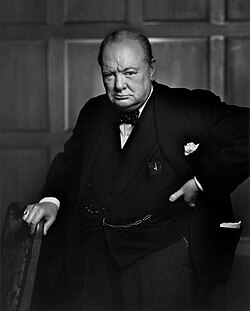 progress, and needed to be eroded by education. During Quit India, Churchill admitted:
Now in his 2006 book Roberts warns of the threat from global jihad to the English-speaking peoples. Yet what does he think would have happened if the whole of Kashmir, Punjab and Bengal had been delivered to Pakistan in 1947? Does he think with this there would have been no massacres? No extermination of Hindus and Sikhs from Pakistan as happened?

Where was Mountbatten when the genocide happened in Bangladesh? If he was responsible for the carnage in 1947, then what of the 1971 carnage when his beloved Kissinger was ensuring that Pakistan’s military had all the fire power to cause maximum human destruction in Bangladesh? Or the constant support which right-wing politicians and their academic apologists have given to American and British support for Pakistan over Kashmir?
For right-wing historians such as Roberts, despite the threat of jihad, the affinity with Islam is something which Hinduism does not have with the west. The gap is deeply metaphysical. What cannot be understood needs to be subsumed as backward, and destroyed in the name of progress. In this there is little difference with the views of Marxists and the Left. That is why desecrating an image of Durga is both normal in the deeply anti-Hindu animus which scholars such as Roberts share with Dalrymple.
Bankruptcy of Western Model
Did India need British Raj to modernise? In 2005 Gavriel D Rosenfeld wrote ‘The World Hitler Never Made’, which explored various scenarios of alternate history – something which Niall Ferguson and Andrew Roberts have speculated in, most notably which empire would have ruled India if not Britain. In 2005 Richard Harris’ book ‘Fatherland’ had already been put onto film. A Victorious Nazi Germany is in standoff with America in a Cold War scenario.
 Two
other books reviewed by Rosenfeld were yet to be put onto screen – Man
in the High Castle, and SS-GB. Also reviewed is Stephen Fry’s Making
History from 1996. In this book time travel allows prevention of
Hitler’s birth. But the social and political atmospherics which led to
the rise of Nazism are not impacted. Hence Germany is victorious in a
more technocratic and pragmatic Nazi leader.
Two
other books reviewed by Rosenfeld were yet to be put onto screen – Man
in the High Castle, and SS-GB. Also reviewed is Stephen Fry’s Making
History from 1996. In this book time travel allows prevention of
Hitler’s birth. But the social and political atmospherics which led to
the rise of Nazism are not impacted. Hence Germany is victorious in a
more technocratic and pragmatic Nazi leader.
It is not certain India would have remained backward if British rule had not been imposed on it. The Mughal state was fracturing but new states of Rajputs, Marathas, Sikhs, Jatts and others were functioning and in various stages of development. When the British came to India it was to exploit its resources through trade and later military conquest.
They came because it was rich. British rule saw the increase in famines, notably the ten million who died under rapacious taxation by the British East India Company in Bengal, and its policy for forcing peasants to plant cash crops of indigo and opium rather than rice. About a quarter to a third of the population of Bengal starved to death. Indian exports of opium, rice, wheat, indigo, jute, and cotton were a key component of the economy of the British empire, generating vital foreign currency.
 British
famine policy in India was influenced by the arguments of Adam Smith,
as seen by the non-interference of the government with the grain market
even in times of famines, and indeed with what happened in Ireland when
the potato crop failed.
British
famine policy in India was influenced by the arguments of Adam Smith,
as seen by the non-interference of the government with the grain market
even in times of famines, and indeed with what happened in Ireland when
the potato crop failed.
The Bengal famine of 1943 was the last catastrophic famine in India, and dismissed by Churchill because he felt Indians were breeding too much. It was in fact after independence that India through efforts such as the Green Revolution averted famine. The famine in 1971 happened in what is now Bangladesh, caused by the genocidal policies of Pakistan – the very state he speaks with of such praise in both ‘Churchillian’s and ‘English-Speaking Peoples’.
One of the more dubious ‘benefits’ brought by western development was that of scientific racism. Though condemned by Ferguson in ‘Civilization’, nevertheless the Aryan Invasion Myth, manufactured to justify British rule in India is still taught as fact. India’s caste politics have roots in this pseudo-science.
As does the myth of martial races where certain communities were deemed racially superior and more suited for buttressing British rule. The legacy of that can be found in the constant failure of democracy in Pakistan, and how the army, feeling they were of martial race (Punjabi, Pathan) felt it necessary to rape and cull an inferior people (largely Muslim Bengalis) to stop the creation of Bangladesh, in a sinister re-enactment of Nazi policies of genocide and lebensborn (promulgation of a master race with female victims).
After being forced by the American military to open its borders in 1855, Japan quickly adapted to western technology, science and even political ideas. Admittedly these took an ugly turn from the 1930s but even that had precedents with European colonialism and contemporary fascism. But what it demonstrated was that colonisation was not needed for development.
Indeed in 1950 Japan and India were democracies, while Spain and Portugal languished under military dictatorships. Portugal and Spain it must be remembered were colonial powers while England had not even conquered Scotland. Now returning to India, how are we to look at an alternate history scenario?
 Maharaja
Mayurdhwaj Singh who ruled Dhrangadhara just before independence
enacted progressive labour laws such as Hindu women’s right to property
act and widows remarriage act. In 1947 Maharaja Vibhuti Narain Singh of
Benaras formed a responsible government made up from the popular
assembly or Praja Mandal.
Maharaja
Mayurdhwaj Singh who ruled Dhrangadhara just before independence
enacted progressive labour laws such as Hindu women’s right to property
act and widows remarriage act. In 1947 Maharaja Vibhuti Narain Singh of
Benaras formed a responsible government made up from the popular
assembly or Praja Mandal.
In Mysore, Maharaja Krishnaraja Wadiyar IV started the Hydro Electric Project in 1902, Minto Eye Hospital in 1903, and street lighting in Bangalore in 1905. Such accomplishments during his time ushered Mysore state into the modern era. Mahatma Gandhi called him as “Rajarshi” and Mysore state was compared to Rama Raajya (the ideal kingdom). So it was possible for India rulers to progress not because of British rule but in spite of it.
 “We
ignore or limit the role of the great Asiatic civilizations of India
and China, making them mere footnotes to what we see as the main
progress of civilization through the Western world. Yet we should note
that India and China have also had their interpretations of world
history, which prevailed in their regions of the world for thousands of
years. In their views of history, our culture has not appeared in very
prominent either. Until the advent of technology, Europe was just a
footnote to their larger and more enduring civilizations of Asia.”
“We
ignore or limit the role of the great Asiatic civilizations of India
and China, making them mere footnotes to what we see as the main
progress of civilization through the Western world. Yet we should note
that India and China have also had their interpretations of world
history, which prevailed in their regions of the world for thousands of
years. In their views of history, our culture has not appeared in very
prominent either. Until the advent of technology, Europe was just a
footnote to their larger and more enduring civilizations of Asia.”Something which the neo-imperialists and colonialist apologists, as much as the Left, cannot fathom.
Also Read
Civilising the ‘Hindoo’ Savage : Part Two
Civilising the ‘Hindoo’ Savage : Part One


No comments:
Post a Comment